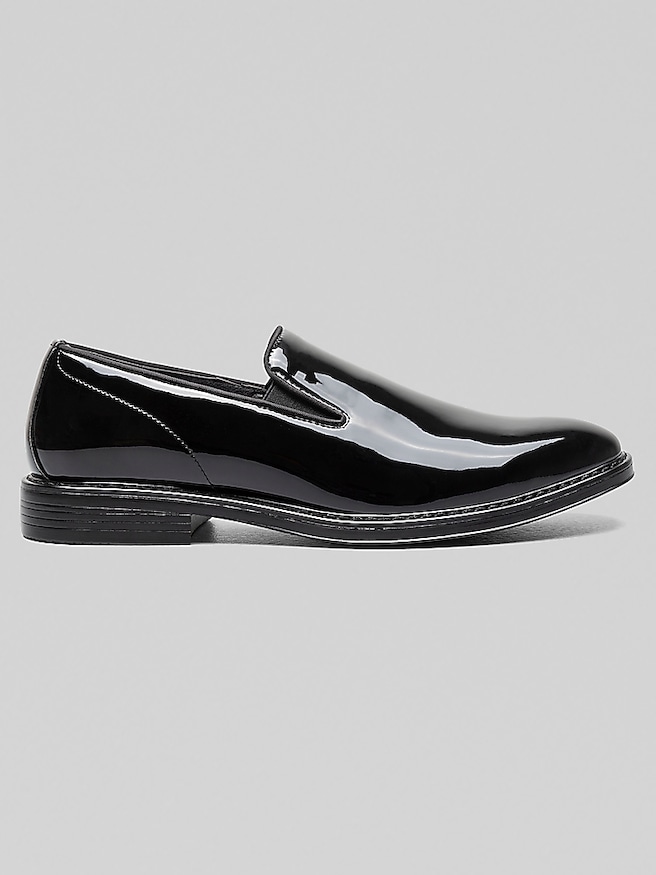
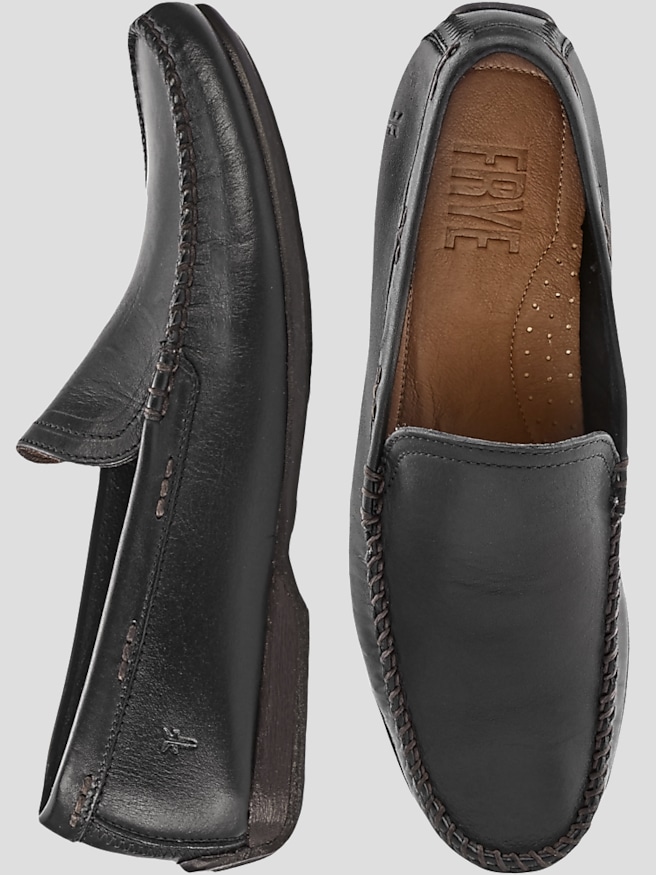
Men's stylish slip-on shoes offer a clean, lace-free profile that can look polished with tailored trousers or relaxed with denim. The category includes several distinct silhouettes, from traditional loafers to streamlined casual shoes, with the shape of the toe, the height of the upper, and the thickness of the sole helping determine the overall impression. Penny loafers have a strap across the top of the foot, often with a small cutout that gives the style its familiar character. Tassel loafers add decorative movement, while Venetian loafers typically keep the upper free of prominent ornamentation for a simpler finish. Moc-toe stitching creates a more visible outline around the forefoot and can give a shoe a relaxed appearance, although the material and construction still influence how dressy it looks. For an office outfit, smooth leather loafers with a restrained toe shape sit neatly beneath wool trousers and complement a tucked-in shirt or sport coat. Suede slip-ons soften the contrast between tailored clothing and casual pieces, making them a natural companion to chinos, an unstructured jacket, or dark jeans with a clean hem. Casual slip-on sneakers lean toward everyday wear, pairing comfortably with denim and knit shirts rather than more formal tailoring. Color also changes the effect: brown tones can introduce warmth and visible leather character, while men's black slip-on shoes create a crisp foundation for charcoal trousers, black denim, and other understated combinations. The most convincing pairing depends on proportion as much as color. A slim loafer generally looks balanced with a tapered trouser leg, while a substantial sole can hold its own beneath a straighter cut. A hem that rests lightly near the shoe keeps its shape visible without a heavy stack of fabric. These details make slip-ons useful for business-casual offices, dinners, celebrations, and everyday outfits that call for something more considered than athletic footwear. For formal events, the stated dress code remains more important than the convenience of a lace-free design.
Materials and construction influence how slip-on shoes feel, age, and function throughout the day. Smooth leather can develop creases and character with wear, and its finished surface often complements sharper clothing. Suede has a soft, textured appearance that makes even a simple silhouette feel less formal, though its raised nap needs care suited to that surface. Canvas and other textile uppers generally create a more casual look; their structure, lining, and weave affect both flexibility and how much support they provide. Leather quality cannot be judged by softness alone. A very supple upper may feel comfortable immediately, while a more structured one can help maintain a defined shape, provided the fit is right from the start. Inside the shoe, smooth lining, well-finished seams, and cushioning beneath the foot can make a noticeable difference during a commute or an evening spent standing and talking. Cushioning is not the same as support, however, and a soft footbed does not automatically provide the structure every foot needs. Fit deserves particular attention because slip-ons do not have laces to adjust the hold across the instep. The upper should feel secure without pressing painfully into the top of the foot, and the toes need room without sliding forward with each step. A little movement at the heel may occur in some loafer designs, but repeated lifting, rubbing, or the feeling that the shoe might come off suggests a mismatch in size or shape. Trying both shoes with the socks intended for regular wear gives a more useful impression than judging one shoe while seated. Walking reveals pressure at the forefoot, slipping at the heel, and whether the sole bends comfortably with the foot. A shoehorn helps preserve the heel structure during dressing. Anyone who uses an orthotic also needs enough interior depth and a suitable footbed arrangement; not every slip-on accommodates an insert without changing the fit. A dependable fit should not rely on painful wear to become acceptable.
The sole and the way it connects to the upper help determine where a slip-on feels most at home. Leather soles are associated with traditional dress footwear and a slim profile, while rubber soles can provide flexibility and traction, depending on their tread and compound. Neither material makes a shoe suitable for every surface, and a smooth sole deserves caution on slick floors. Lightweight construction may suit someone moving between meetings, while a firmer platform may appeal to someone who prefers a more substantial feel underfoot. Durability depends on construction, frequency of wear, fit, and maintenance rather than appearance alone. Stitched construction may allow certain shoes to be resoled, but repair options depend on the particular design and should not be assumed. Consistent care helps preserve both appearance and structure. Smooth leather benefits from removing surface dirt with a soft brush or cloth, followed by conditioner or polish appropriate to its finish. Suede calls for a dedicated brush and suitable cleaning products rather than conventional leather cream. Textile care varies, so machine washing is appropriate only when the care instructions permit it. Shoes that become damp should dry naturally away from direct heat, which can damage uppers and adhesives. Shoe trees can help leather footwear retain its shape between wears, and allowing shoes time to air out reduces trapped moisture. Socks contribute to comfort and presentation, too: fine dress socks maintain a continuous line with trousers, while properly fitted no-show socks create an exposed-ankle look without placing the bare foot directly against the lining. For someone building a work wardrobe, a versatile pair of loafers can bridge the gap between dress shoes and casual sneakers. Slip-ons can also make a thoughtful gift for a graduation, a career milestone, or a birthday when the recipient's size, preferred fit, and everyday dress habits are known. Their lasting appeal lies in that combination of easy dressing and deliberate style: simple to put on, but capable of making an outfit feel complete.