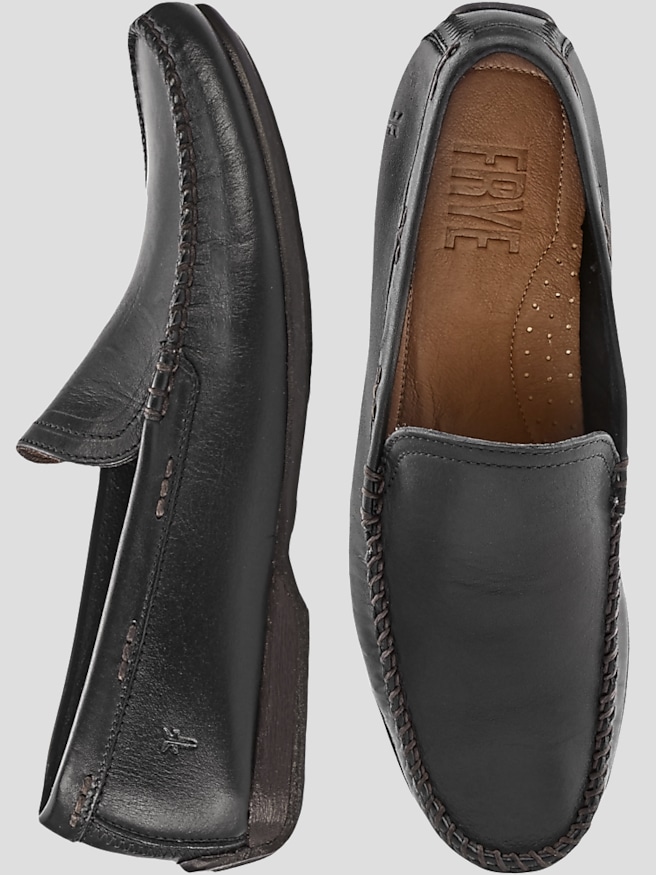
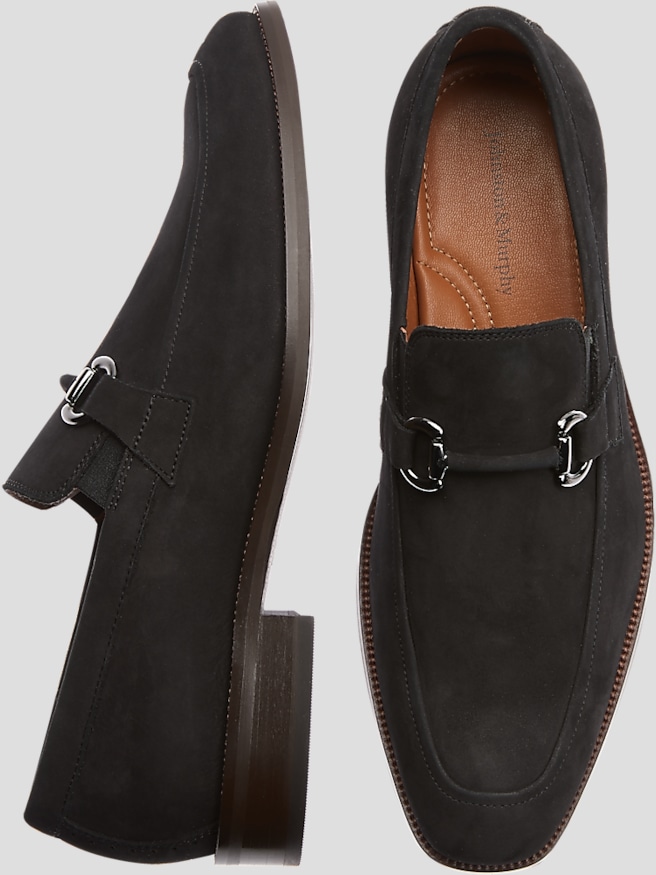
Men’s black slip-on shoes combine a lace-free design with a versatile color that works across business, dress, and casual wardrobes. The category includes structured loafers, streamlined dress slip-ons, relaxed driving shoes, and sneaker-inspired styles, each with its own balance of polish and ease. Smooth leather uppers and restrained stitching create a clean finish beside tailored trousers, while canvas, knit, and other textile uppers give slip-on sneakers a more laid-back character. Black suede adds a soft, matte texture that pairs naturally with chinos or dark denim. Synthetic uppers can offer a uniform finish and straightforward upkeep, though breathability and flexibility vary by construction. For a classic leather silhouette, men’s black leather slip-on loafers bring together an uncluttered profile and familiar details such as a penny strap, tassels, or a simple stitched apron around the toe. Those details influence the overall impression: a sleek, lightly decorated loafer feels more dressed up than a broad, heavily stitched style with a substantial sole. Black slip-on dress shoes can complement a charcoal suit for a presentation, tailored navy trousers for dinner, or a blazer and chinos for a gathering where a full suit would feel unnecessary. Casual black slip-ons work well with jeans and relaxed pants when the goal is a neat outfit without the formality of a dress shoe. For weddings and other dressier occasions, the invitation’s dress code matters more than color alone; not every black slip-on is appropriate for formal attire. A refined leather loafer may suit a cocktail dress code, while black-tie dressing calls for footwear that specifically complements formal eveningwear. The most useful choice follows the settings where the shoes will actually be worn, whether that means several hours at a desk, frequent walks between appointments, or an evening spent moving from dinner to a reception. A low-profile sole generally creates a dressier outline, while thicker rubber soles give the same black upper a more casual, substantial appearance.
Fit deserves particular attention with slip-on shoes because there are no laces to tighten or loosen across the foot. The upper should hold the instep comfortably, with enough room for the toes to rest naturally rather than pressing against the front or sides. A secure fit does not mean a tight fit: pinching over the top of the foot, compressed toes, or a heel that repeatedly lifts out are signs that the shape or size may not be suitable. Leather can soften with wear, but a painful shoe should not be chosen with the expectation that it will stretch into the correct size. Elastic side panels, often called goring, allow the opening to expand during entry and can provide a little flexibility while walking. They do not replace the need for an appropriate width or sufficient room through the forefoot. Trying shoes with the socks intended for everyday wear gives a more useful sense of fit than switching between thick athletic socks and thin dress socks. For a bare-ankle look, low-profile no-show socks can help manage friction and moisture without interrupting the line of cropped or slightly shorter trousers. Cushioning, arch contour, lining, and sole flexibility also affect how a shoe feels over several hours. Memory foam may provide a soft step-in sensation, but softness alone does not establish how supportive a shoe will feel during extended walking. A stable base, a well-shaped footbed, and a secure heel all contribute to comfort. Removable insoles may be helpful for someone who uses an insert, provided the shoe has enough interior space to accommodate it without squeezing the foot. For a commute that includes sidewalks, stairs, and station platforms, sole construction warrants as much attention as the upper. Textured rubber can offer useful traction, but tread, surface conditions, and wear all influence grip; no outsole makes every surface slip-proof. Leather soles offer a traditional dress appearance, while rubber or combination soles may be more practical when walking is a regular part of the day.
Durability in men’s black slip-on shoes depends on materials, construction, use, and care rather than appearance alone. Even stitching, securely attached soles, neatly finished edges, and resilient elastic panels are useful details to examine. The areas around the heel lining, toe flex point, and sole edges often reveal wear first, especially in shoes worn repeatedly for long stretches. A shoehorn helps the foot slide in without crushing the heel counter, the structured section that supports the back of the shoe. Allowing shoes to air out between wears helps the lining dry, and shoe trees can help leather uppers maintain their shape. Smooth leather generally benefits from brushing or wiping away surface dust, followed by a suitable conditioner when needed and polish appropriate to its finish. Black polish can refresh color and soften the appearance of minor scuffs, but it should be used according to the care directions and tested discreetly first. Suede needs its own brush and compatible cleaning products; conventional leather cream can alter its texture. Textile and synthetic uppers should be cleaned according to the manufacturer’s instructions, since machine washing or strong cleaners can damage adhesives, finishes, or structural components. Shoes should dry naturally away from direct heat. Care also includes noticing when heel edges become uneven, tread wears smooth, or lining damage begins to affect comfort. Some constructions allow professional sole or heel repairs, while others have more limited repair options. Beyond maintenance, thoughtful styling helps black slip-ons earn a regular place in a wardrobe. A trouser hem that rests lightly at the top of the shoe keeps a slim loafer visible, while straight-leg jeans balance a chunkier casual sole. With dressier outfits, a black leather belt in a similar finish creates a coherent look without requiring every accessory to match exactly. As a gift, black slip-on shoes can be a practical choice for someone starting an office role, celebrating a graduation, or refreshing everyday essentials. Knowing the recipient’s usual size, width, preferred sock thickness, and typical dress code makes the choice more personal and more likely to suit daily life.