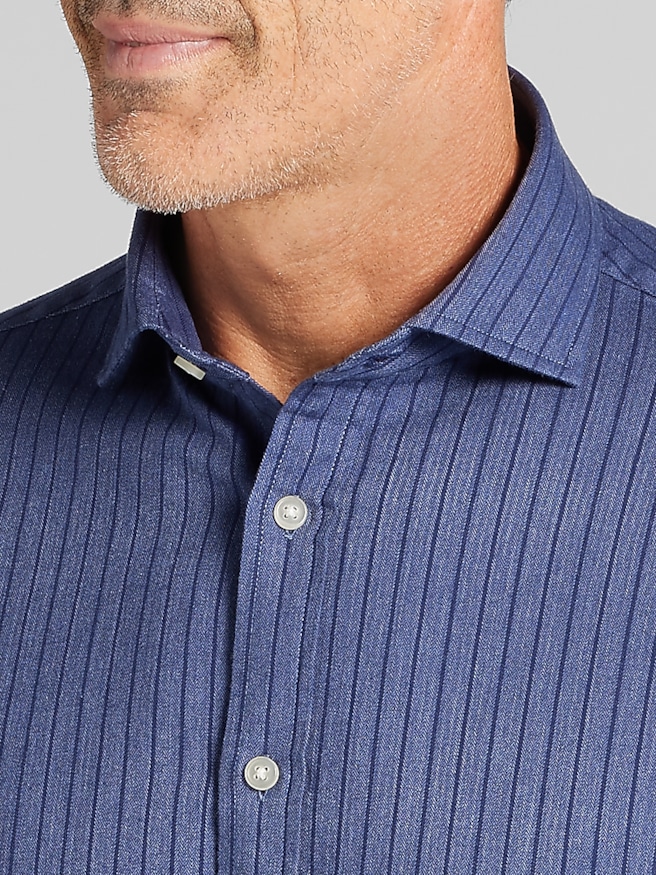
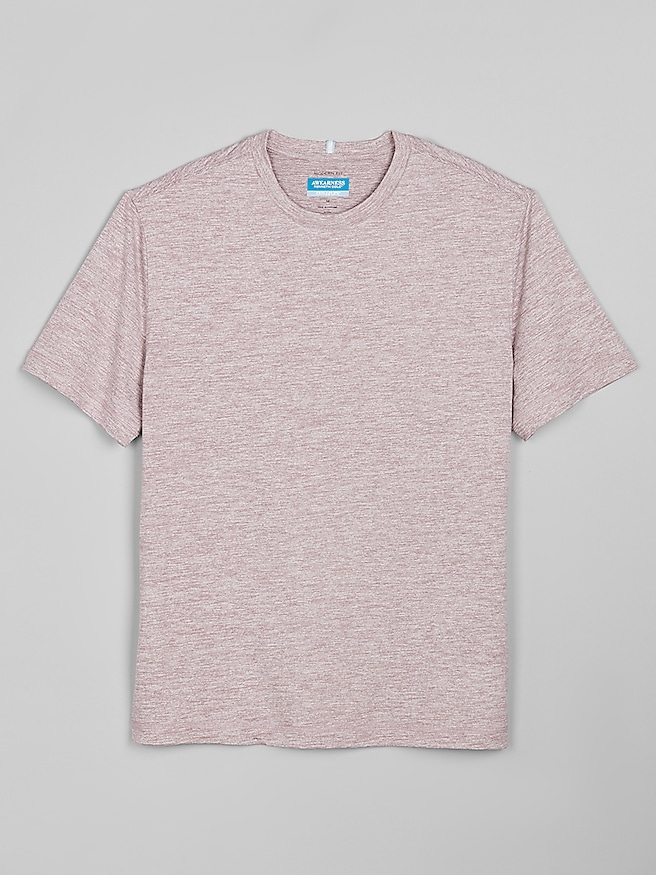
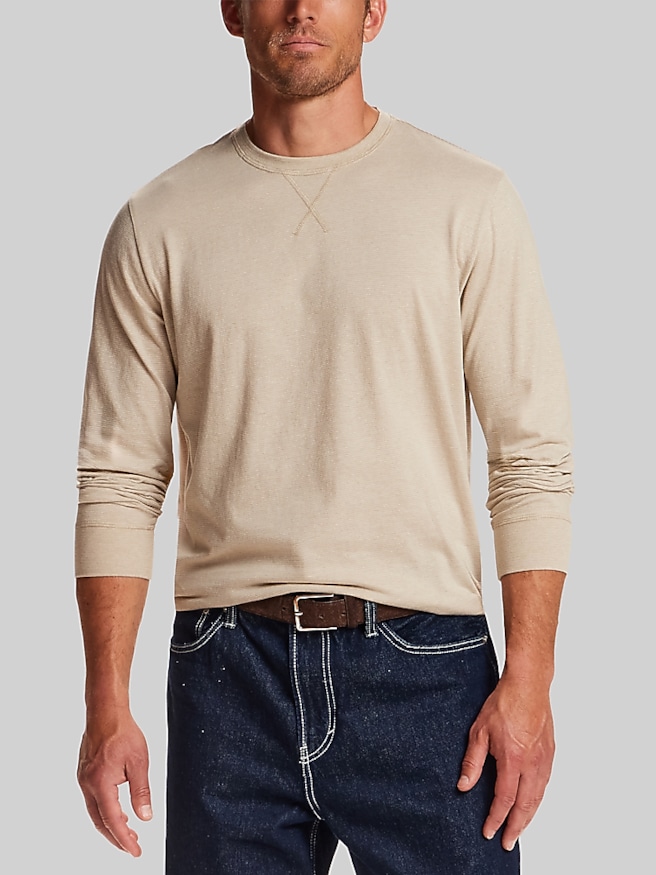
Men's striped long-sleeve jersey crewnecks combine the familiar shape of a casual T-shirt with full-length sleeves, a rounded neckline, and a pattern that adds definition without requiring elaborate styling. Jersey describes the knit fabric rather than a particular fiber: it typically has a smooth outer face, a soft feel, and natural give that allows the shirt to move with the body. That construction distinguishes a jersey crewneck from a woven shirt and gives it a more fluid drape. Cotton jersey is valued for its breathable feel and softness against the skin, while cotton blended with polyester can offer improved shape retention and quicker drying, depending on the fabric's composition. A small amount of elastane can add stretch and help the fabric recover after movement. Fiber content alone does not tell the whole story, though. Yarn thickness, knit density, and finishing also affect how a shirt feels, hangs, and holds up to repeated wear. Lightweight jersey can sit neatly beneath another layer, while a more substantial knit often has enough structure to wear on its own without feeling insubstantial. Stripe scale changes the overall effect just as noticeably. Fine, closely spaced stripes can look almost like a textured solid from a distance; wider bands make the pattern more prominent. A low-contrast combination creates a quieter look, while sharply contrasting colors give the shirt a stronger visual presence. Navy with white, gray with charcoal, and other familiar combinations illustrate how the same basic shape can feel crisp, understated, or graphic. An evenly spaced stripe has a steady rhythm, while alternating widths introduce more variation. The crew neckline keeps the design grounded: there is no collar to arrange, no open placket, and no need for a separate undershirt to complete the look. Together, these details make striped jersey crewnecks an approachable option for men who want the comfort of knitwear with more visual interest than a plain tee.
Fit determines whether a striped long-sleeve crewneck feels trim and polished or easy and relaxed. With a conventional set-in sleeve, the shoulder seam generally sits near the edge of the shoulder; a deliberately dropped shoulder creates a different, looser silhouette. Through the chest and torso, the fabric should have enough room to move without pulling into taut lines across the body. A close fit can work well beneath a jacket, but clinging fabric may interrupt the stripe pattern and make the shirt feel restrictive when reaching forward or sitting down. A relaxed cut offers more ease, especially for anyone who prefers a straight line from chest to hem. Sleeve length matters, too: cuffs that finish around the wrist keep the proportions tidy without bunching excessively over the hands. Hem length affects how the shirt works with different pants. A shorter, straight hem can look balanced untucked, while additional length may be useful for a secure tuck. Checking the shirt's measurements against a well-fitting knit already in the closet is often more useful than relying on a size label alone. For everyday outfits, the stripes can supply most of the detail. Dark jeans and simple sneakers create an easy combination for a coffee stop, a casual lunch, or an afternoon browsing a bookstore. Chinos and clean leather shoes give the same kind of shirt a more considered finish for a relaxed dinner or an office where casual knitwear is appropriate. A solid overshirt or unstructured jacket provides contrast without introducing another competing pattern. Because jersey flexes naturally, these crewnecks can also be comfortable for a long drive or a day spent moving between errands and informal plans, although performance features depend on the individual fabric. As a gift, this category suits someone who regularly wears casual separates and appreciates familiar shapes. Matching the recipient's usual fit, preferred colors, and tolerance for bold patterns makes the choice more personal than simply selecting a favorite stripe.
Care and construction both influence how well a striped jersey crewneck keeps its appearance. The garment's care label is the starting point because cotton, synthetic blends, stretch fibers, and decorative finishes can require different treatment. When the label permits machine washing, a gentle cycle with cool water can help limit unnecessary wear and color fading. Turning the shirt inside out reduces direct friction on the visible surface, and washing it with similar colors helps protect the contrast between light and dark stripes. Rough hardware on other garments can catch delicate knits, so separating shirts from exposed zippers or hook-and-loop fasteners is worthwhile. Drying deserves equal attention: excessive heat can contribute to shrinkage or affect stretch recovery, particularly when the fabric contains cotton or elastane. Following the specified drying method and smoothing the shirt back into shape can help preserve its proportions. If ironing is permitted, the recommended heat setting matters more than the assumption that every jersey shirt can tolerate the same treatment. Between wears, a neat fold avoids the shoulder marks that some hangers can leave in softer knits. Durability is also reflected in details that are easy to overlook at first glance. Even stitching, securely finished hems, and a neckline that lies flat help a simple shirt maintain a clean appearance. A neckband with good recovery is less likely to look stretched after repeated dressing, while sound sleeve and side seams support everyday movement. Stripe alignment at visible seams can contribute to a considered finish, though construction methods vary. Within the broader category of Men's Crew Necks, striped long-sleeve jersey styles offer a distinctive balance of softness, pattern, and uncomplicated wear. Their usefulness comes from those practical qualities working together: a comfortable knit, proportions that suit the wearer, colors that coordinate with existing clothes, and care that helps preserve the fabric. The result is an everyday piece that can feel familiar without disappearing into the background.