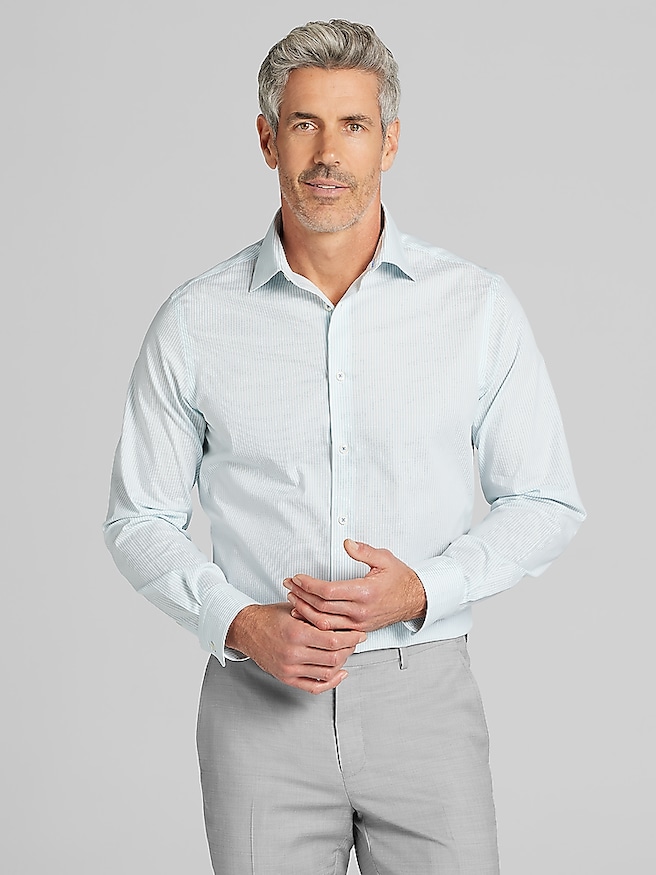
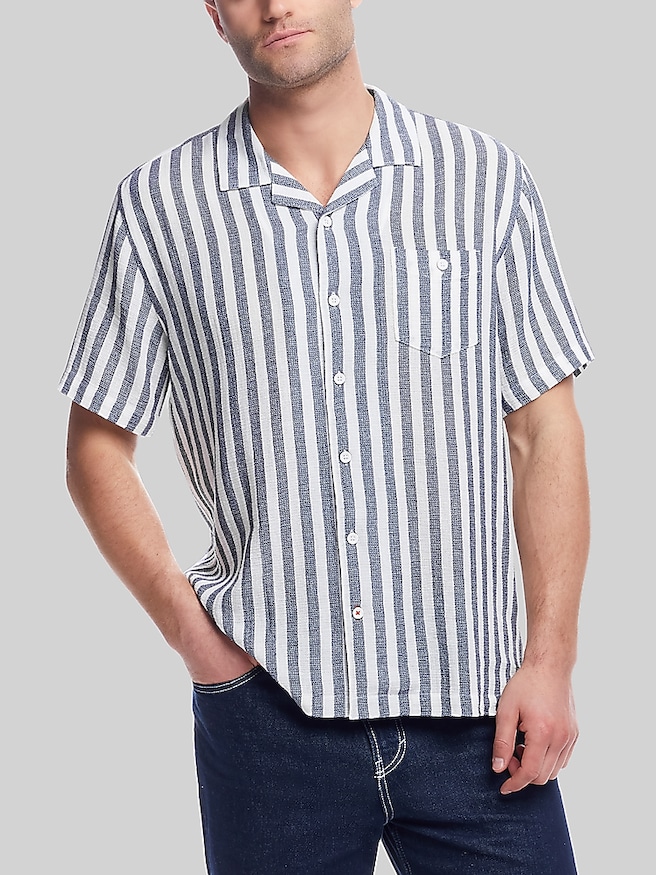
Men’s long sleeve striped shirts bring pattern to everyday dressing without requiring a bold outfit. The category includes woven dress shirts, casual button-front styles, and knit shirts, with stripe width, fabric texture, and collar shape helping determine how each feels and where it fits. A fine blue stripe on a white ground has a clean, understated appearance that works with charcoal trousers, navy tailoring, or a simple pair of chinos. Wider stripes create a stronger visual presence, especially when the colors contrast sharply, while closely spaced tonal stripes can look almost solid from a distance. Vertical stripes are common on dress shirts and casual woven styles; horizontal bands are often associated with crewneck knits, polos, and rugby-inspired shirts. Neither direction determines the occasion on its own. A crisp collar, smooth fabric, and longer shirttail generally suggest a more dressed-up shirt, while a soft collar, textured weave, or straight hem can feel more relaxed. For an office presentation, a narrow-striped shirt beneath a solid jacket adds detail without competing with the rest of the outfit. For dinner or an informal gathering, an open collar and dark jeans can make the same basic pattern feel less structured. Matching every stripe color to another piece is unnecessary; repeating one shade in the trousers or jacket usually provides enough connection. When a tie is part of the outfit, a solid design keeps the combination straightforward. A patterned tie can also work when its pattern differs noticeably in scale from the shirt’s stripes, giving each element room to register. Long sleeves add flexibility beyond their appearance: cuffs provide a finished edge under a jacket, and sleeves that roll neatly can support a more casual look when the setting allows. The most useful striped shirts tend to suit the clothes already worn regularly, whether that means quiet patterns for a tailored wardrobe or broader bands alongside denim and casual pants.
Fabric and fit shape the experience of wearing a striped shirt as much as the pattern does. Cotton is valued for its breathable feel and ability to take a crisp press, although its weight, weave, and finish affect how it drapes and how much attention it needs after washing. Poplin typically has a smooth, relatively flat surface that gives narrow stripes a sharp outline. Oxford cloth has a more noticeable woven texture and a substantial hand, making it a natural companion to chinos, denim, and less structured jackets. Twill’s diagonal weave can give a shirt a softer drape, while jersey knit brings the ease and flexibility associated with a long sleeve T-shirt. Cotton blends may incorporate fibers chosen for stretch, shape retention, or easier care, but those qualities depend on the actual fabric rather than the blend label alone. Wrinkle-resistant finishes can reduce maintenance without eliminating the need for occasional pressing. Fit deserves the same attention to detail. On a set-in sleeve shirt, the shoulder seam should sit near the edge of the shoulder rather than hanging well down the arm or pulling inward. The chest and back need enough room for reaching forward, sitting, and bending the elbows without straining the button placket. A slim fit generally follows the torso more closely, while a classic or relaxed fit allows more ease; the terminology and measurements can vary. Sleeves should reach the wrist in a standing position without covering much of the hand, and a buttoned cuff should feel secure rather than restrictive. For shirts worn with a tie, the collar needs comfortable space when fastened. Tucked styles benefit from enough length to stay anchored through ordinary movement, whereas shirts intended to be worn untucked usually have a shorter, balanced hem. Looking at how the shirt sits while seated can reveal fit issues that are easy to miss while standing still.
Care and construction help determine whether men’s long sleeve striped shirts remain dependable parts of a regular rotation. A smooth button placket, securely attached buttons, neatly finished seams, and even stitching are useful details to examine. Stripe alignment across visible sections can contribute to a polished appearance, although some areas, such as a contrasting yoke or pocket, may intentionally change direction. Fabric weight alone does not establish durability: a lighter woven shirt can hold up well with suitable care, while a heavier knit can lose shape if handled roughly. The care label should govern washing, drying, and ironing, particularly when a shirt combines fibers or has a special finish. Sorting light and dark colors, avoiding an overloaded washer, and treating a small stain promptly can help preserve the clarity of pale backgrounds and darker stripes. Fastening any recommended closures and using an appropriate cycle can reduce unnecessary abrasion. When machine drying is permitted, removing the shirt promptly helps limit deep creases; smoothing the placket, collar, and cuffs before hanging can make the next wear easier. Knits may need reshaping or flat drying according to their labels so the shoulders and body retain their proportions. For pressed woven shirts, attention to the collar and cuffs often makes the biggest visible difference, especially beneath a jacket. These practical qualities also matter when choosing a gift for a partner, parent, graduate, or friend. A familiar fit, a known collar or sleeve measurement, and colors that complement the recipient’s usual wardrobe are more useful than an unfamiliar pattern chosen for novelty alone. Someone who wears navy trousers frequently may appreciate a blue-and-white stripe, while someone drawn to casual knits may prefer wider bands and a softer feel. Similar pattern preferences can carry into men’s striped short sleeve shirts for another sleeve-length option. Across both, the strongest choices balance recognizable personal style with comfortable movement, manageable care, and a clear place in everyday outfits.