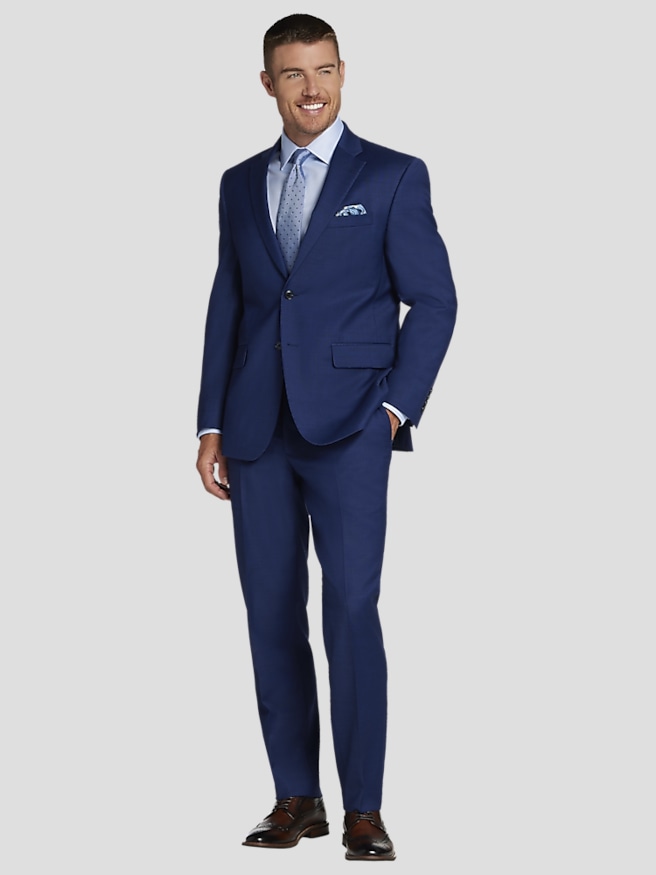
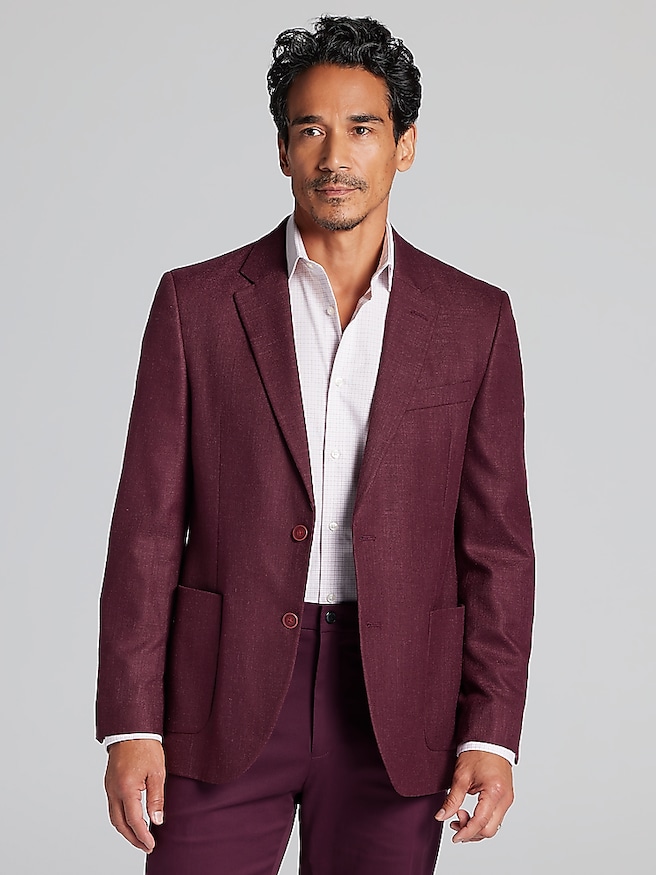
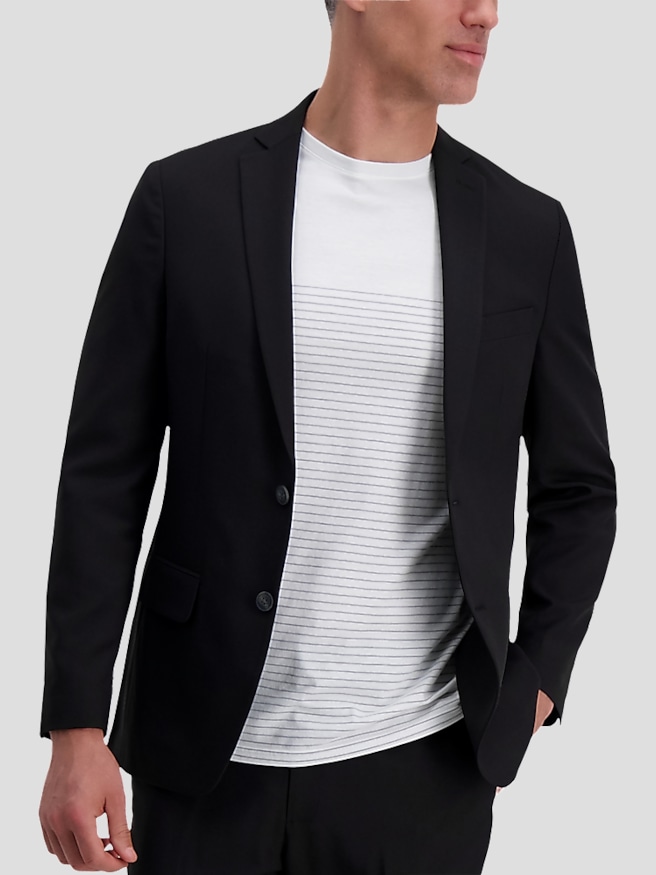
Men's statement cocktail party attire combines evening-ready tailoring with a distinctive color, texture, or detail that feels celebratory without becoming a costume. The look is polished enough for a cocktail dress code but more expressive than everyday business clothing, with personality coming through in the fabric, silhouette, and finishing touches. A deep jewel tone, a softly lustrous weave, or a richly textured jacket can give familiar tailoring a different character. Statement dressing does not have to mean a loud pattern or an entirely unconventional outfit; sometimes the contrast between a dark, clean-lined suit and an unexpected shirt color creates all the distinction needed. At a gallery reception, that contrast might read as creative and understated. At an engagement party or a milestone birthday celebration, a more pronounced pattern or plush fabric can feel especially fitting. The setting and invitation still establish the level of formality, since cocktail attire generally sits between business dress and black tie rather than replacing either one. A coordinated jacket and trousers tend to create a more formal impression, while tailored separates allow for a deliberate contrast in color and texture. The restrained foundation associated with Men's Formal Cocktail Attire also applies here: balanced proportions, a considered shirt, and polished footwear keep expressive details looking intentional. A single focal point often has greater impact than several competing ones. A patterned jacket has room to stand out against quiet trousers, while a saturated suit color looks more composed with a simple shirt and restrained accessories. Small-scale patterns create visual interest at conversational distance; larger motifs make an impression across the room. Neither approach is inherently more dressed up, but the relationship between pattern, fabric, and fit determines whether the result feels refined. For men who enjoy dressing for an occasion, statement cocktail clothing offers a way to look recognizable and individual while still respecting the event.
Fabric gives statement cocktail attire much of its character, especially in spaces where lighting changes between a seated dinner, a reception area, and a dance floor. Wool is valued in tailoring for its drape, resilience, and ability to hold a defined shape without necessarily feeling stiff. A fine, smooth weave produces a crisp outline, while a more textured surface adds depth even when the color is subdued. Wool blends can bring other qualities to the fabric, depending on their composition, including softness, stretch, or a subtle sheen. Velvet has a distinctive pile that catches light unevenly, creating richness through texture rather than relying on a busy print. Its appearance can change as the wearer moves, which makes simple styling particularly effective. Jacquard fabrics create patterns through the weave itself, giving tonal designs a dimensional quality that differs from a flat printed surface. Cotton shirts provide a familiar, crisp counterpoint to these expressive fabrics, while smoother shirt finishes can reinforce a more formal impression. Fabric weight, lining, and construction also influence how comfortable an outfit feels through several hours of standing, sitting, and moving. A jacket should follow the shoulders cleanly, with sleeves that allow natural movement and a front that rests without pulling into sharp creases when fastened. A close fit is not the same as a tight fit; enough room through the chest, upper arms, seat, and thighs helps tailoring retain its intended lines. Trousers with a clean drape keep attention on the overall silhouette rather than on bunching or strain. Their length changes the visual balance as well, with a slight break offering a familiar tailored finish and a shorter hem creating a more contemporary outline. These details matter particularly with bold clothing because a strong color or pattern draws attention to the garment's proportions. Alterations can refine sleeve length, trouser hems, and some aspects of shape, although the shoulders and basic jacket structure remain important starting points. The most convincing statement looks comfortable in motion, not just while standing still.
Finishing details connect expressive tailoring to the occasion without requiring every part of the outfit to compete for attention. Smooth leather footwear gives a textured or patterned ensemble a grounded finish, while suede introduces a softer surface that can work with less formal cocktail settings. The degree of shine changes the effect: a restrained polish feels versatile, whereas a highly reflective finish reads as more ceremonial. A tie can sharpen the line of a shirt and jacket, but an open collar may suit an invitation that allows a more relaxed interpretation of cocktail dressing. In either case, a collar that sits neatly beneath the jacket helps the outfit look complete. Pocket squares, cuff links, and watches offer smaller opportunities for expression, particularly for someone who prefers dark tailoring but still wants a memorable detail. Related colors often look more natural than an exact match across every accessory, and leaving some visual space keeps the overall effect composed. These smaller finishing pieces can also make thoughtful gifts for someone who enjoys attending receptions, anniversary dinners, or other dressy celebrations, especially when their preferred colors and level of formality are already familiar. Long-term usefulness depends on care as much as appearance. Following each garment's care label protects the fabric and construction, and prompt attention to spills helps prevent a single evening from leaving a lasting mark. Structured jackets benefit from supportive hangers and enough closet space to avoid crushing the shoulders or lapels. Trousers stored neatly are less likely to develop unwanted creases, while brushing suitable fabrics and allowing garments to air after wear can help keep them fresh between professional cleanings. Velvet, decorative finishes, and delicate blends may require specialized attention because pressure, heat, or moisture can alter their surface. Secure buttons, sound stitching, and fabric that recovers well after movement contribute to durability. With thoughtful upkeep, distinctive cocktail attire can remain part of a wardrobe for many occasions, offering a recognizable sense of style without needing a completely new look for every invitation.