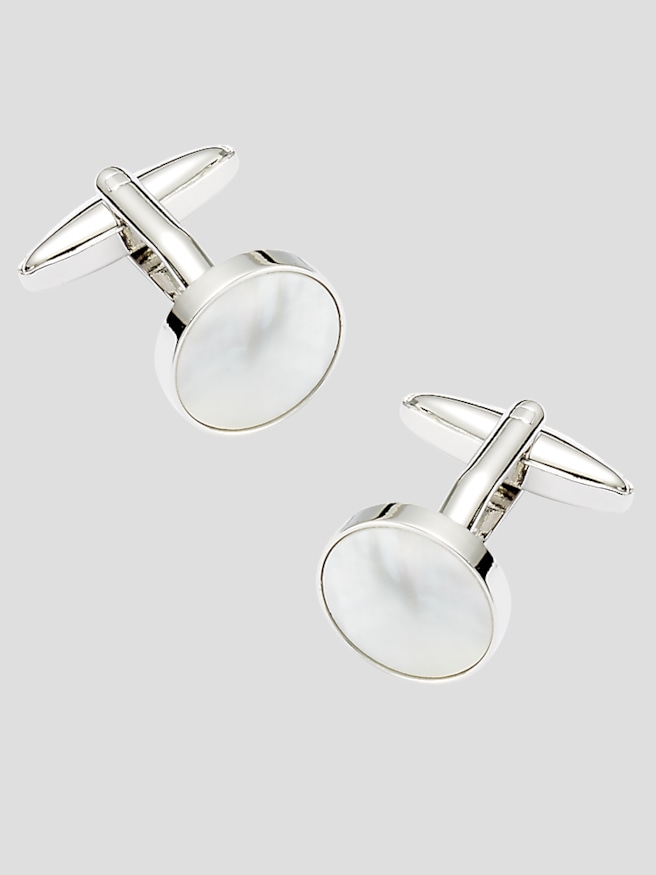
Men’s stainless steel cufflinks fasten dress shirt cuffs with a durable, corrosion-resistant metal that suits both understated business attire and formal clothing. Stainless steel resists tarnishing better than many traditional jewelry metals, making it a practical choice for an accessory that touches fabric, skin, and the occasional conference table. Its appeal goes beyond durability: the clean, silver-toned appearance can complement a crisp white shirt, bring definition to pale blue fabric, or provide a subtle contrast against a dark jacket sleeve. Polished surfaces reflect light with a mirrorlike finish, while brushed or satin textures offer a softer effect that feels less conspicuous in a professional setting. Round faces tend to look balanced and traditional; square and rectangular shapes introduce straighter lines that echo a tailored jacket’s structure. Small differences in edge shape, surface texture, and proportion can change the overall impression without requiring a bold decorative motif. Stainless steel is generally harder than sterling silver, so it can stand up well to repeated wear, although it is not scratchproof. A smooth face may show fine marks more readily than a textured one, and any added coating or decorative inlay may need different care from the underlying metal. The material also contains varying amounts of other metals, and some stainless steel alloys contain nickel. Anyone with a known metal sensitivity should check the stated composition rather than assume that every stainless steel accessory is suitable for sensitive skin. For someone building a dependable dress wardrobe, a restrained design offers flexibility across interviews, presentations, weddings, and evening events. For someone who already wears cufflinks regularly, a distinctive finish or slightly different silhouette can add variety while maintaining a familiar, easy-to-coordinate metal tone. The result is an accessory with enough presence to finish a cuff neatly, without drawing attention away from the shirt, tailoring, or person wearing it.
The right fit begins with the shirt rather than the cufflink face. French cuffs fold back on themselves and have aligned openings for cufflinks; convertible cuffs can also accommodate them when designed with the appropriate openings. A standard button cuff without those openings is not interchangeable with a French cuff. On a compatible shirt, the cufflink’s post or connecting section needs enough room to pass through the fabric layers and hold them securely without squeezing the cuff into a tight bunch. Heavier shirt fabrics and substantial folded cuffs may need more clearance than lightweight cloth. The face should sit comfortably against the outside of the cuff, with the fastening positioned securely behind it. Hinged toggle closures are familiar and convenient, while fixed-back and chain-linked constructions have a different feel when handled and worn. Closure quality matters as much as appearance: moving parts should operate smoothly, and edges should feel finished rather than rough against the shirt. A moderately sized face is often easier to wear beneath a jacket sleeve than an oversized design that catches on the lining or presses against a desk. A little shirt cuff showing beyond the jacket sleeve gives the metal room to register without making it the center of the outfit. When comparing the best men’s cufflinks, proportions, fastening comfort, and compatibility with familiar shirts can be more useful considerations than decoration alone. Stainless steel pairs naturally with silver-toned watches, belt hardware, and shirt studs, although those details do not need an identical finish. A brushed watch case and polished cufflinks can sit comfortably together when their scale and overall character feel related. With a business suit, simple shapes keep the effect composed. With a tuxedo, a restrained design can complement the shirt studs and other formal accessories without competing with the bow tie or jacket lapels. More expressive details can suit a celebratory dinner or wedding, especially when the rest of the outfit stays relatively simple.
Regular care helps stainless steel cufflinks retain their finish and keeps their closures pleasant to use. After wear, a soft, dry cloth can remove fingerprints and surface residue before the cufflinks return to storage. When more cleaning is needed, plain stainless steel can generally be wiped with a cloth lightly dampened with mild soapy water, then wiped clean and dried thoroughly. Decorative finishes, stones, enamel, and other inlays may have separate requirements, so the stated care directions take precedence. Abrasive cleaners and rough polishing materials can dull a surface or damage a coating, and prolonged exposure to harsh chemicals is best avoided. Corrosion resistance does not make stainless steel immune to every environment; leaving cufflinks damp or exposed to cleaning chemicals can compromise their appearance over time. Separate compartments or a soft pouch help prevent metal pieces from rubbing against each other, especially during travel. Keeping each pair together also makes dressing for an early meeting or a formal event less hurried. Before wearing them, a quick check of the closure can reveal a loose mechanism or an edge that might snag delicate fabric. That combination of straightforward upkeep and lasting usefulness makes stainless steel cufflinks a thoughtful gift for a graduate, a father, a partner, or a member of a wedding party. The recipient’s existing wardrobe provides useful clues: someone who wears French-cuff shirts to work may appreciate a versatile, low-profile design, while someone who dresses formally only for important occasions may prefer a pair that coordinates easily with a white shirt and dark suit. A gift is more useful when the recipient has a compatible shirt, so cuff style deserves as much attention as the decorative face. For a groom or wedding attendant, matching metal tones across the group can create consistency while allowing individual shapes or textures. Beyond the occasion itself, stainless steel offers an enduring, practical way to finish tailored clothing with a detail that feels considered every time the cuffs are fastened.