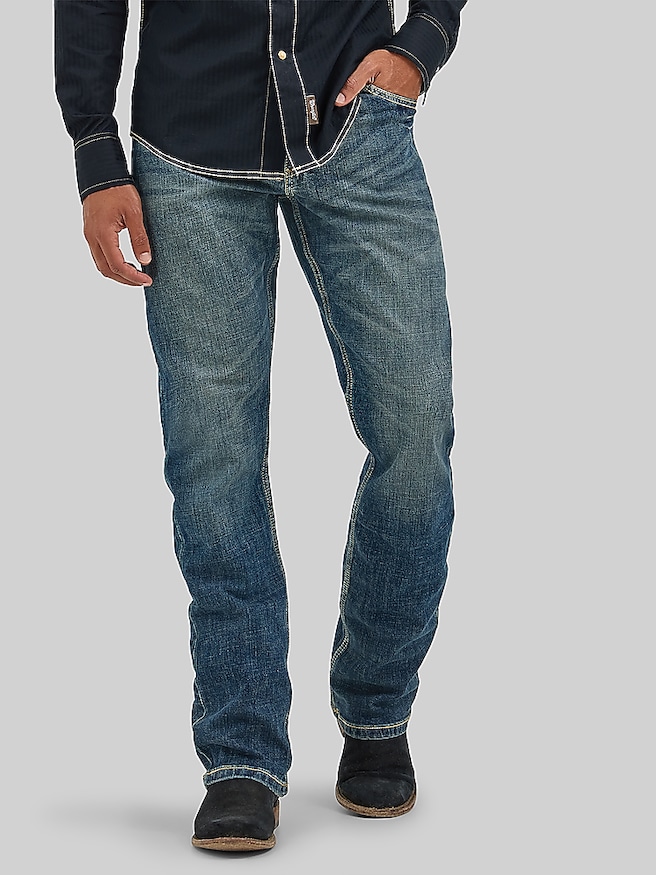
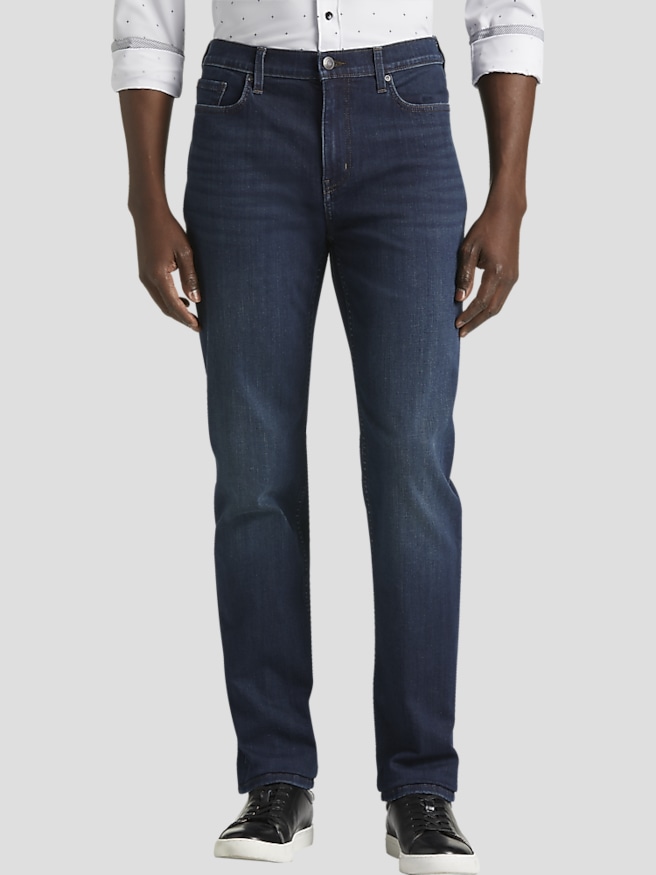
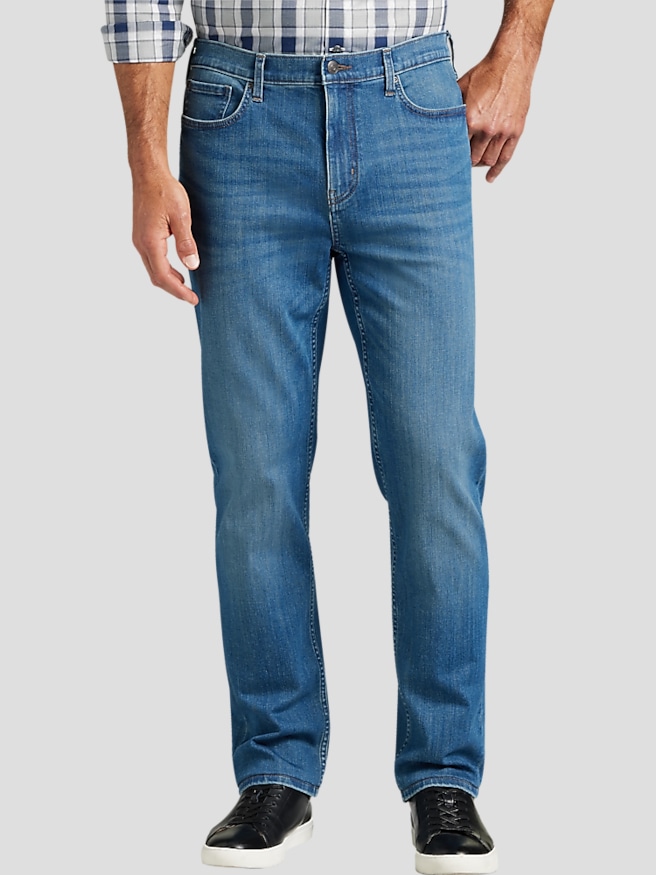
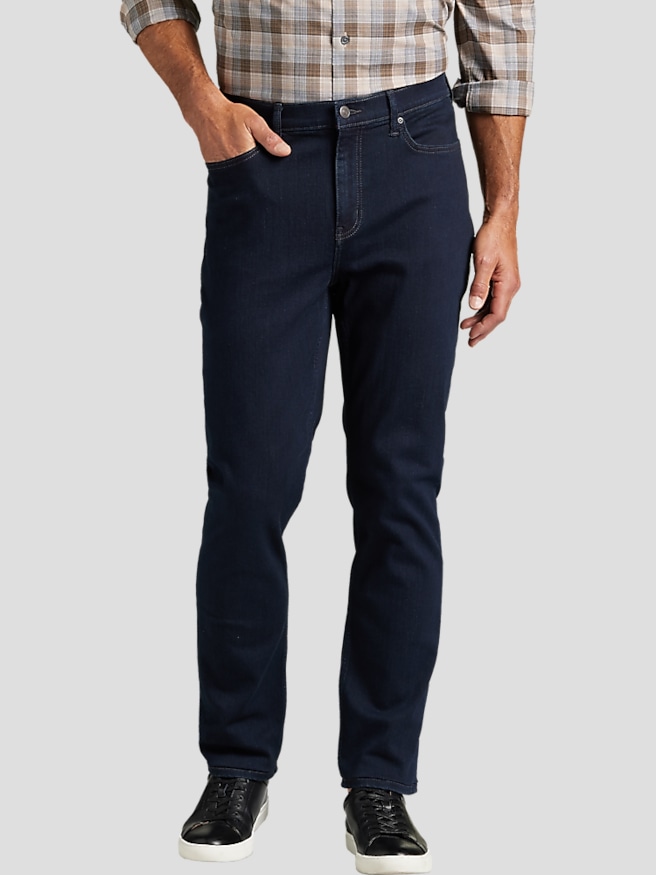
Men’s soft stretch jeans combine denim’s familiar appearance with a softer feel and added flexibility for everyday movement. Their comfort comes from a combination of fiber content, fabric construction, and finishing—not simply the amount of stretch listed on a label. Cotton often forms the foundation, giving the fabric its recognizable denim texture and breathable feel, while a small amount of elastane, also called spandex, helps it give when sitting, bending, or taking a longer stride. Blends that include lyocell or rayon can contribute a smoother, softer hand; polyester may add strength and help the fabric retain its shape. The exact balance matters more than any single ingredient. Softness describes how denim feels against the skin, while stretch describes how it expands with movement. Recovery is a separate quality: it is the fabric’s ability to return toward its original shape rather than staying loose at the knees or seat. A higher stretch percentage does not automatically mean softer jeans, better recovery, or a more comfortable fit. Some stretch denim gives primarily across the width, while fabrics described as four-way stretch are designed to flex in both directions. Either construction can feel comfortable when the cut suits the wearer. Finishing treatments can also soften denim, creating a broken-in feel without requiring weeks of wear. The result can be a pair that still looks unmistakably like jeans, with visible twill texture, sturdy pocket edges, and a defined silhouette, but feels less restrictive through a drive, a desk-based workday, or an afternoon spent walking around town. Within the broader category of Men's Stretch Jeans, softness is a useful distinction for anyone who likes denim’s versatility but prefers a gentler feel against the skin. Neither softness nor flexibility requires an especially close cut, so comfort-focused denim can suit a range of silhouettes and personal styles.
Fit gives soft stretch denim its purpose, whether the goal is a clean line under an untucked shirt or comfortable room through the thighs. A slim cut generally follows the leg more closely, while a straight cut keeps a more consistent line from the knee toward the hem. An athletic fit typically provides extra room through the seat and thighs, often narrowing below the knee, and a relaxed fit allows more space overall. These descriptions vary by maker, so measurements and fit details are more useful than assuming every pair with the same size label will feel alike. Stretch should support a good fit, not compensate for jeans that are too small. A waistband that digs in while seated, front pockets that pull open, or pronounced horizontal tension lines across the hips can signal that more room is needed. At the same time, extra fabric gathering beneath the seat or collapsing around the ankles can interrupt an otherwise neat silhouette. Rise, thigh room, and inseam work together: the rise affects where the waistband rests, the thigh measurement influences ease of movement, and the inseam determines how the hem meets the shoe. A modest break over sneakers or loafers creates a tidy everyday finish, while a slightly wider leg opening can sit more naturally over boots. For someone who spends hours at a desk before heading to dinner, a comfortable waist and enough room through the upper leg may matter more than maximum stretch. For frequent travel, softness can make long stretches of sitting more pleasant without giving up the structure of denim. Wash and detailing shape intended use as well. Dark indigo or black denim with minimal fading can look polished with a button-down shirt and an unstructured sport coat in settings where jeans are appropriate. Mid-blue washes pair easily with polos, knit shirts, and casual footwear, while visible fading or distressed details give the outfit a more laid-back character. Soft stretch jeans remain casual clothing, even when styled neatly, so the setting’s dress expectations still matter.
Durability depends on more than whether denim stretches. Fabric weight, yarn quality, construction, fit, frequency of wear, and laundering all affect how a pair holds up. A softer surface does not necessarily mean a weaker fabric, and a heavier feel does not guarantee that jeans will resist wear indefinitely. Added give can reduce resistance during movement, but repeated friction still affects areas such as the inner thighs, pocket edges, and seat. Jeans that are excessively tight place more strain on both fabric and seams, while a suitable fit lets the material move without staying under constant tension. Reinforced stress points, even stitching, and securely finished seams are useful construction details, though no single feature establishes overall longevity. Care is especially important for denim containing elastic fibers. The garment’s care label should take priority, since finishes and fiber blends can require different treatment. When permitted, washing inside out in cold water with similar colors can help limit surface abrasion and color transfer. A gentle cycle and an appropriate amount of mild detergent can clean the fabric without unnecessary agitation or residue. High heat can damage elastic fibers over time, so air-drying or a low-heat setting, when allowed by the label, is generally a gentler choice. Dark denim may release dye during early washes or transfer color through rubbing, making care around light upholstery and pale footwear worthwhile. Washing according to actual wear and soil, rather than automatically after every brief outing, can reduce repeated laundering, while stains benefit from prompt treatment consistent with the care instructions. For gifting, soft stretch jeans make the most sense when the recipient’s waist, inseam, preferred rise, and usual leg shape are known. A familiar wash and silhouette are often more useful than choosing solely for the highest stretch content. Someone who already reaches for jeans for casual dinners, errands, or an office that permits denim may appreciate a softer version of that everyday staple. The most satisfying combination is straightforward: comfortable fabric, enough movement for normal activities, a shape that feels natural, and care habits that help preserve both the color and the fit.