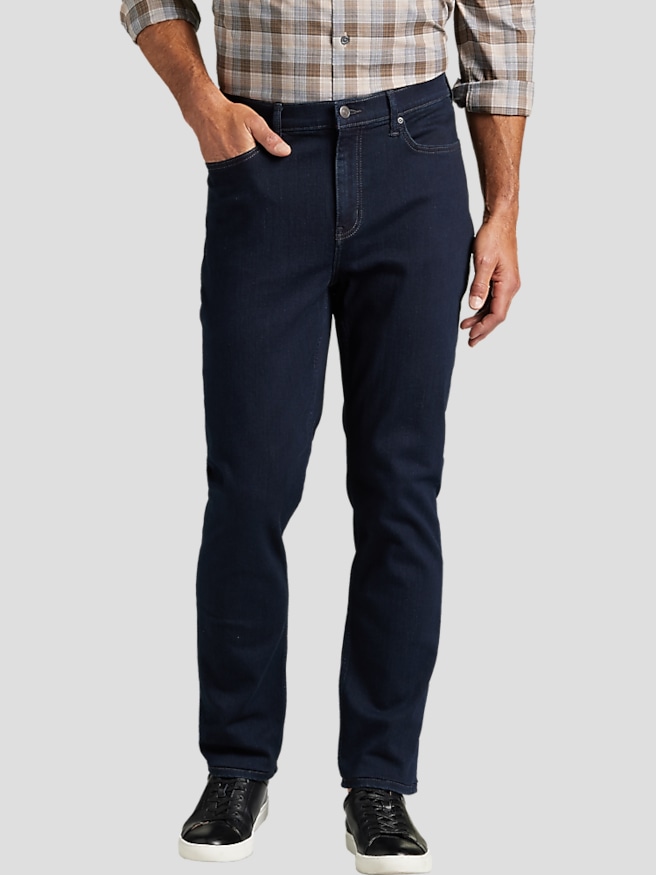
Men’s soft jeans bring together the familiar look of denim and a comfortable feel that makes them easy to wear through a full day. Softness can come from the fibers, the weave, or finishing treatments that help the fabric feel broken in before repeated wear. Cotton provides denim’s recognizable texture and breathability, while blends containing lyocell or modal can add smoothness and a more fluid drape. A small amount of elastane adds stretch, helping the fabric move at the knees, hips, and seat. Stretch and softness are different qualities, though: jeans can feel soft without much give, and stretchy denim can still have a firm surface. The balance matters for everything from sitting at a desk to stepping into a car or spending an afternoon on foot. Garment washing and other finishing processes may soften the surface and ease the stiffness associated with traditional denim. Fabric weight also influences how jeans feel, but lighter fabric is not automatically softer, and heavier denim does not have to feel rigid. A substantial cotton blend can have a supple hand while retaining enough body to hold a clean silhouette. That combination gives soft denim its everyday appeal: the texture still looks like jeans, but the feel is more forgiving against the skin. Smooth pocket linings, unobtrusive seams, and a waistband that sits comfortably can contribute just as much to all-day comfort as the denim itself. For someone accustomed to stiff jeans, the difference may be most noticeable when bending down, crossing a leg, or settling into a chair. For someone who already prefers flexible clothing, soft jeans offer a familiar level of ease in a more structured shape. The result is a practical foundation for casual wardrobes, especially when comfort matters but sweatpants feel too informal. Subtle fading, an even dark wash, or a gently worn texture can each give that same comfortable fabric a different character without changing its basic purpose.
Fit determines how well men’s soft jeans translate that comfortable fabric into everyday wear. A straight leg leaves a consistent line from the knee toward the hem, making it an adaptable shape for casual shirts, knit tops, and unstructured jackets. Slim fits sit closer through the leg for a more defined outline, while relaxed fits provide additional room without depending on stretch alone. Athletic cuts generally accommodate more space through the seat and thighs before narrowing toward the ankle, although measurements vary by design. The right fit should allow natural movement without pulling across the front pockets, gripping behind the knees, or needing frequent adjustment at the waist. Soft fabric should complement a suitable cut rather than compensate for one that is too tight. Rise makes a noticeable difference as well: a waistband that rests at a comfortable point on the torso can feel steadier when sitting or reaching. Length affects both appearance and movement. A slight break over the shoe creates a familiar denim silhouette, while a cleaner hem with less stacking gives soft jeans a neater finish. Dark, evenly colored denim often works well in offices where jeans are permitted, particularly with a tucked shirt and leather shoes. A faded wash feels more casual with sneakers and a simple knit, and a restrained amount of surface wear keeps the look versatile. These differences make soft jeans useful for a day that moves from a commute to a casual workplace and then to dinner without a complete outfit change. They also make comfortable travel clothing when the fit allows room to sit and the waistband stays in place without digging. For another perspective on denim styling, explore Mens Fall Fashion Jeans. Across different outfits, the most useful pair is often the one that works with familiar shoes and shirts, keeps its shape through ordinary movement, and feels comfortable enough that the fabric does not become a distraction.
Lasting comfort depends on construction and care as much as the first impression of softness. Even stitching, secure belt loops, neatly finished seams, and reinforcement around pocket openings help jeans withstand repeated use. Fabric recovery matters in stretch denim: some easing during wear is normal, but the blend and construction influence how well the knees and seat return to shape. A very soft feel does not necessarily mean delicate fabric, just as a rigid feel does not guarantee better durability. Friction, fit, washing habits, and the demands of daily use all play a part. Denim that pulls tightly across the thighs or seat may experience more strain at seams and high-contact areas, making adequate room especially important for frequent wear. The care label is the best starting point because different fiber blends and finishes can require different treatment. Turning jeans inside out before washing can help limit surface abrasion, and washing with similar colors helps reduce unwanted dye transfer. A gentle cycle and a modest amount of detergent are often suitable when the label permits them. Excess detergent can leave residue, while high dryer heat may affect stretch fibers or contribute to shrinkage. Air-drying or using an approved low-heat setting can help preserve the intended fit and feel. Soft jeans also make a thoughtful gift for someone who values practical clothing, particularly when the recipient’s usual waist size, inseam, and preferred cut are known. Matching the silhouette of a pair already worn regularly is often more useful than choosing by wash alone. For everyday use, it helps to think about the details that repeatedly matter: a waistband that remains comfortable after lunch, pockets that lie flat, enough room to climb stairs easily, and hems that work with everyday footwear. Those small considerations distinguish jeans that merely feel soft to the touch from jeans that remain comfortable throughout the day. Balanced fabric, an appropriate fit, and straightforward care give soft denim a dependable place in a well-used wardrobe.