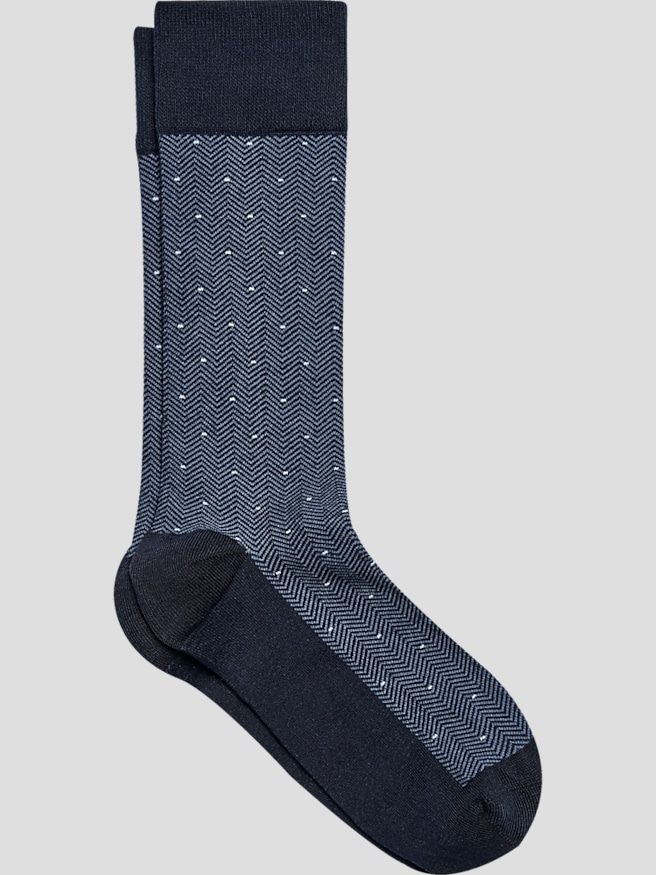
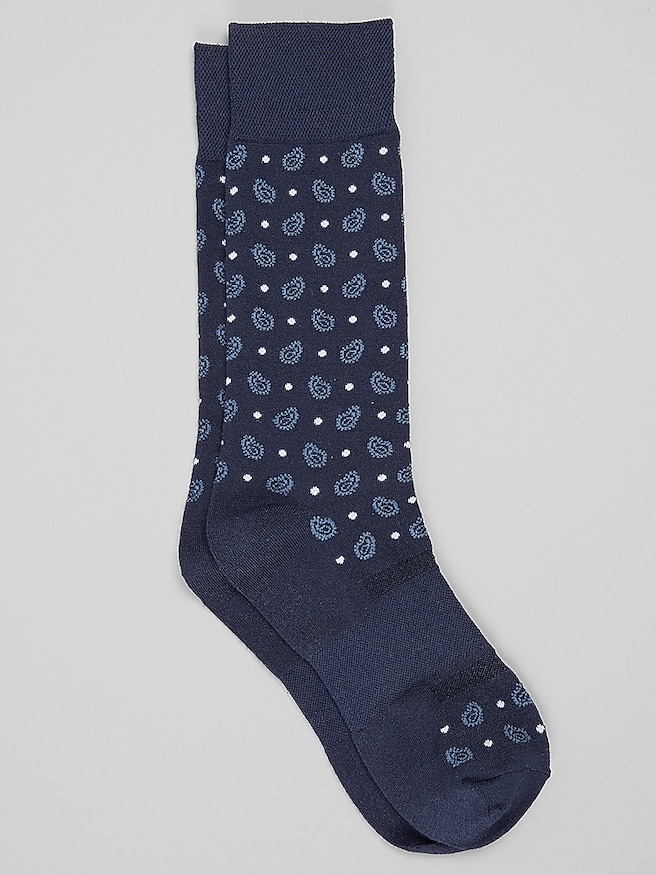
Men's sock fashion spans understated dress styles, bold patterns, retro-inspired athletic looks, and performance-minded fabrics such as merino wool blends. The right pair contributes more than a glimpse of color above a shoe: its height, texture, and weight help an outfit feel complete. Fine-gauge dress socks create a smooth line beneath tailored trousers and sit comfortably inside close-fitting leather shoes. Ribbed crew socks bring a more relaxed texture to chinos, denim, and sneakers, while athletic-inspired stripes add a familiar sporting detail without requiring an entire athletic outfit. Solid navy, charcoal, brown, and black provide a restrained foundation; burgundy, forest green, and muted blue offer color that still feels at home with classic menswear. Patterns range from small dots and narrow stripes to geometric designs and expressive motifs, with scale making a noticeable difference. A tiny repeat can read almost like a solid from across a room, while a large design becomes a visible accent when trousers lift at a desk or over crossed legs. Sock height also shapes the look. Over-the-calf styles provide extended coverage beneath suit trousers, crew lengths work across many everyday outfits, and ankle socks or no-show liners create less visible coverage with low-cut shoes. A no-show design should sit below the shoe opening without slipping beneath the heel; the cut of the shoe matters as much as the sock's name. For everyday combinations with denim, chinos, and relaxed footwear, Men's Casual Socks connect easygoing style with practical comfort. The distinction between casual and dress socks is not simply whether they have a pattern. Fabric thickness, surface texture, cuff construction, and overall length all influence how a pair looks and feels. A colorful, finely knit sock can complement tailoring, just as a plain ribbed crew can give sneakers a deliberate, finished appearance. These details make socks useful for expressing personality within an otherwise familiar wardrobe, whether the setting is an office, a wedding reception, or an unhurried weekend lunch.
Materials and construction determine much of a sock's comfort over a full day. Cotton is familiar for its softness and absorbency, making cotton-rich blends a common choice for everyday wear. Because cotton holds moisture, its performance depends partly on the fibers blended with it and the structure of the knit. Merino wool is valued for its fine feel, breathability, and ability to manage moisture, with a smoother texture than many people associate with traditional wool. Synthetic fibers serve distinct purposes: nylon can improve abrasion resistance, polyester can support moisture transport and drying, and elastane supplies stretch and recovery. Fiber percentages alone do not tell the whole story, since yarn quality, knit density, and construction also influence the finished sock. A light, smooth knit reduces bulk inside dress shoes, while cushioning under the heel and forefoot can soften contact during long stretches of standing or walking. Extra cushioning is most comfortable when the shoe has enough room for it; a thick sock inside an already snug shoe can create pressure rather than relief. Fit should follow the stated shoe-size range, with the heel pocket resting around the heel instead of bunching underneath or pulling toward the ankle. Toes need space to settle naturally, and seams should feel unobtrusive across the front of the foot. At the top, a well-fitting cuff holds its position without persistent pinching or repeated adjustment. Ribbing helps a sock flex with movement, while reinforced heels and toes can add durability in areas that receive repeated friction. For a commuter walking several blocks before spending hours at a desk, secure fit and a smooth interior may matter more than a dramatic pattern. For someone on their feet through a reception or presentation, a balanced combination of cushioning, breathability, and shoe compatibility can be especially useful. Performance-oriented details are worth considering for everyday use, not just exercise, but no fabric or feature replaces a comfortable fit inside the shoes being worn.
Color and pattern give men's socks an outsized role in an outfit built from relatively simple pieces. Socks close to the color of the trousers create visual continuity, particularly when seated, while a contrasting pair introduces a clear break between the hem and shoe. Navy trousers with deep blue socks feel cohesive without requiring an exact match. Gray tailoring can support burgundy or subtly patterned socks, and brown shoes pair naturally with earth-toned accents. Repeating a small color from a shirt, tie, or pocket square can make a patterned sock feel connected to the outfit rather than added at random. Exact matching is not necessary; a shared tone is often enough. With sneakers and casual trousers, a ribbed crew can become part of the silhouette, especially when the hem leaves a little of the sock visible. More expressive motifs work best when the wearer enjoys that detail and the occasion allows it, while understated textures offer personality in settings that call for restraint. Care matters just as much as coordination when socks are worn frequently. Following the care label helps protect the particular fiber blend, and washing with similar colors limits unwanted color transfer. Turning socks inside out can help expose the interior to cleaning and reduce friction against the visible surface. Excessive dryer heat may affect elastic fibers, so the recommended drying method deserves attention. Keeping toenails smooth, allowing footwear to dry between wears, and rotating pairs can also reduce avoidable wear. A thinning heel, persistent slipping, or stretched cuff signals that a pair is no longer delivering its original fit. Socks also make a practical birthday or graduation gift for a dad, brother, partner, or friend, especially when the style reflects what the recipient actually wears. Restrained solids suit someone building a professional wardrobe; distinctive patterns suit someone who treats accessories as a signature. The most useful choice balances that personal taste with the recipient's shoe size, preferred sock height, and everyday footwear, so the gift earns a place in regular rotation.