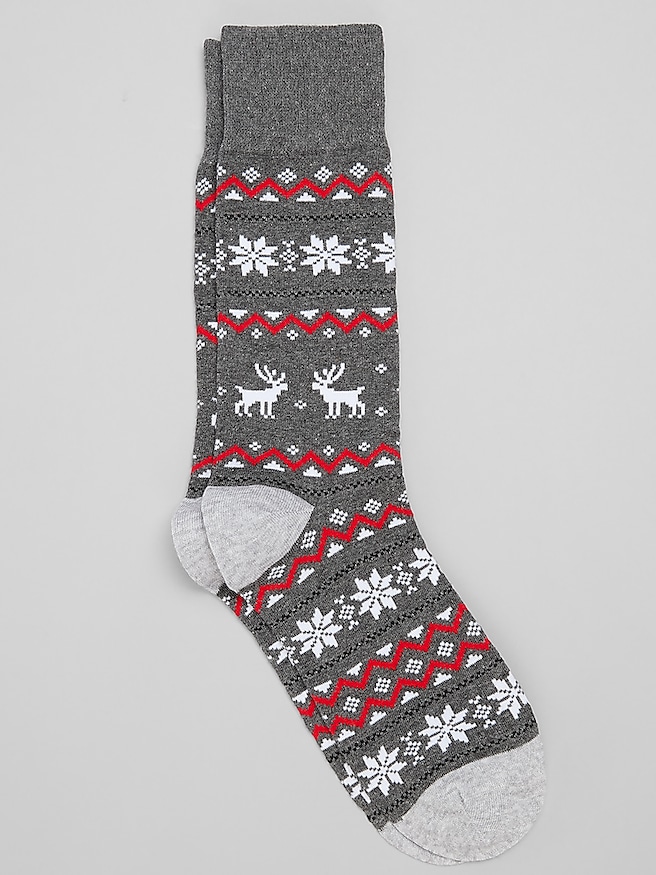
Men's casual socks are everyday essentials designed to sit comfortably inside sneakers, loafers, casual boots, and other relaxed footwear. Common styles include no-show, ankle, quarter, and crew socks, with each height offering a distinct balance of coverage and visibility. No-show socks sit below the opening of many low-cut shoes, creating a bare-ankle appearance while keeping a layer of fabric between the foot and the shoe. Their success depends on the shape of the shoe as much as the sock: a deeply cut loafer may reveal an edge that stays hidden inside a sneaker. Ankle socks provide a little more coverage around the shoe opening, while quarter socks extend just above the ankle. Crew socks reach farther up the lower leg, making them a natural companion to jeans, chinos, and casual boots. For someone moving from a morning commute to a relaxed office and then dinner with friends, the right sock height helps an outfit feel considered without looking overly dressed up. Solid navy, gray, black, and earthy shades blend easily with everyday pants, while stripes, small geometric patterns, and brighter accents add interest when a cuff lifts. A subtle pattern can connect the color of a shirt with the rest of an outfit; a stronger contrast can make simple sneakers and straight-leg jeans feel more personal. Ribbed textures offer another way to add detail without relying on bold color. The amount of sock on display also changes with pant length, seated posture, and the depth of the shoe opening. A crew style that appears understated while standing may become a visible part of the outfit at a desk or restaurant table. Casual socks work best when their height, texture, and overall thickness suit both the footwear and the day's plans, whether those plans involve neighborhood errands, a campus schedule, travel, or an afternoon spent catching up with friends.
Materials and construction shape how men's casual socks feel over hours of wear. Cotton is valued for its soft hand and familiar feel against the skin, and it is often blended with other fibers to improve stretch, shape retention, or resistance to abrasion. Cotton also absorbs moisture, so the overall fabric blend and knit structure matter for someone who spends much of the day walking. Merino wool has fine fibers and can help manage moisture, making it another option for everyday wear beyond traditional outdoor settings. Polyester and nylon can contribute durability and help fabrics release moisture, while small amounts of elastane or spandex give socks the stretch needed to follow the foot without becoming loose. Fiber percentages tell only part of the story: a dense, smooth knit can feel quite distinct from a thick, cushioned knit made with similar materials. Light cushioning takes up less room inside closer-fitting shoes, while additional padding under the heel and ball of the foot can soften the feel of repeated steps, provided the shoe has enough space. Too much fabric inside an already snug sneaker can crowd the toes and create pressure rather than comfort. A well-matched sock size places the shaped heel where it belongs and leaves the toe area smooth instead of stretched tight or folded underneath the foot. Size ranges are typically tied to shoe size, though the package's sizing details remain the best reference. Cuffs should stay in place without leaving an uncomfortable, persistent indentation, and low-profile toe seams can reduce noticeable bulk across the front of the foot. Reinforced heels and toes may help with wear in high-friction areas, but fit still matters: a sock that slides or bunches can rub repeatedly against both skin and shoe lining. For long stretches at a desk, frequent walks between buildings, or everyday errands, balanced stretch and a secure heel can matter as much as softness at the first touch.
The everyday usefulness of casual socks also depends on how well they hold their shape and how easily they fit into a regular laundry routine. Care instructions vary by fiber blend and construction, so the label should determine wash temperature, drying method, and any restrictions on bleach or fabric treatments. Turning socks inside out can help expose the interior to washing while limiting friction on the visible surface. A mesh laundry bag keeps smaller pairs together, especially low-cut styles that can disappear among larger garments. Excessive dryer heat can shorten the life of elastic fibers, and gentler drying methods may help preserve stretch when permitted by the care label. Socks should be fully dry before they go back into a drawer or onto the foot. Rotating pairs gives each one time to be washed and dried between wears, while keeping toenails smooth and checking shoe linings for rough spots can reduce avoidable snags. Thinning fabric beneath the heel, stretched cuffs, and toe seams that no longer sit flat are practical signs that a pair is losing its original fit. For shoppers placing extra emphasis on softness, cushioning, and an easy everyday feel, Men's Comfortable Socks offers a related category to consider alongside preferred sock heights and fabric blends. Casual socks can also make a thoughtful birthday, graduation, or thank-you gift for someone whose wardrobe leans toward sneakers, denim, and relaxed tailoring. Shoe size, usual footwear, and personal taste are more useful clues than an eye-catching pattern alone. Someone who wears understated chinos most days may appreciate muted solids or fine stripes, while a person who enjoys expressive accessories may welcome a brighter design. Whether chosen for a gift or an everyday rotation, the strongest match is a sock that sits neatly inside the shoe, feels comfortable through ordinary movement, and brings just the right amount of color or texture to getting dressed.