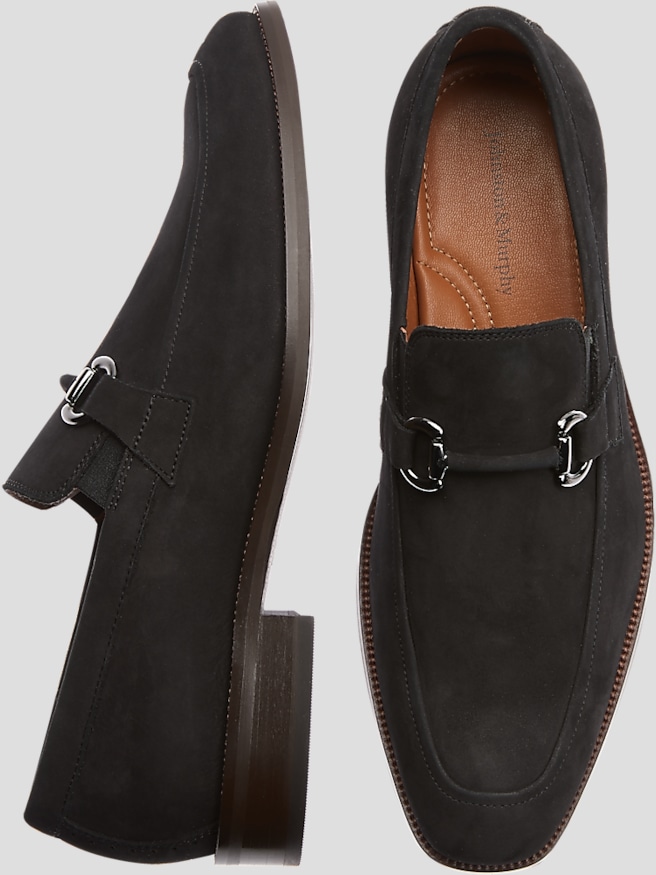
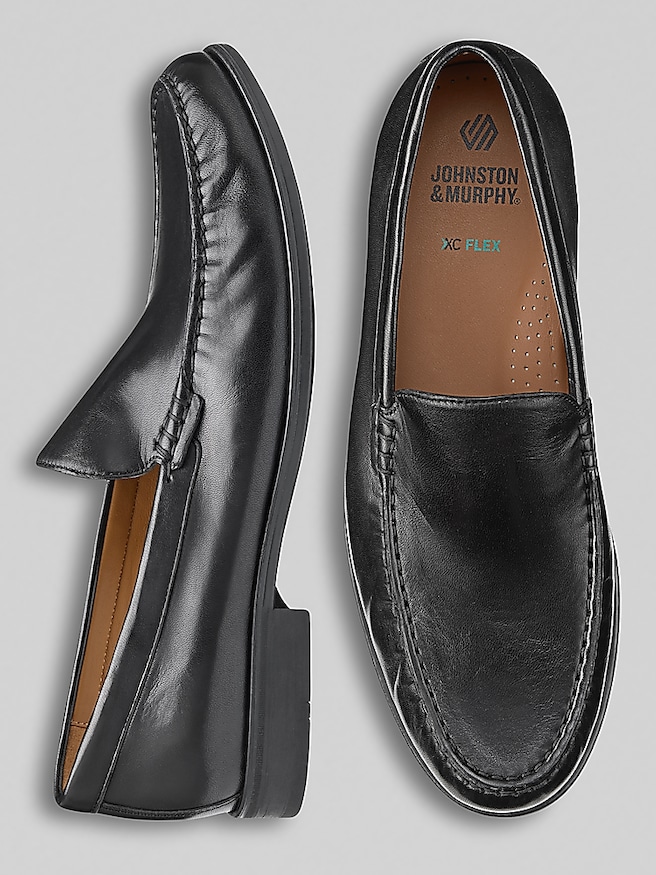
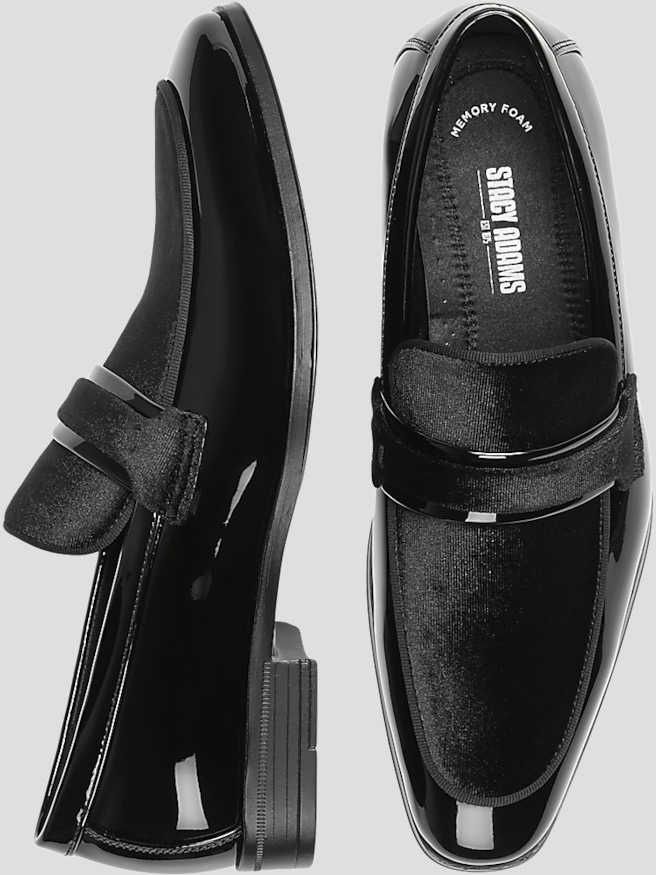
Men’s slip-on dress loafers combine a laceless design with the polished appearance of a dress shoe, making them a practical choice for office outfits, wedding guest attire, and smart-casual occasions. Unlike lace-up shoes, loafers rely on the shape of the upper and its fit across the instep to hold the foot securely. Their clean profile works especially well with trousers that have a slight break, allowing the shoe’s shape to remain visible without excess fabric bunching at the ankle. Penny loafers feature a strap across the top of the foot, while tassel styles add a more decorative finish. Metal detailing creates a stronger focal point, though the overall shape and material usually do more to determine how dressy a pair looks. A slim profile, restrained stitching, and a gently rounded or almond-shaped toe tend to complement tailored clothing. Broader shapes and heavier soles create a more relaxed impression. Smooth leather offers a crisp finish that pairs naturally with suits and dress pants, while suede introduces a soft, textured surface suited to less formal combinations. Patent leather has a high-gloss appearance associated with formal occasions, but an event’s dress code should determine whether a loafer is appropriate. Color also affects versatility: men’s black leather slip-on loafers provide a sharp foundation for charcoal trousers, gray suits, and other tailored looks. Brown shades bring warmth to navy, tan, and earth-toned clothing, while deep burgundy offers subtle contrast without an overly bright finish. A belt in a similar color family helps the outfit feel coordinated; an exact shade match is less important than a consistent level of formality. For a client presentation, understated leather loafers and dress socks keep the emphasis on the tailoring. For a dinner reservation or networking event, the same general silhouette can work with chinos and a sport coat.
Materials and construction influence how slip-on dress loafers feel through a full day of walking, standing, and sitting. Leather uppers can gradually conform to the foot, although thickness, finish, lining, and construction all affect flexibility. Full-grain leather retains its natural surface character, while other leather finishes may create a more uniform appearance. Neither a glossy finish nor a soft first impression alone establishes durability; sound stitching, secure sole attachment, and an upper that flexes comfortably are also meaningful details. Leather linings can help manage moisture, while textile and synthetic linings vary in breathability and feel. Underfoot cushioning may soften contact with hard floors, but it should not substitute for a suitable shape or enough room through the forefoot. Leather outsoles offer a traditional dress-shoe appearance and can feel firm initially. Rubber outsoles generally provide more traction, with flexibility and weight depending on their thickness and design. A low-profile rubber sole can preserve a tailored look without the bulk of a more casual shoe. Because loafers have no laces to adjust, fit deserves particular attention. The heel should feel secure, the instep should sit comfortably beneath the upper, and the toes should have room without sliding forward. A small amount of heel movement may occur with a stiff new sole, but repeated lifting or rubbing suggests that the size or shape needs reconsideration. Pressure across the toes, numbness, or pinching should not be treated as a normal break-in requirement. Leather may soften with wear, but a shoe should not need to stretch substantially to become wearable. Trying loafers with the socks intended for everyday use gives a more realistic sense of fit. Walking several steps and checking both feet can reveal issues that are easy to miss while seated. For someone moving between a desk, meeting rooms, and a reception, secure footing and comfortable flex matter as much as the view in the mirror.
Regular care helps dress loafers retain their shape and finish, especially when they are worn often with tailored clothing. Smooth leather benefits from having surface dust removed with a soft brush or cloth before a suitable conditioner or polish is applied according to the material’s care instructions. Conditioner helps maintain suppleness, while an appropriate polish can refresh color and improve the finished appearance. Excess product can leave buildup around seams and decorative details, so light applications are generally more useful than heavy layers. Suede needs a separate approach: a suede brush can lift the nap and remove loose dirt, while ordinary leather polish can flatten or stain its textured surface. Patent leather and coated finishes also call for material-specific care rather than a universal treatment. After wear, allowing shoes to air out before storing them helps manage moisture from the foot. Cedar shoe trees can help preserve the upper’s shape, and a shoehorn reduces strain on the heel when slipping a pair on. These small habits are particularly useful for loafers because a crushed heel can undermine the secure fit their laceless construction requires. Rotating between pairs gives linings and uppers time to dry naturally, while periodic checks for worn heel edges, thinning soles, and loose stitching can catch repair needs early. Some constructions permit resoling, but that depends on how the shoe is made and should not be assumed. Beyond daily use, dress loafers can make a thoughtful gift for a graduate starting an office job, a partner who enjoys tailored clothing, or someone whose calendar includes presentations and celebrations. A familiar size, preferred width, and an understanding of the recipient’s usual wardrobe make the choice more personal. For frequent suit wear, a restrained silhouette in smooth leather is often easier to coordinate than bold ornamentation. For someone who mostly wears chinos and button-down shirts, subtle texture or a slightly more relaxed shape may fit naturally into an established wardrobe.