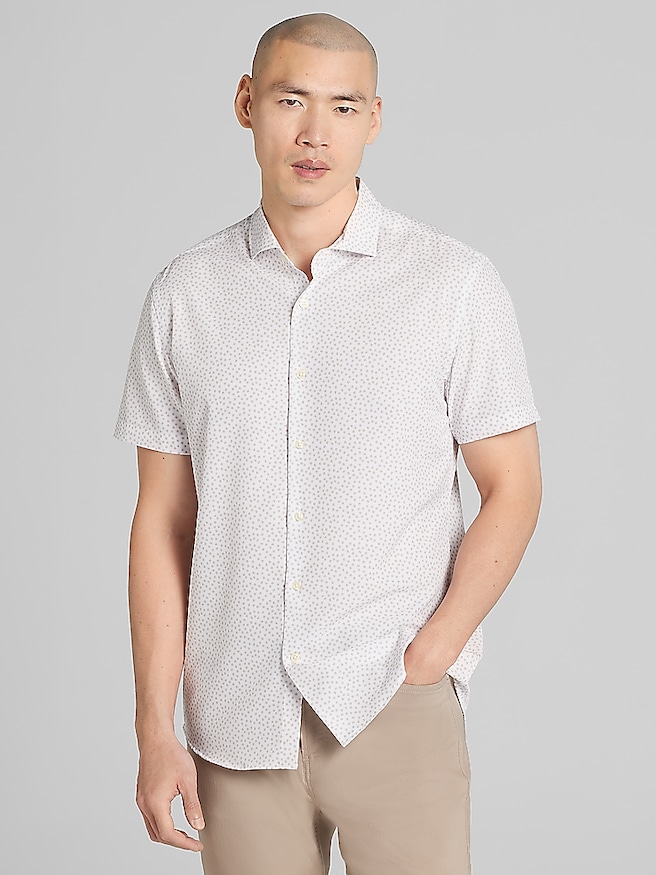
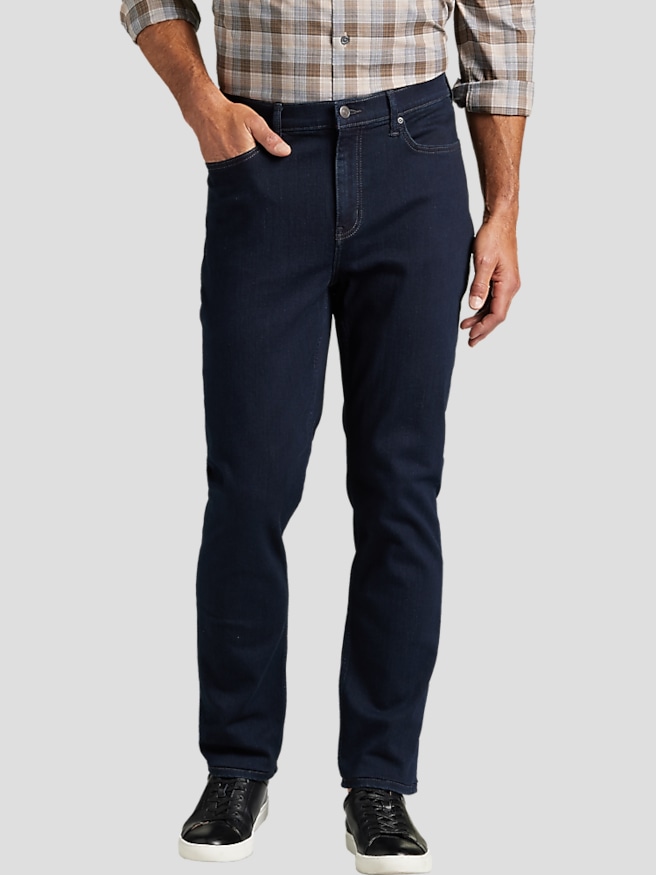
Men's slim fit work shirts combine a streamlined silhouette with the details that make a shirt feel appropriate for the office: a structured collar, a clean button front, and proportions that sit neatly beneath a jacket. Compared with classic fits, slim fits generally have less excess fabric through the chest, waist, and sleeves, creating a closer outline without the billowing that can gather above a waistband. The intended effect is tailored rather than tight. A well-proportioned shirt follows the body while leaving enough room to sit through a meeting, reach across a desk, or lift a bag onto a shoulder without pulling at the buttons. Fit varies by cut and fabric, so the slim label alone does not tell the whole story. Shoulder seams should sit close to the shoulder edge, the collar should fasten comfortably, and the front placket should lie flat rather than spread across the chest. Long sleeves should reach the wrist with the arms relaxed, with cuffs that stay secure without squeezing. For tucked-in office outfits, sufficient shirt length helps keep the hem in place when moving between a desk and a conference room. A shorter hem can work for untucked business-casual dressing, provided the proportions look intentional rather than unfinished. These differences matter to anyone building a professional wardrobe, whether that means dressing for a first full-time role, a client-facing position, or an established office routine. Slim fit is a shape preference, not a requirement tied to a particular age or body type. Someone with broader shoulders may need more chest room even when seeking a tapered waist, while another person may prefer a closer sleeve for a cleaner line under a blazer. The right balance leaves the shirt looking composed while allowing ordinary movement. In this context, work shirts serve professional and business-casual wardrobes; they should not be assumed to provide the protective features required for industrial tasks or specialized job sites.
Fabric gives a slim fit work shirt much of its character, influencing its drape, texture, ease of movement, and care requirements. Cotton is a familiar choice for its soft feel and breathability, with the weave making a noticeable difference in appearance. Poplin typically has a smooth surface that works well with tailored trousers and a suit jacket, while twill has a subtle diagonal texture and often a slightly fuller drape. Oxford cloth brings a more visible woven texture that feels at home with chinos and less structured office outfits. These are general characteristics rather than guarantees of weight or performance; the fabric composition and construction still matter. Cotton blends can combine a familiar hand feel with practical qualities such as easier care or improved shape retention, depending on the fibers used. Shirts containing elastane or another stretch fiber may provide additional give when typing, driving, or reaching, but stretch should support a comfortable fit rather than compensate for a shirt that is too small. Wrinkle-resistant and non-iron finishes can help reduce creasing, although neither means a shirt will remain perfectly smooth through every commute or long day. The care label remains the most reliable reference for washing, drying, and pressing. Promptly removing a washable shirt from the machine or dryer, smoothing the placket and cuffs, and hanging it neatly can help preserve a tidy appearance. Excessive dryer heat can contribute to shrinkage or affect stretch fibers, while pressing beyond the recommended setting can damage certain fabrics and finishes. Durability also depends on construction and everyday habits. Even stitching, secure buttons, and neatly finished seams are useful details to consider, particularly around cuffs and other frequently handled areas. Rotating shirts between wears gives each one time for laundering and helps distribute wear across a wardrobe. Treating collar and cuff marks according to the care instructions, before they become deeply set, can help keep regularly worn shirts looking presentable.
A practical rotation of men's slim fit work shirts can accommodate different office expectations without making every outfit feel identical. Solid white and light blue create a clear, understated foundation for tailored clothing, while pale stripes, small checks, and restrained textures introduce variation without overwhelming a jacket or tie. Pattern scale makes a difference: a fine stripe tends to read more quietly from across a meeting table than a large check, and a textured solid adds interest without adding another color to coordinate. A spread or point collar can frame a tie neatly, depending on the collar's proportions and the knot, while a button-down collar offers a more relaxed character. For offices where an open collar is the norm, men's slim fit button down shirts pair naturally with chinos, flat-front trousers, and unstructured jackets. The rest of the outfit helps establish the level of formality: dark tailored trousers and polished shoes feel more businesslike, while softer construction and a subtly textured shirt suit a less formal workplace. Under a jacket, a closer-fitting sleeve reduces bunching, and a smooth back helps the layers settle cleanly. Beneath a knit sweater, a slim fit can also limit excess fabric around the waist without requiring the shirt itself to feel restrictive. These shirts can move beyond the usual workday to networking events, interviews, presentations, and dinners where a neat appearance is welcome. For travel, fabric recovery and clear care requirements may matter as much as the initial finish, especially when a shirt needs to emerge from a garment bag looking orderly. As a gift for someone starting a new role or refreshing a professional wardrobe, a work shirt is most useful when the recipient's measurements, preferred fit, and workplace expectations are known. Across these settings, the strongest choices balance a flattering outline with manageable care and enough comfort for a full day's routine.