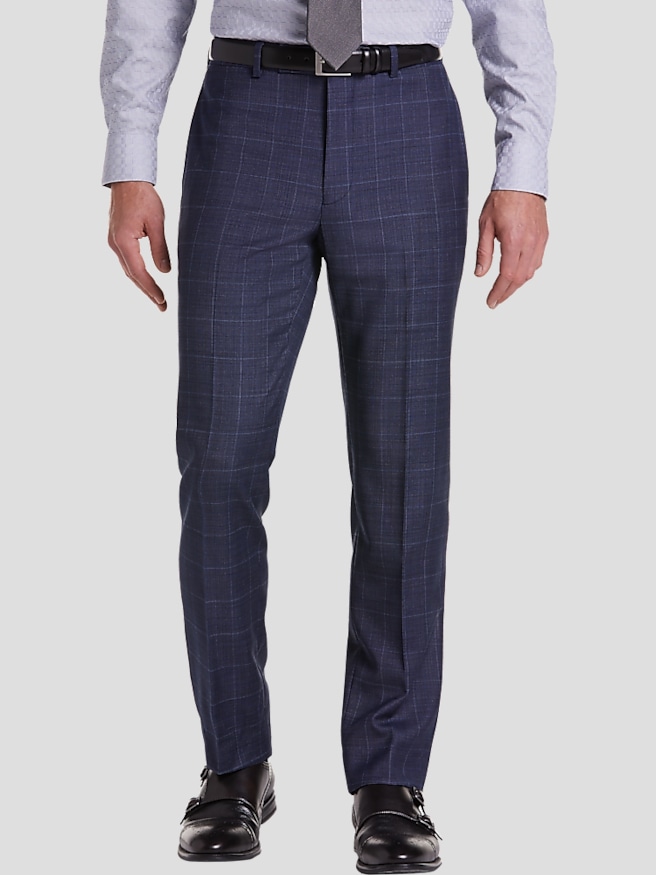
Men's slim fit pleated trousers combine extra room at the front waist with a streamlined leg, bringing together the ease of a traditional pleated cut and the cleaner outline of modern tailoring. The pleats are folds of fabric that provide room to expand through the hips and upper thighs when sitting, walking, or taking the stairs. A slim fit keeps that allowance from becoming excessive volume through the knee and lower leg. The result is a trouser shape that can feel comfortable through a long meeting while still looking neat when standing for a presentation. Single pleats create a relatively restrained front, while double pleats introduce more fullness and a more pronounced tailored appearance. Neither detail determines the fit on its own; rise, seat, thigh width, and leg opening all affect how the trousers sit. A waistband positioned at or near the natural waist often gives pleats room to fall smoothly, although the appropriate position depends on the garment's intended rise and the wearer's proportions. At rest, the pleats should lie reasonably flat rather than pull open, and the pockets should sit close to the body without flaring. Some movement in the folds while seated is normal and part of their purpose. For an athletic build, the combination of a roomier upper leg and a narrower hem can offer a useful middle ground between close-fitting flat-front pants and fuller traditional trousers. Slim does not need to mean tight: fabric stretched across the seat or caught around the calves can interrupt the drape that makes this silhouette appealing. Trouser length matters, too. A slight break over the shoe gives a familiar dress-pant finish, while little or no break emphasizes the taper. The best balance leaves enough length for a clean line without a stack of fabric at the ankle, with the hem considered alongside the shoes most often worn.
Fabric gives slim fit pleated trousers much of their character, influencing everything from the sharpness of the folds to the way the legs move. Wool and wool-blend fabrics often provide fluid drape and a polished surface suited to dressier settings. A finer, smoother weave can look particularly crisp with a tailored jacket, while a more textured cloth adds depth to a simple shirt-and-trouser combination. Cotton generally has a more relaxed appearance, and cotton twill can provide structure that makes the pleats visible without looking overly formal. Linen brings a distinct texture and a less rigid finish; its natural creasing is part of the fabric's appearance rather than necessarily a sign of poor fit. For a closer look at that fabric in a similarly streamlined shape, men's slim fit linen trousers offer a related direction. Blended fabrics may combine the qualities of several fibers, and a small amount of stretch can add flexibility, though stretch alone does not replace adequate room in the seat and thighs. Fabric weight, weave, and finishing also influence durability, so fiber content tells only part of the story. Neatly finished seams, secure closures, and pockets that lie smoothly contribute to trousers that look considered inside and out. Care should follow the garment label, especially when the fabric includes wool, a lining, or a finish that requires professional cleaning. Washable trousers still benefit from the recommended cycle and drying method; excess heat can affect dimensions and damage some stretch fibers. Between cleanings, allowing trousers to air out and hanging them neatly can help preserve their shape. A fabric-appropriate brush can lift surface dust, and careful pressing can restore definition without flattening the pleats in the wrong direction. Persistent shine, puckering, or distortion is a reason to reassess heat and pressure rather than press harder. Thoughtful care helps maintain both the fabric and the distinctive lines of the cut.
The appeal of men's pleated slim fit trousers extends beyond a matching suit. With a tucked-in dress shirt and leather lace-up shoes, they create a composed foundation for office days, interviews, client meetings, and business dinners. The pleated front adds visual interest even when the rest of the outfit stays simple. A shirt that has enough room to move without billowing over the waistband lets that detail remain visible, while a belt of moderate width keeps the waistline balanced. For trousers designed with side adjusters, the waistband can look especially clean without a belt. A softly structured sport coat brings another layer of tailoring, but the jacket and trousers do not need to match; contrast in color or texture can make separate pieces look intentional. Charcoal, navy, and medium gray work easily with a range of shirts, while tan or brown can create a less formal impression. A fine-gauge knit or an understated polo offers another approach for a dinner reservation, a gallery visit, or a workplace with a relaxed dress code. Loafers reinforce that easier mood, while polished oxfords lean dressier. For weddings and other celebrations, the invitation's dress code remains the deciding factor: pleated dress trousers can suit many tailored outfits, but they are not a substitute for required formal attire. Their versatility also makes them a thoughtful gift for a graduate starting a professional wardrobe or someone whose routine includes regular occasions to dress up. Waist size alone may not establish the right fit, so knowing the recipient's usual rise, inseam, and preferred room through the thigh is useful. Alterations may refine the hem or waist, depending on construction, but they cannot reliably correct every mismatch in proportion. A comfortable waistband, smooth seat, and uninterrupted leg line provide the strongest foundation for trousers that feel as appropriate at a desk as they do across a dinner table.