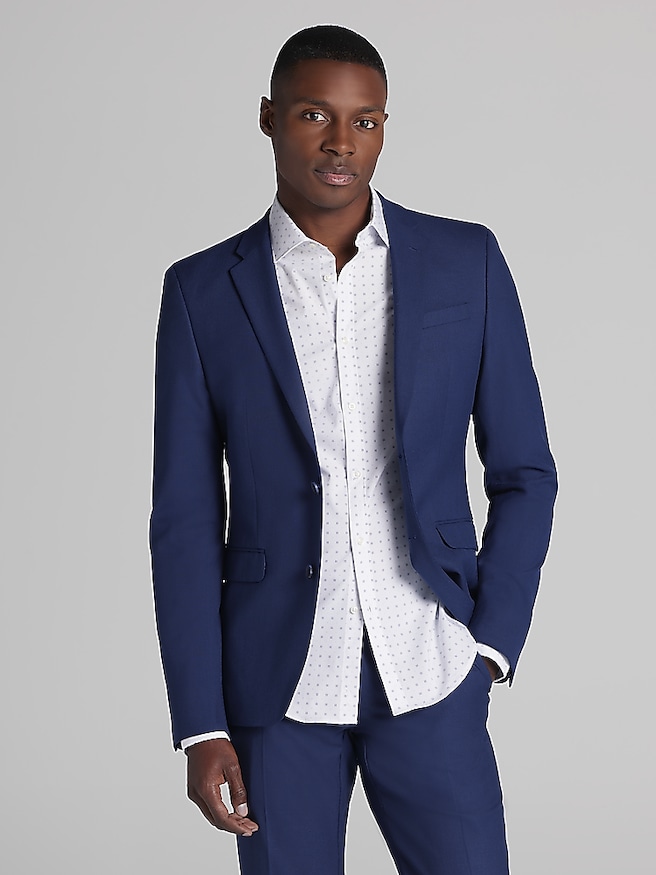
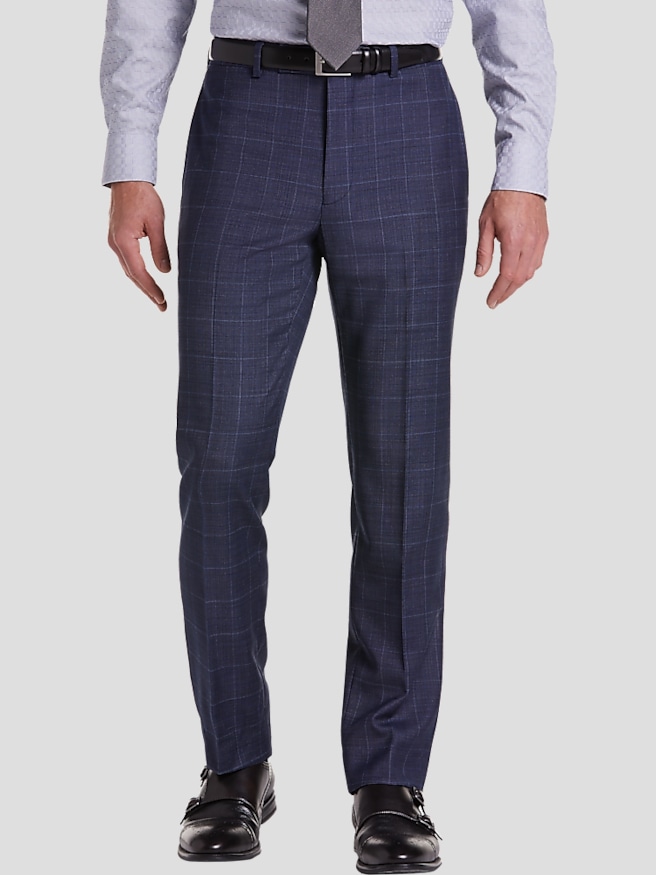
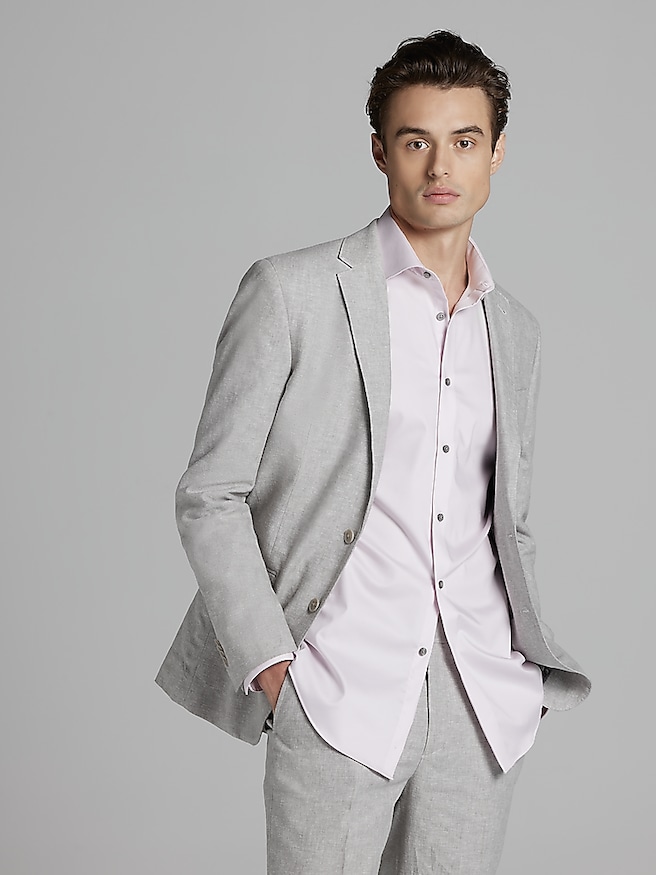
Men’s slim-fit matching suits pair a tailored jacket with trousers in the same fabric, color, and pattern for a coordinated look from shoulder to hem. Their defining feature is a closer silhouette: a jacket shaped through the torso and trousers that narrow through the leg without needing to feel tight. The appeal of Slim Fit Men's Suits is that balance of clean lines and everyday wearability. A matching suit creates an intentional appearance for a job interview, a client presentation, a wedding, or an evening celebration, with less guesswork than combining separate jackets and pants. Fabric matters here as much as color. Two navy pieces can look similar on separate hangers yet reveal contrasting undertones, textures, or sheen when worn together. Matching suit pieces are designed to work as a complete outfit, giving the finished look visual continuity. Navy and charcoal lend themselves to business settings and milestone events, while medium gray creates a slightly lighter visual impression without losing its tailored character. Black has a crisp, understated presence for occasions where a dark suit fits the dress code, though it does not replace a tuxedo when black tie is required. Subtle stripes, checks, and textured weaves add interest while maintaining that coordinated effect. A fine pattern often reads almost like a solid from across a room, then becomes more noticeable in conversation or close-up photographs. The same suit can also take on a distinct character through its finishing details. A white dress shirt, restrained tie, and polished leather shoes create a traditional presentation; a pale blue shirt or textured tie introduces personality without competing with the tailoring. For wedding parties or other coordinated groups, matching fabric and color help establish a cohesive appearance, while individual alterations allow each person to wear the silhouette comfortably.
Slim fit describes the cut of a suit, not the body type of the person wearing it, and the proportions can vary among designs. A well-balanced slim-fit jacket follows the chest and waist without pulling across the front, while its shoulders sit smoothly rather than extending conspicuously beyond the natural shoulder line. The collar should rest close to the shirt collar, and the lapels should lie flat when the jacket is buttoned. These details become especially noticeable during ordinary moments: reaching across a conference table, greeting guests, or sitting through a ceremony. Trousers need enough room through the seat and thighs for sitting and walking, even when the lower leg has a pronounced taper. A narrow leg opening can create a neat line over dress shoes, but excessive tightness at the calf may cause the fabric to catch instead of falling smoothly. Jacket length, sleeve length, and trouser hems all contribute to the final proportions; slim does not have to mean unusually short. Materials influence that fit and feel just as much as the cut. Wool is valued in suiting for its drape, breathability, and natural resilience, helping a tailored silhouette look defined without appearing rigid. Wool blends combine those qualities with characteristics contributed by other fibers, while fabrics containing a modest amount of stretch can provide additional give during movement. Stretch does not compensate for a suit that is too small, but it can make a close-fitting shape more comfortable. Cotton offers a comparatively relaxed, matte appearance, and linen brings visible texture and a naturally creased character. A smoother weave tends to look more formal, while a textured weave creates depth without relying on a bold pattern. Fabric weight, lining, and internal structure also affect how a jacket hangs. Clean seams, secure buttons, neatly finished edges, and lining that moves without binding are useful signs of careful construction, particularly for a suit intended for frequent wear.
The value of a matching slim-fit suit extends beyond its first occasion. A graduate may wear one for commencement photographs, interviews, and the first months of a professional role; a wedding guest may return to the same suit for anniversary dinners, ceremonies, and other celebrations. Someone who wears tailoring regularly may appreciate a restrained color and subtle fabric texture that work with several shirt-and-tie combinations. For someone who dresses formally less often, a versatile matching suit can make an important invitation feel easier to prepare for. It can also be a thoughtful milestone gift when the recipient’s measurements, preferred silhouette, and dress requirements are known, especially if there is time for a fitting before the event. Both jacket and trouser proportions matter, since a familiar jacket size alone does not establish how the complete suit will feel. Long-term appearance depends on sensible care as well as initial fit. The care label remains the starting point because fiber content, lining, and construction can require distinct cleaning methods. Many tailored suits call for professional dry cleaning rather than machine washing, and cleaning only as needed can help limit unnecessary wear. A broad, supportive hanger helps preserve the jacket’s shoulder shape, while trousers benefit from being hung neatly rather than left folded over a chair. Allowing the fabric to air between wears and gently brushing away surface dust can keep the suit looking fresh without treating every outing as a reason for cleaning. Heavy objects in jacket or trouser pockets can distort the close silhouette, so keeping those pockets lightly loaded helps maintain the intended lines. When professional cleaning is needed, having matching pieces cleaned together helps reduce uneven changes in appearance over time. Small repairs, such as securing a loose button or addressing an opening seam, are worth handling before they become larger problems. With appropriate care and a fit that permits natural movement, a slim-fit matching suit offers a polished, repeatable outfit for occasions that call for more than everyday clothing.