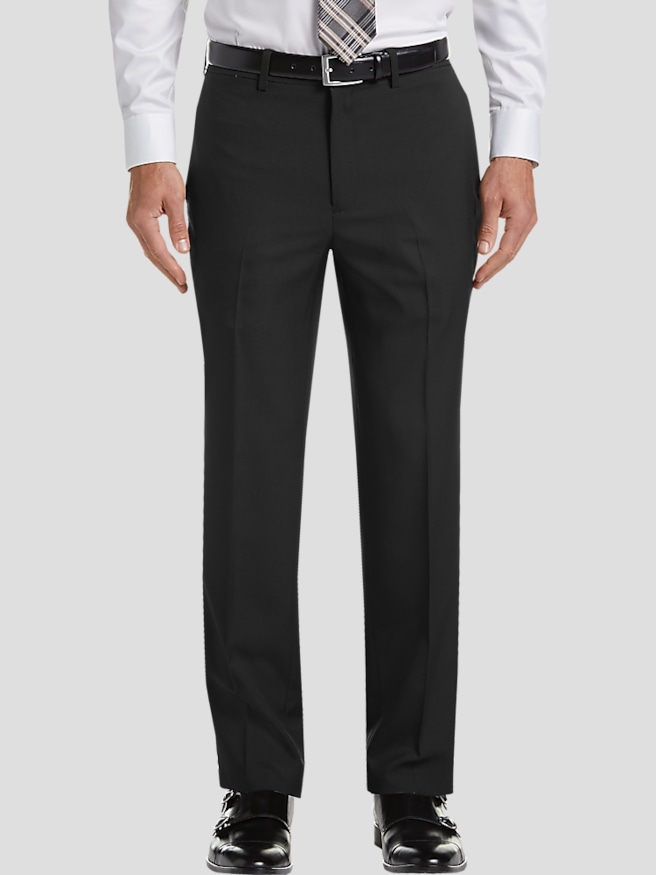
Men’s slim fit black tuxedo pants are formal trousers with a streamlined silhouette, typically shaped closer through the seat and thigh before tapering toward the ankle. Their defining details often include a clean front, a sharply pressed crease, and satin or grosgrain trim along the outside leg seam, although construction varies by style. That combination separates tuxedo trousers from everyday black dress pants: the proportions are tailored, while the finishing details are intended to complement a tuxedo jacket. They suit occasions such as weddings, black-tie dinners, galas, and formal performances, whether worn by a groom, a guest, or someone stepping onto a stage. A slim fit should follow the body without clinging to it. The waistband should remain comfortable when seated, the pockets should lie flat, and the fabric across the front should hang smoothly rather than pull into horizontal lines. Enough room through the seat and thighs matters just as much as a narrow leg opening, especially during a long reception that moves from dinner to dancing. Rise also affects the finished look. A waistband that sits securely at a comfortable height helps a tucked formal shirt stay neat and keeps the proportions balanced beneath a buttoned jacket. At the hem, a slight break or a clean, nearly unbroken line can work well with the tapered shape, depending on the trouser length and the shoes. Excess fabric bunching over the instep can obscure that shape, while a hem cut too high can expose more sock than intended when standing. Measurements provide a useful starting point, but the way the trousers move is equally important. Sitting down, taking a full stride, and bending a knee reveal whether the fit has enough ease for the occasion. The result should look precise in photographs and feel natural during the hours between them, rather than requiring constant adjustments to the waistband or legs.
Fabric helps determine how black slim fit tuxedo pants drape, feel, and hold their shape. Wool and wool blends can create a smooth, fluid line with natural resilience, making them useful for tailored formalwear that needs to remain polished through extended wear. Polyester blends can contribute durability and wrinkle resistance, while rayon, including viscose, can add softness and a supple drape. A small amount of elastane or spandex may provide stretch for movement through the hips and knees. Stretch is helpful, but it is not a substitute for the right size; fabric that remains stretched tight while standing usually needs more room. The overall weave and construction matter alongside fiber content. A densely woven cloth can produce a crisp crease, while a softer fabric may fall more gently over the shoe. Satin is a weave rather than a single fiber, and its reflective surface creates a subtle contrast against the body of the trousers. Grosgrain has a ribbed texture and a more restrained sheen. Either finish should coordinate with the jacket’s lapel facing for a cohesive appearance. Interior details also influence comfort and longevity: secure stitching, neatly finished seams, a stable waistband, and a smooth closure help the trousers maintain their shape through repeated wear. Care should follow the garment label, especially when the main fabric and decorative trim have different requirements. Some formal trousers require professional dry cleaning, and direct heat can mark delicate finishes. Between occasions, allowing the trousers to air out and hanging them neatly along their crease can reduce unnecessary wrinkling. A padded clamp hanger or a suitable trouser hanger helps avoid hard fold lines. Before storage, stains deserve prompt attention according to the care instructions rather than vigorous rubbing, which can disturb the fabric surface. Empty pockets also help preserve the clean outline and keep keys or other hard objects from stressing the cloth.
The strongest formal combinations treat the trousers and jacket as parts of the same outfit rather than separate black garments. Black fabrics can differ in undertone, texture, and sheen, so pieces that seem identical on separate hangers may look noticeably mismatched together. Coordinating fabric and trim creates a more consistent finish, particularly under event lighting and in photographs. A white formal shirt, black bow tie, and polished black formal shoes provide a traditional foundation, while a suitable waist covering can keep the shirt from showing between the waistband and jacket. Many tuxedo trousers are designed without belt loops and may use side adjusters or accommodate suspenders instead; the waistband construction determines which approach works best. Socks that blend with the trousers maintain an uninterrupted line when seated. Keeping bulky objects out of the pockets also preserves the slim silhouette, especially with lighter, more fluid fabrics. For occasions that call for tailored black trousers without tuxedo detailing, Black Slim Fit Pants offer a related direction, while tuxedo pants remain the more specifically formal choice. The distinction matters when an invitation specifies black tie: a narrow cut alone does not make an ordinary pair of dress pants part of a tuxedo. For wedding parties, consistency in fabric, trim, and hem proportions helps the group look coordinated without requiring every person to wear the same size or rise. For someone who attends formal events regularly, comfort and dependable construction can matter as much as the first impression. Tuxedo trousers can also be a thoughtful gift for someone building a formal wardrobe, provided the waist, inseam, preferred fit, and intended jacket are known. Leaving time for any necessary alterations helps turn accurate measurements into a polished result. Well-chosen men’s slim fit black tuxedo pants bring together a clean profile, comfortable movement, and finishing details that belong to the occasion, creating a foundation that supports the entire formal outfit without competing with it.