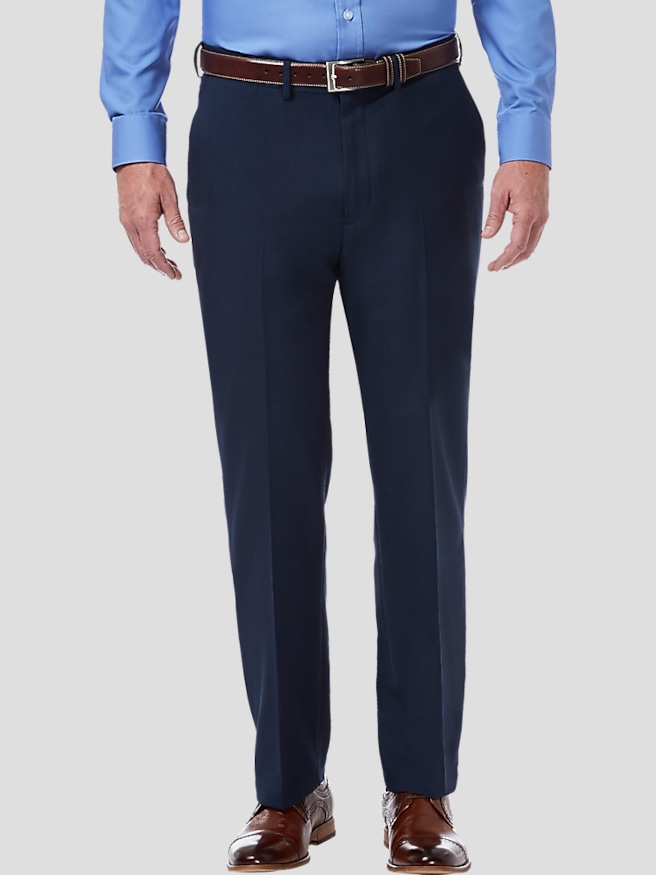
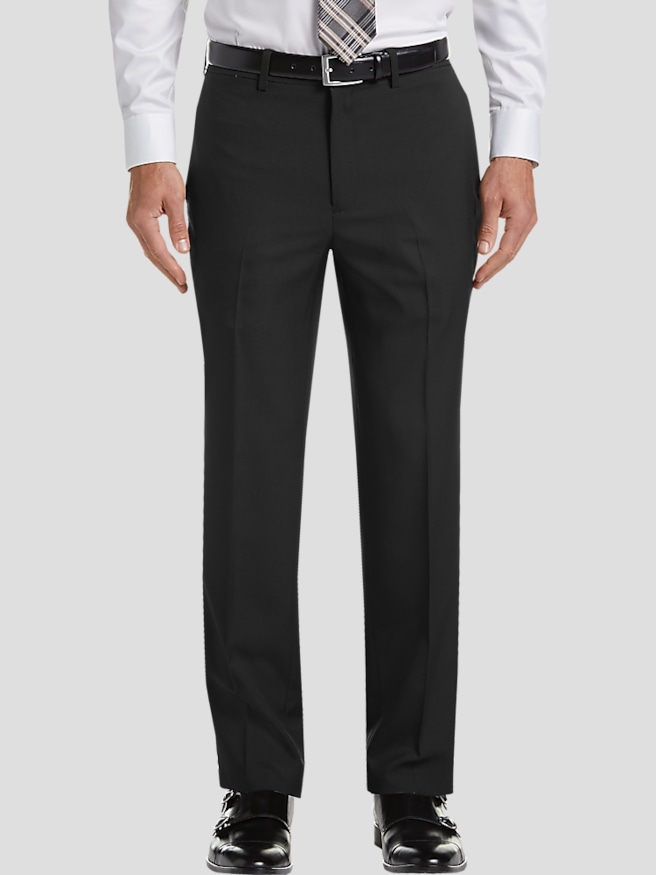
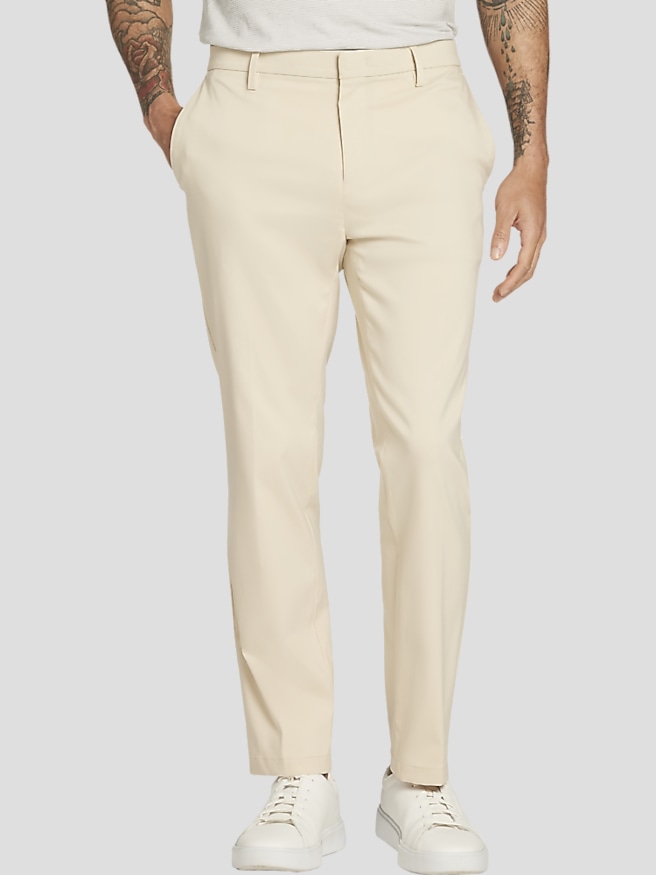
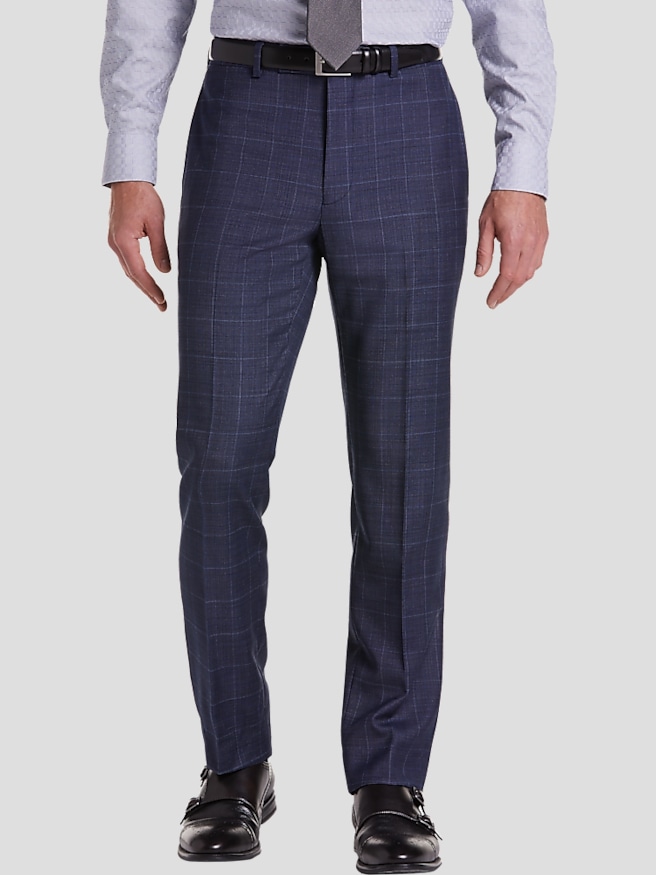
Men’s slim fit black khaki pants combine the easygoing character of cotton twill with a cleaner, closer-cut silhouette. In this context, “khaki” describes a familiar style of casual trouser rather than a tan color: black khakis have the understated appearance of chinos, with a dark finish that works across a wide range of outfits. They occupy useful ground between jeans and dress pants, looking polished enough for many business-casual workplaces without feeling overly formal at a neighborhood restaurant or a weekend gathering. A slim fit generally follows the seat and thigh more closely than a classic fit, then narrows toward the ankle, although the exact shape varies by construction. The result should look streamlined rather than restrictive, with enough room to sit comfortably, climb stairs, and move through a full day. Black gives that silhouette a crisp outline, especially alongside a white Oxford shirt, a fine-gauge knit polo, or a softly structured jacket. A tucked-in button-down and leather loafers create a neat office combination; a clean T-shirt and low-profile sneakers make the same trouser style feel relaxed. For occasions that call for a jacket but not a matching suit, black khakis can provide a simple foundation beneath textured tailoring. Their versatility also comes from the way black works with navy, gray, cream, olive, and muted earth tones, allowing changes in shirts and shoes to do most of the styling work. The appeal of Black Slim Fit Pants is that a narrow silhouette and neutral color can support many outfits without becoming the focus of every one. In a khaki or chino construction, that balance feels particularly approachable: sharp enough to show intention, relaxed enough for everyday wear. For someone who prefers a small, practical wardrobe, this combination can make getting dressed simpler while leaving plenty of room for personal style through texture, layering, and footwear.
Fabric and construction shape how slim black khakis feel as much as their cut does. Cotton twill is a common foundation, recognizable by its subtle diagonal weave and familiar, substantial hand. Depending on the fabric’s weight and finish, it can feel softly broken-in or more structured, with enough body to hold a clean line through the leg. A small amount of elastane or spandex can add give at the knees, hips, and waistband, which is especially useful when the silhouette sits close to the body. Blends that include synthetic fibers may offer additional shape retention or easier care, but stretch, wrinkle resistance, and softness are separate qualities rather than interchangeable promises. Fabric recovery matters, too: a comfortable pair should flex with movement without quickly becoming loose at the knees or seat. A smooth, tightly woven surface tends to look more refined, while a washed finish can give black a softer, more casual appearance. Fit begins at the waist, where the waistband should sit securely without pinching or relying on a tightly cinched belt. Rise affects both comfort and proportion; a mid-rise shape often provides a balanced starting point, while other rises may suit individual preferences. Through the seat and thighs, slim should mean close rather than compressed. Horizontal pulling near the pockets, a strained fly, or fabric that catches at the calves can signal that the proportions are too narrow. Men with fuller thighs may find that a little extra room above the knee creates a better slim silhouette than sizing down for a tighter leg. At the hem, a slight break or a clean finish near the top of the shoe keeps excess fabric from collecting around the ankle. Neat stitching, securely attached buttons, smooth zipper operation, and reinforced areas of stress are useful construction details, particularly for pants expected to handle repeated wear. Pocket placement matters as well: pockets that lie flat help preserve the clean profile, while carrying a bulky wallet or phone can interrupt an otherwise balanced fit.
Black slim fit khakis are especially useful for days with more than one setting on the schedule: a morning at a desk, lunch outside the office, and dinner afterward can all call for slightly different levels of polish. Their casual twill character makes them comfortable alongside everyday shirts, while their dark color helps an outfit feel considered without requiring dress-trouser formality. They can also suit a campus presentation, a casual date, a family gathering, or a workplace with a relaxed dress code. The distinction matters for more formal occasions, where black khakis are not a substitute for suit trousers simply because the color matches. Footwear and finishing details help establish the intended mood. Suede loafers and a knit shirt soften the look, while polished leather shoes, a tucked shirt, and a coordinated belt give it more structure. Keeping black fabric looking rich takes some attention, particularly because lint, pale detergent residue, and fading can be more noticeable against a dark surface. The care label should determine the cleaning method; when machine washing is permitted, turning pants inside out, washing with similar dark colors, and using cool water can help limit unnecessary wear. Avoiding excessive detergent and high dryer heat can also help protect the finish and support fabric recovery. Promptly hanging or folding pants after cleaning reduces avoidable creasing, and a garment brush or lint roller helps restore a tidy appearance between wears. Pressing requirements depend on the material, with lower heat often necessary for blends containing stretch fibers. For gifting, these pants make the most sense when the recipient’s waist, inseam, and preferred fit are already known, since a slim cut leaves less room for guesswork through the thighs and calves. Whether worn for work or off-duty plans, the strongest choice balances a clean outline with freedom of movement, durable construction, and care requirements that fit naturally into an everyday routine.