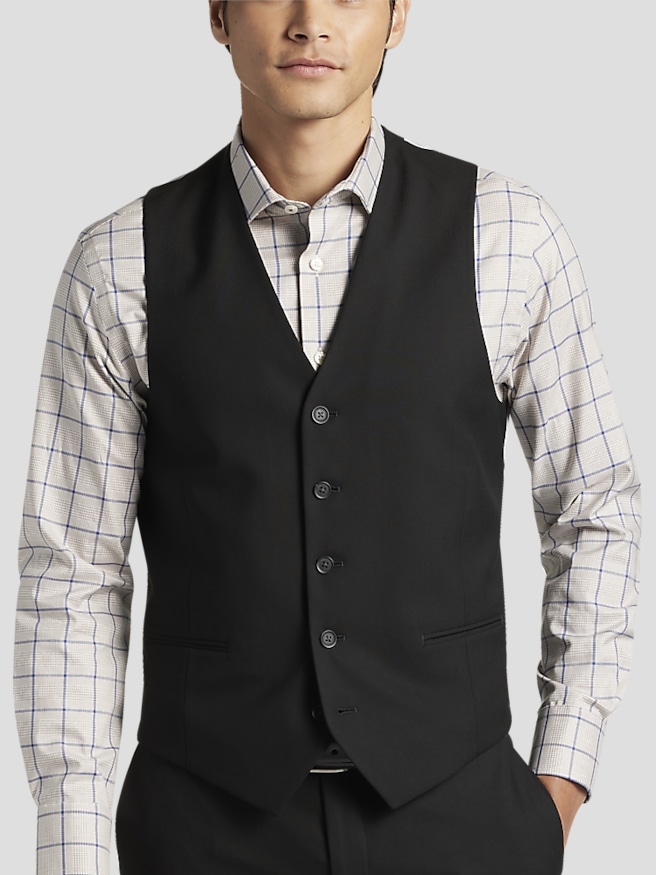
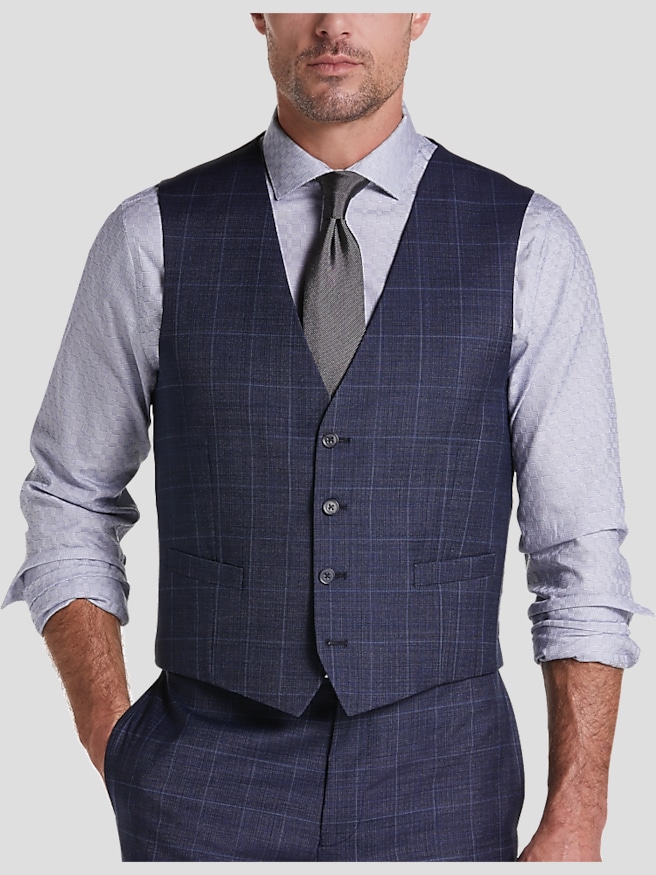
Men’s sleeveless vests add shape, texture, or coverage through the torso while leaving the arms free to move. The category includes tailored dress vests, knit sweater vests, and casual zip-front layers, each with a different role in a wardrobe. A dress vest, also called a waistcoat, creates a defined silhouette over a button-front shirt and can form part of a three-piece suit. A sweater vest brings a softer finish to a collared shirt or fine-gauge knit, while an unstructured woven or quilted vest lends itself to more relaxed outfits. Sleeveless undershirts and athletic tanks serve a different purpose: they sit close to the skin or function as workout tops rather than providing the structured appearance of a traditional vest. That distinction matters when choosing something for an office presentation, a wedding reception, a dinner out, or a casual afternoon. For tailored dressing, a V-shaped neckline frames the shirt and tie, and the front panels create a continuous line toward the trouser waistband. Matching the vest and trousers gives an outfit a coordinated foundation; contrasting them makes the vest a more visible part of the look. A charcoal vest over a crisp white shirt reads differently from a textured knit over an open collar, even when both are paired with neatly pressed trousers. Details such as lapels, a straight or pointed hem, welt pockets, and the number of buttons influence how formal the result feels. Low-profile pockets and restrained stitching tend to look dressier, while patch pockets, exposed zippers, and pronounced quilting suggest everyday use. For another view of this versatile category, Cool Men's Vests offers a related starting point for considering personal style. The most useful choice is one that works with the shirts, pants, and shoes already worn regularly, whether that means a sharp waistcoat for celebrations or a simple knit layer for a less structured dress code.
Fabric and construction determine much of how a sleeveless vest looks, moves, and holds its shape. Wool and wool-blend suiting fabrics can provide a clean drape with subtle surface texture, making them a natural fit for tailored outfits. Cotton brings a familiar hand to woven and knit styles, although its weight and weave affect whether it feels crisp, soft, or substantial. Fine-gauge knits generally sit more smoothly beneath a jacket, while heavier stitches add visible texture and require more room in an outer layer. Polyester and other synthetic fibers may contribute wrinkle resistance, strength, or easier maintenance, but those qualities depend on the fabric blend and construction rather than the fiber name alone. A small amount of stretch can make reaching or sitting more comfortable, though it cannot compensate for a vest that is too tight. Lining also changes the experience: a smooth interior helps a tailored vest settle over a shirt without catching, and a contrasting back panel can make the look less uniform when the jacket comes off. Fit deserves equal attention. Shoulder seams should sit close to the natural shoulder edge, and armholes should allow movement without exposing excessive shirt fabric or pressing into the underarm. On a button-front dress vest, the chest should lie flat and the buttons should close without pulling the fabric into horizontal lines. The neckline should rest against the shirt rather than bow away from it. A traditional tailored vest usually reaches far enough to cover the trouser waistband, preventing a strip of shirt from showing between the two when standing naturally. An adjustable back strap can refine the waist, but it should not have to cinch substantial excess fabric. Knit and casual vests can have a little more ease, especially over an Oxford shirt or substantial knit top. Trying the vest with its intended underlayer, then sitting, reaching forward, and checking the side profile, gives a more useful picture of fit than standing still with arms at the sides.
A well-chosen vest can simplify dressing for several settings without making every outfit feel the same. For a business meeting, a tailored vest with flat-front trousers and a neatly fitted shirt creates definition without relying on a jacket throughout the day. At a wedding, coordinating the vest with the suit keeps the proportions consistent, especially when the jacket is removed for dinner or dancing. A sweater vest over a button-down collar feels less ceremonial and works with chinos, loafers, or understated lace-up shoes. With casual zip-front styles, leaving enough space for the layer underneath helps the front hang cleanly instead of bunching around the waist. Keeping shirt sleeves tidy and avoiding bulky fabric at the armholes makes any of these combinations look more intentional. Durability comes from both construction and routine care. Secure buttons, even seams, reinforced pocket openings, and knit edges that recover after gentle stretching are useful details to examine. Pockets should hold small essentials without distorting the front; a heavy phone or an overfilled wallet can pull a slim vest out of shape. Always follow the care label, since a washable fiber does not necessarily mean the finished garment can go into the washing machine. Linings, interfacing, trims, and blended yarns may require a different cleaning method. Tailored vests benefit from a suitable hanger that supports the shoulders, while sweater vests are generally better folded to limit stretching. Addressing a loose button or small seam opening early helps prevent a minor repair from becoming more involved. For gifting, a sleeveless vest can suit someone building a work wardrobe, preparing for a milestone celebration, or refining an established everyday look. Knowing the recipient’s usual chest size, preferred fit, and favorite trouser colors makes the choice more personal and practical. Someone who regularly wears suits may appreciate a close-fitting, understated style, while a person who favors relaxed separates may get more use from a soft knit. Across these variations, the strongest combination is straightforward: comfortable proportions, fabric appropriate to the setting, and details that complement rather than compete with the rest of the outfit.