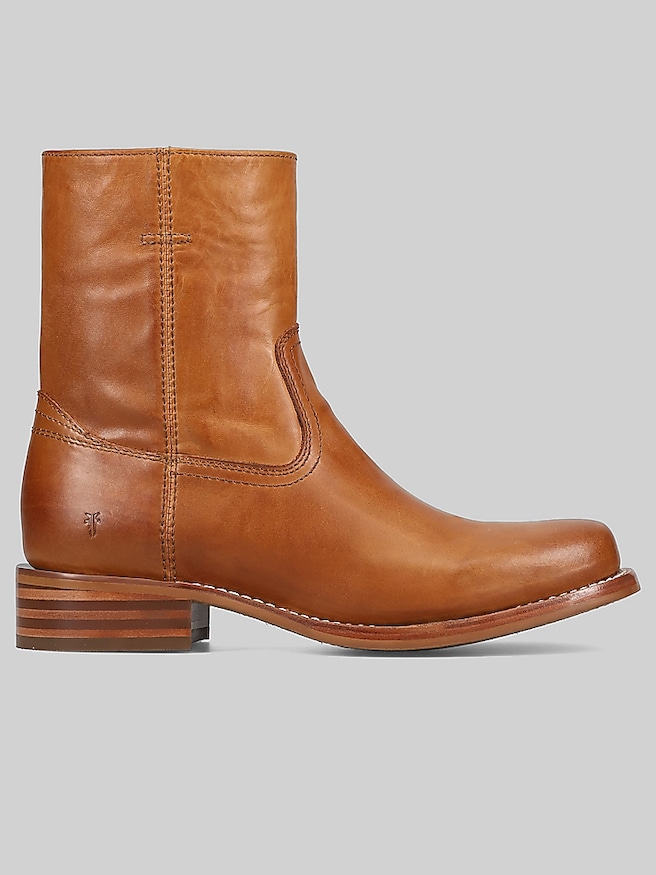
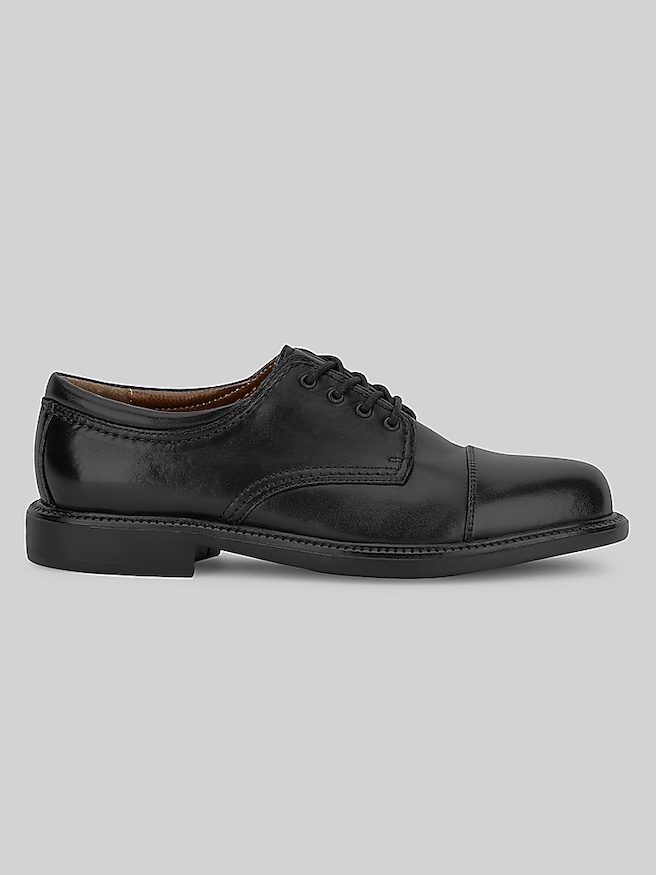
Men’s size 9.5 leather boots come in styles that range from slim dress boots to sturdy lace-ups. A smooth leather Chelsea boot with a low-profile sole sits neatly under tailored trousers, while a round-toe lace-up with a textured sole feels more at home with straight-leg jeans. Chukka boots, with their ankle height and shorter row of laces, pair easily with chinos when a dress shoe feels too formal. The details that make a boot look dressier are often small: a close-cut sole edge, subtle stitching, and a toe that tapers without coming to a sharp point. A broader toe, visible stitching, and a thicker sole give the boot more visual weight, which can balance a wider pant leg. Hem length matters, too. A narrow opening that catches on the top of the boot can leave trousers bunched at the ankle instead of falling in a clean line. The leather finish can change the look of the same basic shape. Smooth leather can take on a soft shine with polish, while pebbled leather has a raised texture that makes small creases and scuffs less noticeable. Suede has a soft, brushed surface that brings a more relaxed look to a simple outfit, especially alongside denim or a knit. Black smooth leather is a natural match for charcoal trousers, while dark brown works well with navy, olive, and indigo. Underfoot, a slim leather sole keeps the profile understated, while rubber can offer more grip, depending on the tread. Deep lugs add bulk and can look out of place under finely tailored pants, but a low-profile rubber sole keeps much of the clean outline of a dress boot. For a pair that will spend as much time on sidewalks as under a desk, the shape of the sole and the way the boot bends at the ball of the foot can matter as much as the finish.
A men’s 9.5 is a starting point for fit, not a guarantee that every boot with that number will feel the same. The form used to shape the boot determines how much room there is at the toe, across the ball of the foot, and over the instep. A tapered toe may feel closer at the sides than a round toe in the same labeled size, and a boot that feels spacious up front can still fit snugly across the top of the foot. Try on both boots with the socks likely to be worn with them. Stand with weight evenly distributed, then walk far enough to notice what happens as the foot bends. The toes should have room to move without sliding into the front, and the widest part of the foot should sit comfortably in the widest part of the boot. The heel should feel secure without repeated rubbing or pronounced lift. Laces provide some control over how firmly the boot holds the instep; a pull-on style relies more on the shape of the boot and the give of its elastic panels. Leather can soften and crease with wear, but break-in will not make a boot longer or reliably fix a pinched toe. If the length feels right but the forefoot feels squeezed, a wider shape can be a better match than a longer boot that lets the heel slide. For shoppers who wear a 9.5 in boots but often find a 10 more comfortable in low-cut footwear, Men's Size 10 Leather Shoes offers a separate fit starting point for outfits that call for a shoe instead of a boot. When choosing boots as a gift, the most useful clue is the size and width of a pair the recipient wears often. A favorite pair can also reveal whether there’s a preference for a roomy toe, an adjustable lace-up, or a pull-on shape that’s easy to slip into.
Leather boots will crease where the foot bends, and that’s part of how the upper takes on its shape. How well a pair holds up also depends on the sole, the way it’s attached, and how the boots are cared for between wears. For smooth leather, a soft brush or cloth lifts surface grit before it gets worked into the creases. If the leather looks dry, a light application of a conditioner suited to the finish can help keep it supple. Test it on a discreet spot first, since some conditioners can darken leather. A small amount of matching polish can make shallow scuffs less visible and restore an even sheen. Suede calls for a separate brush made for its raised fibers; smooth-leather polish can flatten the texture or leave a mark. If boots get damp, let them dry at room temperature rather than placing them beside a heater, which can dry the leather unevenly. Shoe trees can help the uppers hold their shape between wears, and a shoehorn can keep the back of a close-fitting pull-on boot from getting crushed. It’s worth looking at the bottoms as well as the uppers. A boot can still look polished from above when the outer edge of a heel has worn down enough to change how the foot lands. Depending on the construction and the condition of the upper, a cobbler may be able to replace a worn heel or sole rather than retire the whole pair. The best match is a boot that suits the way it will actually be worn. A neat ankle boot that slips beneath dress trousers can take the place of lace-up dress shoes in many office outfits. A boot with more room through the forefoot and a flexible rubber sole can make more sense for a day spent walking between appointments. In either case, comfortable toe room, a steady heel, and an upper that flexes without pinching are better signs of a lasting fit than the size stamped inside.