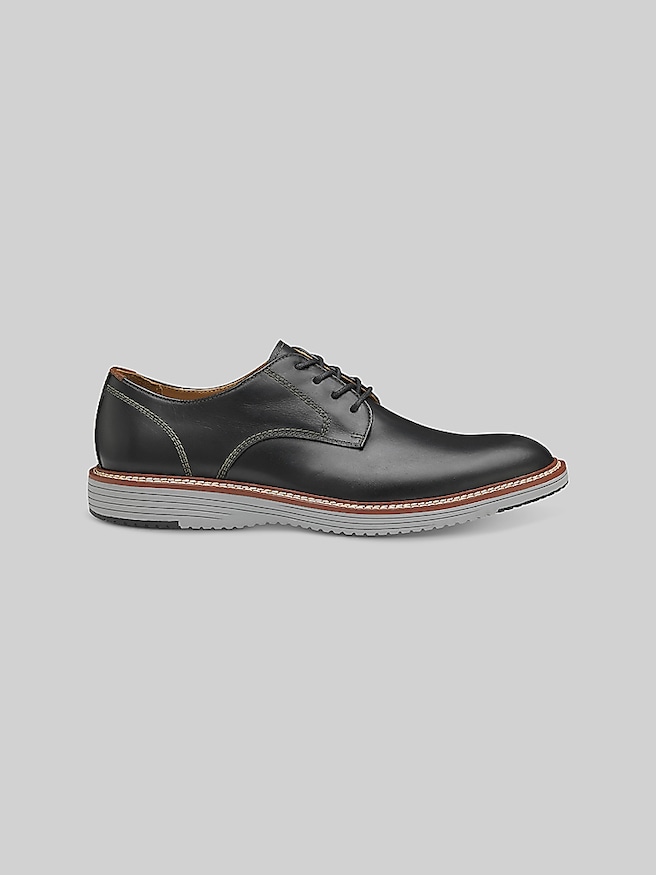
Men’s size 10 leather shoes bring structure and polish to outfits ranging from a tailored suit to chinos and a tucked-in shirt. The category includes dress shoes such as oxfords, derbies, and loafers, along with more relaxed leather footwear suited to everyday wear. Each shape creates a distinct impression. An oxford’s closed lacing keeps the upper looking neat and compact, making it a natural companion to business suits and dress trousers. A derby has open lacing, with the eyelet sections attached over the vamp, which allows more adjustment across the top of the foot. Leather loafers trade laces for a slip-on design that works especially well with tailored separates, while leather sneakers give casual outfits a cleaner finish without the formality of a dress shoe. For an interview or an important presentation, a simple black cap-toe shoe keeps attention on the overall outfit rather than the footwear. Brown leather adds depth beside navy, charcoal, and earth-toned clothing, with darker shades generally looking dressier than light tan. Decorative perforations, known as broguing, introduce texture; a plain toe creates a quieter surface. Neither detail determines comfort, but both affect how a shoe fits into a wardrobe. Toe shape matters visually, too: a gently rounded or almond-shaped toe tends to pair easily with classic tailoring, while an exaggerated point can make the shoe appear longer. A balanced silhouette leaves enough space for the toes without looking oversized beneath the trouser hem. For someone who wears size 10 regularly, the most useful choice often reflects the places the shoes will go: a carpeted office, a wedding reception, a restaurant dinner, or a commute with several blocks on foot. Leather shoes can also make a thoughtful graduation or career-milestone gift when the recipient’s preferred fit and style are known. A familiar size is a helpful starting point, but the shoe’s shape, width, and construction deserve just as much attention as the number inside.
A US men’s size 10 identifies a nominal length, not a universal fit across every leather shoe. The last—the form used to shape the shoe—helps determine its toe room, heel contour, and space over the instep. Two pairs marked size 10 can therefore feel noticeably distinct, even before differences in lining or cushioning come into play. Width markings are worth checking separately: D commonly denotes a standard men’s width, while wider options may use designations such as EE, though labeling varies. A comfortable fit holds the heel securely, lets the toes rest without crowding, and places the ball of the foot near the shoe’s natural flex point. The longest toe should not press against the front when standing or walking, and the upper should not create a tight band across the forefoot. Trying shoes with the socks intended for regular wear gives a more useful impression than switching between thin dress socks and thick casual socks. Both feet need attention, since one may be slightly larger than the other. Leather can soften and conform with wear, but that process should not be expected to correct cramped length or substantial pressure. A derby’s adjustable lacing can help accommodate a fuller instep, whereas a loafer relies more heavily on the fit around the heel and across the vamp to stay secure. If size 10 feels short rather than simply narrow, comparing the next half size can help clarify the fit; men’s size 10.5 loafers provide a related category for that comparison. Sizing up is not automatically the answer to a width problem, because excess length can allow sliding. For days that involve standing through meetings or walking between appointments, cushioning and sole flexibility matter alongside sizing. A padded footbed can soften contact underfoot, while a stable heel and an outsole that bends comfortably at the forefoot help the shoe move naturally. Comfort should feel reassuring from the first few steps, not like a promise that depends on enduring discomfort.
Leather quality and construction influence how size 10 shoes feel, age, and respond to care. Full-grain leather retains the hide’s natural grain surface and can develop character with use; top-grain leather has typically been sanded or otherwise refined for a more uniform appearance. These terms offer useful context, but they do not tell the whole story about durability. Leather thickness, finishing, stitching, lining, and sole attachment all contribute to performance. Smooth leather generally suits a polished dress wardrobe and responds well to care products made for its finish. Suede, with its soft nap, creates a more relaxed effect and needs a suede brush and appropriate treatment rather than conventional polish. Inside the shoe, a smooth lining can reduce friction, while the footbed’s contour and cushioning affect how pressure feels during a long day. Underneath, leather soles offer a traditional profile, while rubber soles can add flexibility and traction, depending on their compound and tread. A rubber outsole alone does not establish slip resistance, so any performance claim should be supported by the shoe’s specifications. Construction also matters when thinking beyond the first stretch of wear. Some welted or stitched designs can be resoled by a qualified cobbler, while repair possibilities for cemented shoes depend on how they are built. Routine care helps preserve both appearance and usefulness: remove surface dust with a soft brush or cloth, condition compatible smooth leather as directed, and apply a suitable polish when the finish needs refreshing. Test care products in an inconspicuous spot first, especially on lighter leather. Cedar shoe trees help maintain shape and absorb residual moisture after wear, and a shoehorn protects the heel counter from being crushed during entry. Let shoes air out between uses and avoid direct heat when drying them. Creasing where the foot bends is normal, but deep abrasion, worn heel edges, or loose stitching merits attention before damage spreads. With a comfortable fit and care suited to the material, leather shoes become a dependable part of getting dressed, whether the day calls for a full suit or a more relaxed combination of trousers and a sport coat.