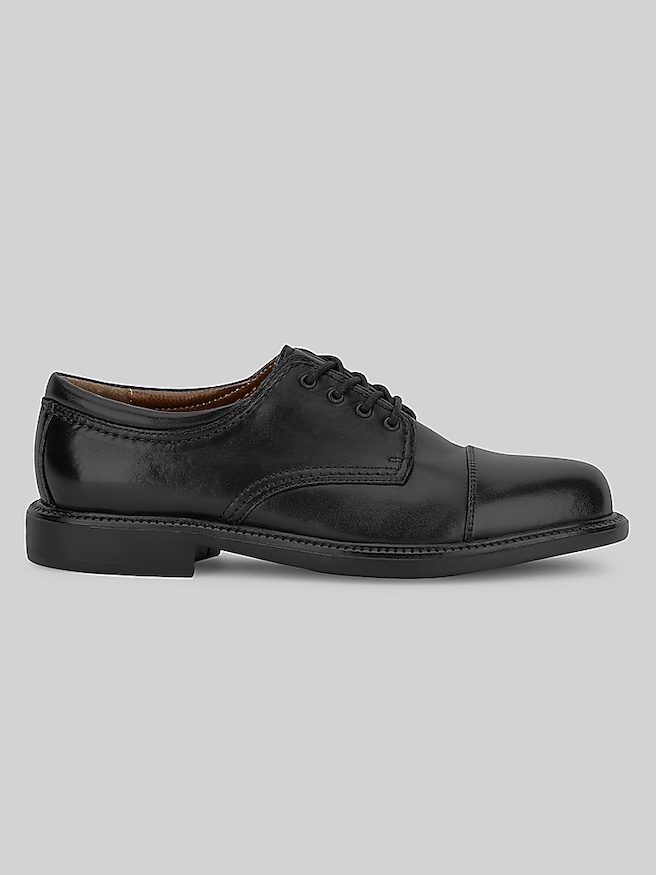
Men’s size 8 black dress shoes bring a clean, grounded finish to tailored clothing, whether the occasion calls for a charcoal suit, pressed trousers, or a tuxedo. Black has a particular usefulness in a dress wardrobe: it reinforces crisp lines without competing with a patterned tie, a textured jacket, or the cut of the trousers. For someone whose usual fit is a size 8, the distinction between a shoe that simply matches an outfit and one that completes it often comes down to shape and finish. A rounded or softly tapered toe tends to feel understated, while a longer, narrower profile creates a sharper silhouette. Neither needs excessive detailing to look polished. A plain-toe design keeps the emphasis on smooth leather and proportion; a cap toe adds a defined seam that sits comfortably with business attire. Oxford shoes, recognized by their closed lacing, have a compact appearance suited to more formal settings. Derby shoes use open lacing for a slightly less structured look and can offer more adjustment over the instep, depending on their construction. Loafers offer another approach, pairing especially well with tailored separates when the dress code allows a relaxed edge. Subtle decorative perforations add texture, though simpler styling generally reads as more formal. These distinctions matter in familiar situations: presenting to clients, attending a graduation, standing with a wedding party, or sitting down to an anniversary dinner. Black dress shoes also make a practical foundation for someone building a professional wardrobe because the color works naturally with gray, navy, and black tailoring. The finish should suit the occasion rather than overpower it. Smooth, polished leather feels appropriate across many business and social settings, while a mirrorlike patent finish is more closely associated with formal evening attire. Trouser length contributes to the overall effect, too; a neat hem lets the shoe’s shape remain visible instead of disappearing beneath pooled fabric.
Fit deserves as much attention as appearance, particularly with shoes intended for a full workday or several hours at an event. A size 8 designation is a starting point, not a promise that every shape will feel the same. The last—the form around which a shoe is built—affects the toe box, heel, and space across the instep. Width matters independently of length, so moving up a size to solve pressure across the forefoot can leave unnecessary room at the heel. A comfortable fit generally holds the heel securely, supports the middle of the foot, and leaves enough space for the toes without allowing the foot to slide forward. The widest part of the foot should sit near the widest part of the shoe, and the upper should feel secure rather than pinching. Trying shoes with the dress socks intended for regular wear gives a more useful sense of fit than trying them with thick athletic socks. Anyone who uses an orthotic may also need to consider interior depth and whether the footbed is removable; those features vary by design. For a broader look at the category beyond black, Size 8 Dress Shoes provides a related starting point. Materials contribute to comfort as well as appearance. Leather uppers can develop softer flex points with wear, but break-in should not be expected to correct cramped toes or persistent pressure. Linings influence how the shoe feels against the foot, while cushioning and arch contours affect comfort during extended standing. Outsole construction makes a noticeable difference underfoot: leather soles have a traditional appearance, while rubber soles can add cushioning and traction, depending on the compound and tread. A sleek profile does not necessarily reveal how supportive a shoe will feel. For a ceremony followed by a reception, or a commute followed by back-to-back meetings, secure fit and a comfortable flex through the forefoot can matter more than a dramatic shine.
Durability in black dress shoes comes from the relationship between materials, construction, use, and care, rather than any single visible feature. Closely finished seams, clean edges, and a well-attached sole help a shoe maintain its appearance through repeated wear. Some stitched constructions may allow resoling, while other designs have more limited repair options; repairability depends on how the shoe is made and its condition. Areas that receive regular friction, including the heel lining and the outside edge of the heel, are worth noticing over time. Addressing a worn heel before it affects the surrounding structure can help preserve a pair that otherwise fits well. Everyday care is straightforward but should match the material. Smooth leather generally benefits from gentle cleaning, occasional conditioning with an appropriate product, and polish suited to its color and finish. Black cream polish can help soften the appearance of minor surface scuffs, while wax can build shine in selected areas. Neither replaces cleaning, and heavy buildup can dull fine details around seams. Patent leather and synthetic uppers need care suited to their finishes rather than the same treatment used for ordinary smooth leather. A soft cloth after wear removes surface dust before it settles into creases. Allowing shoes to air out between uses, keeping them away from direct heat, and using properly sized shoe trees can help manage moisture and maintain shape. A shoehorn also protects the heel counter from being crushed during dressing. These habits are especially useful for shoes worn regularly to an office, but occasional-use pairs benefit from careful storage as well. As a gift, black dress shoes can mark a graduation, a first professional role, or another milestone, provided the recipient’s size, width, and preferred style are known. The most useful pair is not necessarily the most ornate. It is the one that feels natural with the wearer’s clothes, stays comfortable through the occasion, and returns to a polished appearance with consistent care.