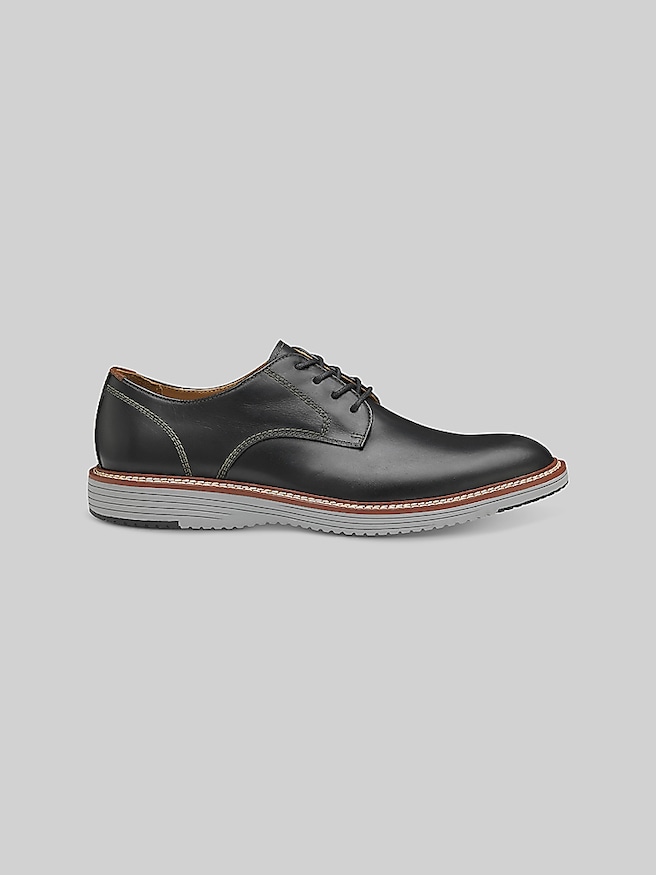
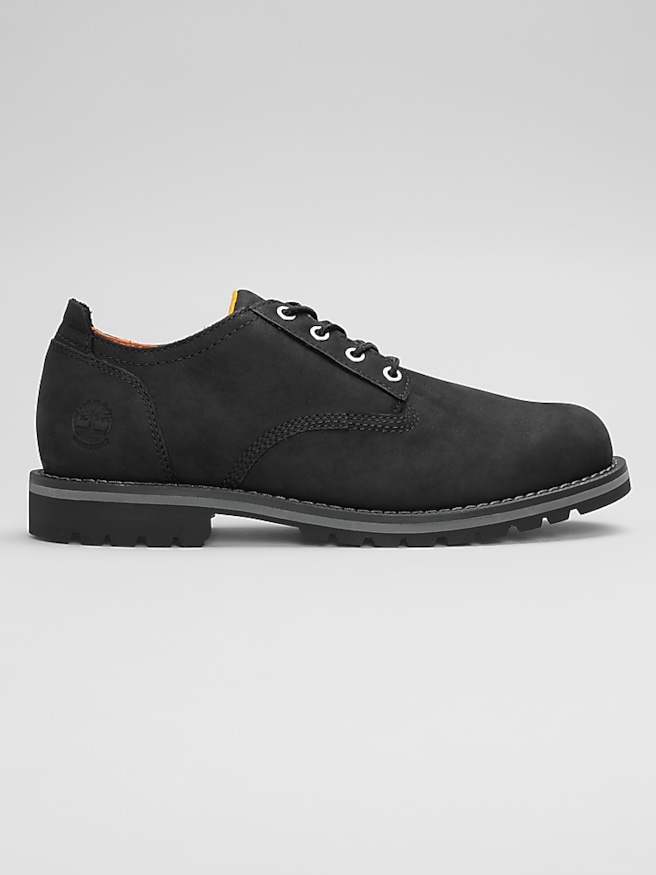
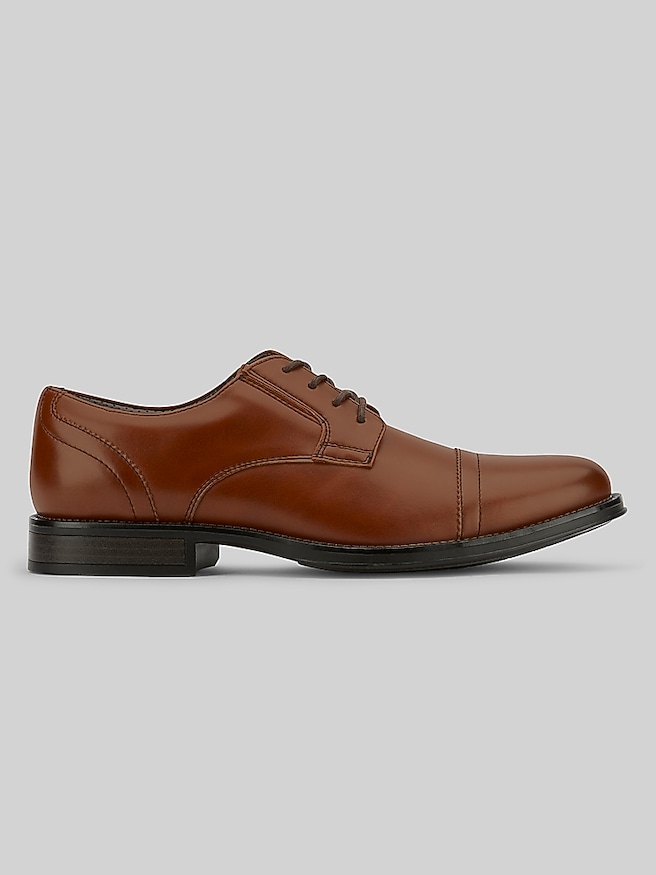
Men’s size 10.5 black oxfords bring a clean, tailored finish to business clothing, wedding attire, and dressier everyday outfits. An Oxford is traditionally defined by closed lacing: the sections holding the eyelets are stitched beneath the front of the upper, creating a neat profile across the instep. That construction gives the shoe its understated character, especially in black, where the shape of the toe and the finish of the material do much of the visual work. A plain toe creates an uninterrupted surface that looks especially streamlined beneath dress trousers. A cap toe adds a horizontal seam across the front, lending definition without making the shoe overly decorative. Brogue perforations and wingtip detailing introduce more texture and generally feel less formal than an otherwise similar plain-toe or cap-toe design. For an interview, a client presentation, or a ceremony with a suit-and-tie dress code, a restrained shape can make getting dressed straightforward. Black oxfords pair naturally with charcoal, navy, and black tailoring, while the finish helps determine how formal the combination feels. Smooth leather with a soft shine suits business settings; a higher-gloss finish has a more ceremonial appearance. Patent leather has a distinctive reflective surface associated with formal evening attire, although the event’s dress code should determine the full outfit. Toe shape matters as well: an almond-shaped toe usually creates a balanced silhouette, while a broad, rounded front offers a more substantial appearance. An excessively long toe can make the shoe look larger without adding useful room where the foot needs it. The relationship between the shoe and the trouser hem also affects the result. A modest trouser break leaves the lacing and toe visible without fabric pooling over the shoe. Black dress socks maintain a continuous line, while socks coordinated with the trousers can make the transition from hem to footwear equally unobtrusive.
With men’s size 10.5 black oxfords, the size number is a starting point rather than a complete description of fit. Width, instep height, heel shape, and the last—the form used to shape the shoe—all influence how the same labeled size feels. A comfortable fit leaves room for the toes to lie naturally without crowding at the sides, holds the heel securely, and allows the shoe to flex near the ball of the foot. A wider foot may need a wider width rather than a longer shoe; extra length alone can place the flex point too far forward and allow the heel to move. Because closed lacing offers less adjustment across the instep than some open-laced designs, pressure beneath the eyelets deserves particular attention. The laces should secure the foot without creating a tight band across the top. Measurements taken while standing, with the type of dress socks intended for wear, provide a useful reference, and both feet matter because one may be larger. Leather can soften and conform with use, but a shoe that pinches sharply or compresses the toes should not be expected to become the correct size through break-in. Materials influence comfort and appearance beyond that initial fit. Full-grain leather retains the hide’s natural grain and can develop subtle creasing with wear; corrected-grain leather has a more uniform treated surface. Synthetic uppers can provide a consistent finish, though their flexibility and breathability depend on their construction. Smooth linings, unobtrusive interior seams, and cushioning beneath the heel and forefoot can make a noticeable difference during a long reception or a workday spent moving between meetings. Outsole choice changes the feel underfoot, too. Leather soles offer a traditional profile, while rubber soles can add flexibility and grip, depending on their compound and tread. Neither material alone guarantees comfort or traction. A discreet rubber insert or low-profile rubber outsole may appeal to someone who walks between appointments, while a slimmer sole can preserve the close, tailored silhouette preferred for formal clothing. The useful balance is support and flexibility without unnecessary bulk.
The lasting appearance of black oxfords depends on how the upper, sole, and construction suit the wearer’s routine. Someone who wears dress shoes several days a week may place particular value on a resilient outsole, a secure heel, and an upper that responds well to regular care. A pair reserved for ceremonies may see less frequent wear, but still benefits from proper storage and attention to the finish. Stitched sole constructions can sometimes allow resoling, although repair options depend on the shoe’s design and condition; a cobbler can assess what is practical. For smooth leather, surface dust should be removed with a soft brush or cloth before compatible conditioner or polish is applied. Conditioner helps maintain the leather’s suppleness, while black cream polish can refresh color and wax polish can build shine, particularly at the toe and heel. Heavy layers are unnecessary and can collect around seams or flex points. Patent leather and synthetic finishes need care suited to their surfaces rather than an automatic application of ordinary leather products. Suede, when used, calls for a suede brush and appropriate cleaner instead of cream polish. Allowing shoes to air out between wears helps the interior dry, and properly fitted shoe trees can help maintain shape and soften the appearance of creases. A shoehorn protects the heel counter from being crushed when the shoes are put on, while loosening the laces before removal reduces strain on the upper. These small habits are especially useful for footwear expected to remain presentable through repeated business events and celebrations. As a gift, black oxfords are most practical when the recipient’s usual dress-shoe size, preferred width, and intended use are known. For another recipient who wears a smaller size, Men's Size 9 Black Oxfords keeps the focus on the same color and shoe style. Whether chosen for a graduation, a wedding, or an established professional wardrobe, size 10.5 black oxfords work best when a refined appearance is matched by a fit that remains comfortable beyond the first few steps.