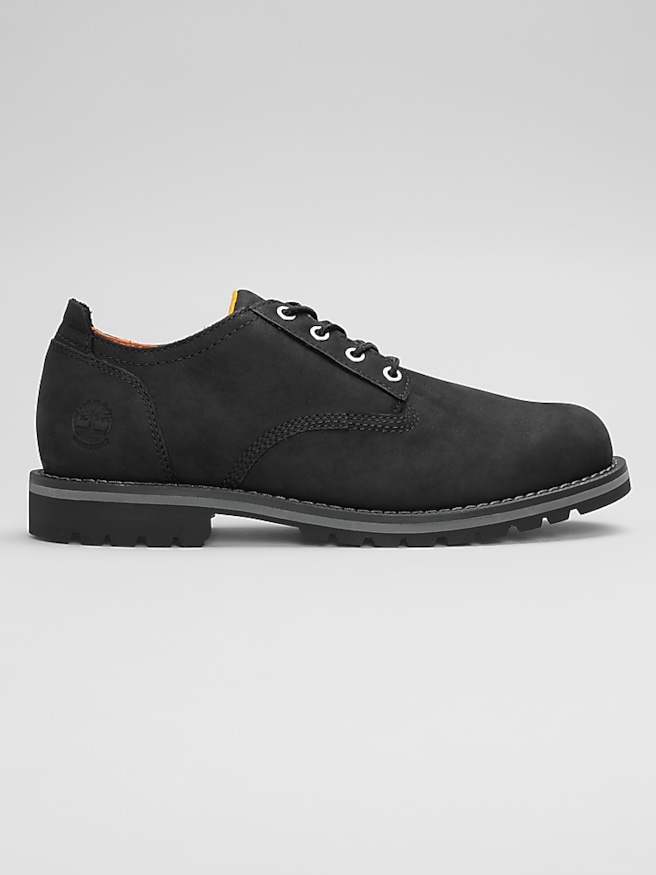
Men’s size 12 black oxfords bring a clean, structured finish to tailored clothing, with a low profile that sits neatly beneath dress pants and suit trousers. A traditional oxford is defined by closed lacing: the sections holding the eyelets are stitched beneath the front of the upper, creating a close, streamlined appearance across the instep. That construction distinguishes an oxford from an open-laced derby, even though the names sometimes overlap in everyday descriptions of dress shoes. Black adds versatility within a dress wardrobe, pairing naturally with charcoal, navy, medium gray, and black trousers. For an interview, a presentation, or a wedding ceremony, a smooth leather pair keeps the focus on the complete outfit rather than drawing attention away from it. Toe details influence the overall effect. A plain toe offers an uninterrupted surface, a cap toe adds a restrained seam across the front, and decorative perforations, known as broguing, introduce more visual texture. A simple black cap toe is particularly useful for business attire because it looks finished without being ornate. For formal evening clothing, a sleek, highly polished or patent finish creates a dressier impression, though the appropriate shoe depends on the event’s dress code. Shape matters as much as decoration: a softly rounded toe feels traditional, while a gently tapered profile gives the shoe a sharper outline without requiring an exaggerated point. In size 12, those proportions can affect how the shoe looks beneath the trouser hem, especially with narrower pant openings. A balanced silhouette leaves the toe visible without making the footwear dominate the outfit. These are shoes for office professionals, wedding guests, graduates, and anyone building a dependable dress wardrobe. They can also make a thoughtful gift for someone starting a new job or preparing for a milestone celebration, provided the recipient’s size, width, and preferred fit are known. Their appeal lies in that combination of purpose and restraint: dark leather, tidy lacing, and a shape that works across many dressed-up occasions.
Fit is especially important when choosing size 12 black oxford shoes, because the size number describes only part of the experience. Two pairs marked with the same US size can feel noticeably different depending on the last, the foot-shaped form used to build the shoe. The last determines heel shape, forefoot space, toe profile, and volume over the instep. Men’s standard width is commonly marked D, while wider fittings may use E, EE, or W; those labels are not perfectly consistent across manufacturers. A longer size is not a reliable substitute for the correct width, since extra length can leave the heel loose while pressure remains across the ball of the foot. A well-fitting oxford should feel secure through the heel and midfoot, allow the toes to rest without crowding, and bend near the ball of the foot during a normal step. Some space beyond the longest toe is expected, particularly in a tapered design, so toe clearance alone does not determine fit. Closed lacing also makes instep volume worth considering. The eyelet sections should draw together comfortably without excessive pressure or a pronounced spread, although a small gap can be normal. Trying dress shoes with the socks intended for everyday wear gives a more useful impression than trying them with much thicker athletic socks. For someone who wears orthotics, a removable footbed and adequate interior depth may be important, but not every oxford accommodates an insert. Materials further shape comfort and appearance. Full-grain leather retains the hide’s natural grain surface and can develop character with regular care, while calfskin is often chosen for its fine texture and supple feel. Suede gives an oxford a softer, less formal look, and patent leather emphasizes shine. Synthetic uppers vary in flexibility and breathability, making the lining and overall construction relevant as well. Cushioning can soften the sensation underfoot, but it cannot correct pinched toes, an overly narrow forefoot, or a heel that repeatedly slips. Comfort starts with the right shape, not simply the softest insole.
Construction and care determine how black oxfords hold up beyond their first few outings. Leather outsoles provide a traditional dress-shoe appearance and can become more flexible with wear, while rubber outsoles often offer useful traction and cushioning; actual grip depends on the sole’s design and the surface underfoot. For a workday that includes walking between buildings, standing through a presentation, and taking the stairs, sole flexibility and heel stability can matter as much as polish. A wedding guest spending several hours on hard floors may appreciate a cushioned footbed, but the shoe should still feel balanced rather than unstable. Welted construction can allow resoling when the upper and other components remain sound, though repair options depend on the individual shoe. Cemented construction bonds the outsole to the upper and may create a lighter, flexible feel, but it is generally less straightforward to resole. Neither construction method alone guarantees durability; leather quality, stitching, heel wear, and regular upkeep all contribute. Smooth leather benefits from dust removal with a soft brush or cloth, occasional conditioning with a compatible product, and black cream or wax polish suited to the desired finish. Cream helps refresh color, while wax can build a more pronounced shine, particularly across the toe. Patent leather and suede need care products appropriate to their finishes rather than the same treatment used for smooth leather. Cedar shoe trees help maintain shape between wears, and alternating pairs gives the interiors time to dry naturally. A shoehorn protects the heel counter from being crushed, while replacing worn heel tips before damage spreads can help preserve the shoe’s balance. Small habits like these keep a black oxford looking intentional with a freshly pressed trouser leg instead of tired around the edges. When coordinating footwear for more than one person, Men's Size 9 Black Oxfords provide a related size category, with each wearer’s measurements determining the appropriate fit. For size 12 wearers, the strongest combination remains a comfortable last, suitable width, dependable construction, and a finish matched to the occasions ahead.