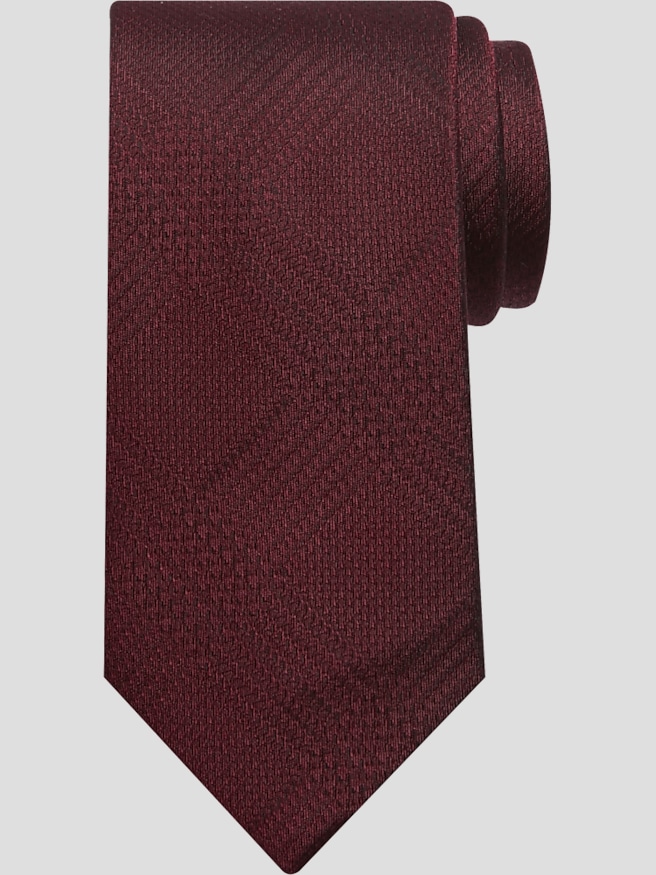
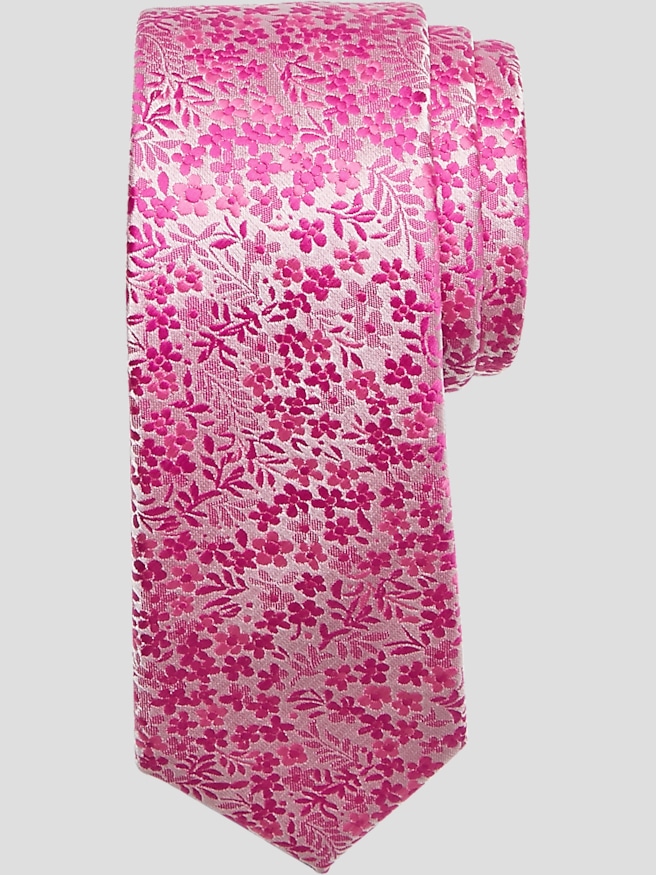
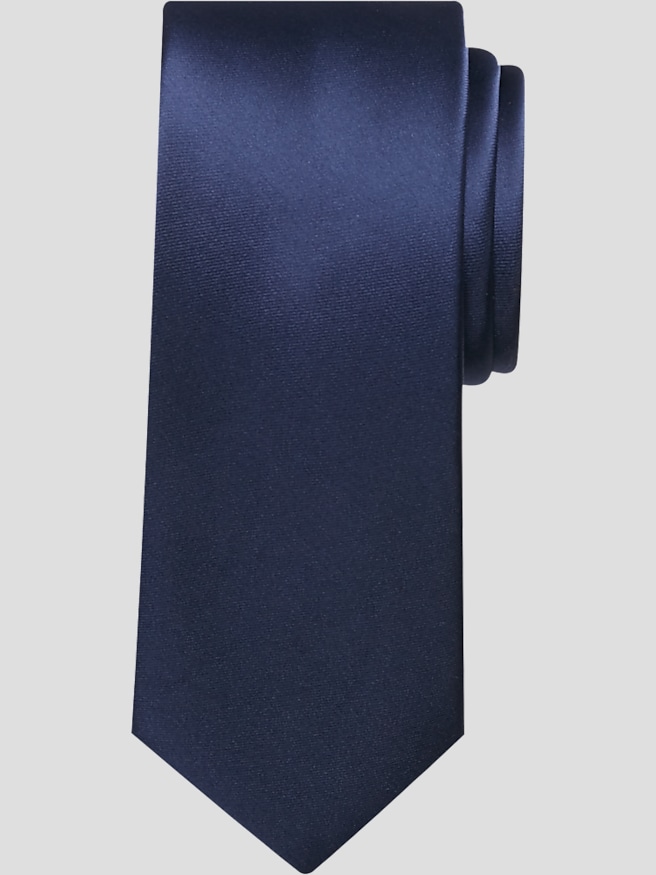
Men’s silk ties add color, texture, and a finished appearance to tailored clothing, from a navy suit worn for an important presentation to a charcoal jacket paired with a crisp white shirt. Silk is valued for its smooth feel, fluid drape, and ability to reflect light, but the finished appearance depends on how the fabric is made. Some silk ties have a soft, understated sheen; others feature a more pronounced luster or a textured surface that reads almost matte from a distance. Woven silk ties create their designs through the arrangement of threads, often giving stripes, small geometric motifs, and other patterns a sense of depth. Jacquard refers to a weaving technique that produces patterns within the fabric rather than applying them to the surface. Printed silk ties carry designs applied to the cloth, allowing for fine detail, flowing paisleys, and intricate floral patterns without requiring a raised weave. Silk grenadine has an open, textured weave that adds visual interest to a solid color, while knitted silk offers a distinctly tactile finish and often a squared end. These differences matter as much as color when creating an outfit: a textured tie can lend character to a plain suit, while a smooth silk tie brings a clean accent to a patterned jacket. For an enduring starting point, Classic Silk Ties complement the familiar lines of dress shirts and tailored lapels without relying on an elaborate design. Fabric composition and construction also influence how a tie feels and hangs. A silk shell may be supported by an interlining that adds body, helps the knot hold its shape, and encourages the blade to lie smoothly. A fuller construction generally produces a more substantial knot, while a lighter construction can feel softer and less bulky. The fiber label distinguishes pure silk from silk blends, and both the fabric and the internal structure contribute to the finished result.
The proportions of a silk necktie help determine how naturally it works with the rest of an outfit. Tie width generally looks most balanced when it relates to the width of the jacket lapels, the scale of the shirt collar, and the wearer’s build. A narrow tie creates a more streamlined line, while a broader blade has a fuller, more traditional presence. Neither works in isolation: a very slim tie can appear disconnected from broad lapels, just as a substantial tie may overwhelm a small collar. Length matters, too. When tied, the front tip typically reaches the waistband, keeping the line of the shirt and trousers visually connected. Height, torso length, neck size, and the amount of fabric used in the knot all affect where that tip falls. A larger knot consumes more length, so the same tie can sit differently depending on how it is tied. The collar opening provides another useful point of reference. A compact four-in-hand knot fits comfortably within many point collars and brings a slightly asymmetrical character, while a half-Windsor creates a fuller triangular shape that can suit a wider spread. Thick silk and substantial interlining can build volume quickly, making a smaller knot a practical match for a heavier tie. Color and pattern offer just as much room for personal preference. Navy, burgundy, and deep green can anchor a business outfit, while lighter or brighter accents can draw attention toward the face. With a striped shirt, a tie featuring a larger, more widely spaced pattern helps keep the two designs distinct. With a checked jacket, a solid silk tie provides a quieter focal point. Matching a tie exactly to a pocket square is not necessary; a shared accent color can create a more relaxed connection. The overall effect should feel considered rather than crowded, with enough contrast for the tie to stand apart from the shirt.
Silk ties suit a range of occasions, but the dress code and setting shape which textures and patterns feel appropriate. Small repeating motifs and restrained stripes work well for interviews, client meetings, and other situations where the emphasis belongs on the conversation rather than the outfit. A wedding guest might choose a floral or paisley design that picks up a color in the suit or shirt, while a solid tie with subtle texture can feel equally appropriate at a graduation or an anniversary dinner. Formal invitations deserve closer attention: a silk necktie complements many dressy suits, but traditional black-tie attire generally calls for a black bow tie rather than a long necktie. As a gift, a silk tie is especially personal when its color or pattern connects with something the recipient already wears. A dependable solid can become part of a regular work rotation, while a distinctive motif may mark a milestone or reflect an individual sense of style. Good care helps preserve both the fabric and the shape. Silk can snag, show water marks, or develop a shine from excessive heat, so the care label should guide cleaning and pressing. A stain is best handled without rubbing or adding water indiscriminately; a professional cleaner experienced with silk can assess the appropriate treatment. After wear, gently reversing the knot rather than pulling the narrow end through a tight loop reduces strain on the fabric and seams. Leaving a tie knotted can set creases and compress the interlining. Woven ties can rest loosely on a suitable rack, while knitted ties are often better stored flat or gently rolled to avoid stretching. Space between ties helps prevent crushing and makes delicate surfaces less likely to catch on hardware. With thoughtful handling, suitable storage, and attention to the fabric’s particular needs, a silk tie can remain a useful, distinctive finishing touch through repeated wear.