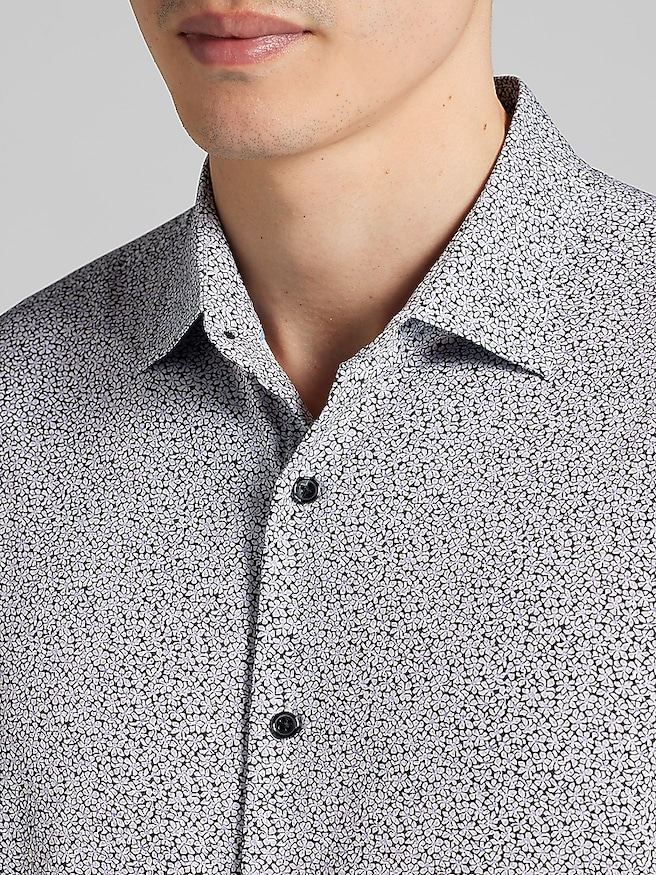
Men’s short sleeve printed shirts bring pattern and personality to everyday outfits while keeping the familiar structure of a collared, button-front shirt. Their character comes from the balance of fabric, print, and cut: a fine geometric motif can look understated from across a room, while a broad floral or abstract design becomes the focal point of an outfit. Small repeating patterns are an easy starting point for someone who usually wears solid colors, especially when the background is navy, white, gray, or another familiar neutral. Larger motifs have a more expressive feel, but print size does not need to follow a rule about body type. The better consideration is how much visual emphasis feels comfortable and how the pattern works with the rest of the clothing. A closely spaced botanical print paired with dark jeans creates a different impression from a widely spaced abstract design worn with tailored trousers, even if both shirts share the same colors. These shirts suit dinners with friends, casual celebrations, travel, and workplaces where an open collar is appropriate. They occupy the space between a basic T-shirt and a more traditional dress shirt, offering enough detail to make a simple outfit feel considered without requiring a tie or elaborate layering. For settings that call for a more restrained approach, men’s short sleeve dress shirts offer a related direction, though the fabric, collar, and workplace dress code still matter more than the category name alone. Printed short sleeve shirts are not a substitute for formal attire when an invitation specifically calls for it. Their strength is relaxed polish: a clean collar at a restaurant table, an interesting pattern beneath an open casual jacket, or a favorite color repeated subtly in the print. Choosing one color from the design and echoing it in pants or shoes helps the outfit feel connected without making every piece match.
Fabric and fit determine how a printed shirt feels after several hours of wear, not just how it looks on a hanger. Cotton is often chosen for its soft hand and breathability, although the weave and fabric weight influence whether a shirt feels crisp or fluid. A tightly woven cotton fabric can hold a defined collar and a tidy front, while a softer construction may feel more relaxed against the skin. Linen has a distinctive texture and develops visible creases as it is worn; that slightly rumpled appearance is part of its character rather than necessarily a sign of poor care. Cotton blends can balance softness with other qualities, but their performance depends on the fibers and proportions involved. Polyester blends may resist wrinkling, while viscose or rayon can give a shirt a smoother, more flowing drape. Added stretch can provide flexibility when reaching or sitting, though it cannot compensate for a cut that is too small. For a conventional tailored fit, shoulder seams should sit close to the shoulder edge, and the front placket should lie flat without pulling between the buttons. A quick reach forward or a seated position can reveal tightness across the upper back or waist that is not obvious while standing still. Sleeves should leave comfortable room around the upper arm rather than gripping it or flaring excessively. Slim fits generally follow the torso more closely, while classic and relaxed fits allow more ease; the actual measurements remain more useful than the fit label alone. Length deserves equal attention. A shirt intended to be worn untucked should finish neatly around the hips without overwhelming the pants beneath it. Longer, curved hems usually provide more coverage for tucking. Collar shape also changes the mood: a camp collar lies open for a distinctly casual effect, while a conventional point collar creates a more structured outline. Together, these details influence whether a print feels easygoing, sharply defined, or somewhere between the two.
The most useful printed shirts work with clothing already in regular rotation. A muted microprint can pair naturally with chinos for a casual office, while a more graphic design can give plain denim and simple sneakers a deliberate finish. When a shirt contains several colors, solid pants usually keep the combination clear and balanced. Texture can add interest without introducing another competing pattern: smooth cotton trousers, subtly textured denim, and understated leather footwear each bring a different feel to the same shirt. For an occasion where tucking is appropriate, a flat waistband and a belt that complements the shoes help maintain a clean line. An untucked shirt benefits from an even hem and enough room to hang freely instead of catching at the hips. Long-term appearance depends just as much on care as styling. The sewn-in care label is the best starting point because printed fabrics, blends, and trims may require different treatment. When machine washing is permitted, turning the shirt inside out can help reduce surface abrasion, and washing with similar colors can limit unwanted color transfer. Avoiding excessive heat, when consistent with the label, can help protect the fabric and reduce shrinkage. Promptly removing the shirt after washing or drying helps keep deep creases from setting, while gentle reshaping can encourage the collar and placket to lie properly. Ironing or steaming should follow the recommended temperature, with extra caution around printed finishes that may be sensitive to direct heat. Secure buttons, evenly sewn seams, and neatly finished hems are useful construction details to examine, though no single feature guarantees durability. A shirt that fits comfortably and suits its owner’s habits is more likely to see regular use. As a gift for a partner, father, brother, or friend, a printed short sleeve shirt feels personal when its colors and pattern reflect what the recipient already enjoys wearing. Familiar sizing, a preferred collar shape, and manageable care requirements can matter more than choosing the boldest design. Those practical details turn an appealing pattern into a dependable part of an everyday wardrobe.