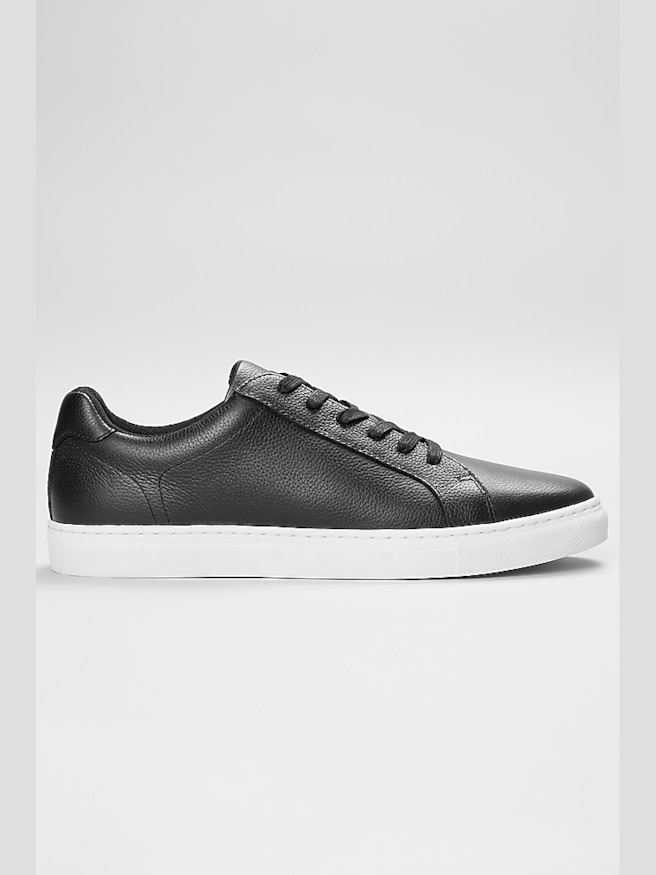
Men’s rubber sole shoes pair everyday practicality with a range of looks, from streamlined dress footwear to relaxed loafers and lace-ups. The defining feature is the rubber outsole: the layer that meets the ground. Depending on its formulation, thickness, and tread pattern, rubber can provide flexibility, resistance to abrasion, and traction for routine walking. That makes these shoes a practical choice for office days, commutes, dinners, and occasions that involve moving between a seated setting and time on foot. A slim rubber sole can maintain the clean profile of a dress shoe, while a thicker sole gives casual footwear a more substantial appearance. Neither needs to look athletic; a neatly shaped toe, restrained stitching, and a close-trimmed sole edge can keep the overall effect polished. Smooth leather uppers with dark rubber soles work naturally with tailored trousers, while textured leather and more pronounced tread suit chinos and denim. Black offers a crisp foundation for charcoal or navy tailoring, and brown shades bring depth to earth tones, blue trousers, and less formal combinations. For someone heading from a morning meeting to an evening meal, a modest sole profile can bridge both settings without making the footwear feel out of place. Comfort, however, comes from the entire shoe rather than rubber alone. The midsole, footbed, lining, and overall shape all influence how a pair feels after several hours. A flexible outsole may make movement feel easier, but it does not automatically provide substantial cushioning or arch support. Traction also varies with the surface underfoot and the design of the sole. Rubber should not be treated as a guarantee of slip resistance, and workplace requirements call for footwear with the appropriate stated performance features. Likewise, a rubber outsole does not make the upper waterproof. These distinctions help separate the everyday benefits of rubber from specialized features, keeping attention on the combination of appearance, construction, and intended use.
Upper materials give men’s rubber sole shoes much of their character. Smooth leather offers a refined surface that can be conditioned and polished, while suede has a softer, matte texture that works especially well with less structured clothing. Textile uppers lend a more relaxed appearance, though their feel and care requirements depend on the fabric and construction. The Cloth Shoes Mens collection is a related category for considering fabric uppers; cloth describes the material above the sole, so it can coexist with rubber underfoot. Lining matters as well, particularly around the heel and across the top of the foot, where rough seams or a stiff edge can become noticeable over a full day. Fit should feel secure without squeezing. Toes need space to rest naturally, the widest part of the foot should align comfortably with the widest part of the shoe, and the heel should stay supported without persistent rubbing. Extra length is not a dependable substitute for the correct width, especially in a pointed or tapered shape. A shoe can look sleek without pressing the toes together. Lace-up styles allow adjustment across the instep, which can be useful when balancing a close fit with comfortable movement. Loafers rely more heavily on the relationship between the heel, instep, and opening, so an overly loose fit can lead to slipping with each step. The socks intended for everyday wear belong in that fit assessment: fine dress socks and thicker casual socks occupy noticeably different amounts of space. Feet can also expand through normal daily activity, making a comfortable fit later in the day worth considering. For a role that involves standing to greet clients, walking between buildings, or spending long stretches away from a desk, the most useful combination is a stable base, an accommodating upper, and cushioning suited to the wearer. A soft first impression is welcome, but lasting comfort also depends on whether the shoe holds the foot securely through repeated movement.
Durability in rubber sole footwear depends on more than the thickness of the tread. The rubber compound, attachment method, upper material, and pattern of use all contribute to how a shoe wears. A denser outsole may resist abrasion well, while a softer formulation may feel more flexible; neither quality alone establishes how comfortable or long-lasting the complete shoe will be. Stitching or adhesive construction can affect repair options, and a rubber sole is not automatically replaceable. For footwear worn frequently, even wear across the heel and forefoot matters more than a rugged appearance. A heel worn down heavily on one edge can change how the shoe sits, while flattened tread may reduce its usefulness on certain surfaces. Routine care helps preserve both the finish above and the structure below. Loose grit can be brushed from the outsole, and dirt along the sole edge can usually be removed with a lightly dampened cloth, followed by drying away from direct heat. Leather uppers benefit from suitable cleaning and conditioning products used according to their directions; suede calls for a brush and treatments intended for its nap. Textile care varies by material, and a rubber sole alone does not mean the entire shoe is machine washable. Time between wears allows accumulated moisture to dissipate, while properly fitted shoe trees can help leather footwear maintain its shape. Storage with enough space around each pair also helps prevent crushed heels and scuffed uppers. These practical details are especially relevant for someone building a dependable rotation of work and weekend footwear. As a gift, men’s rubber sole shoes are most personal when the recipient’s size, width, usual clothing, and preferred fastening style are already known. A polished lace-up may suit someone who wears tailored trousers most days, while a relaxed loafer may fit a more casual routine. The strongest match is footwear that looks natural with the recipient’s wardrobe and supports the way the shoes will actually be worn.