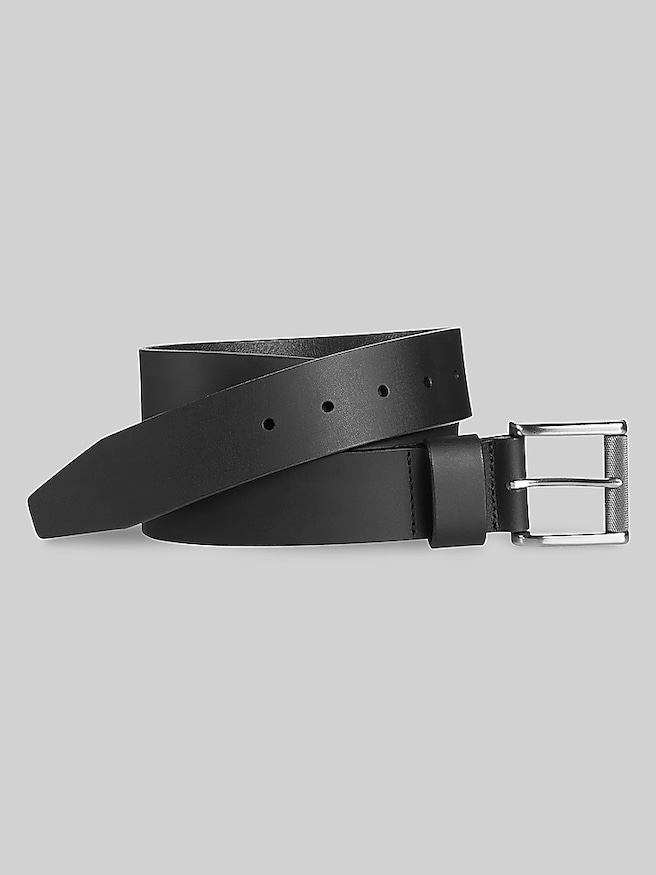
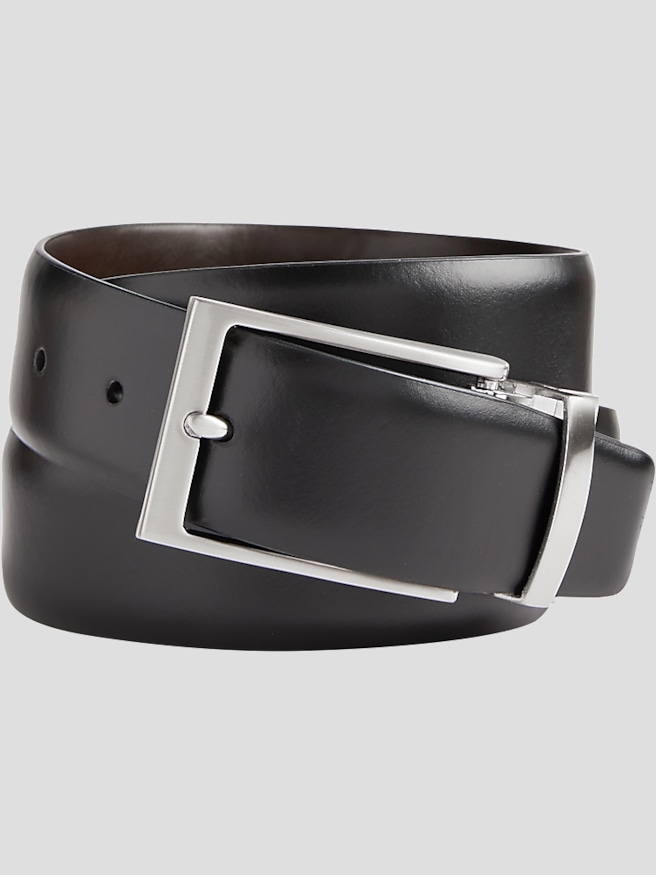
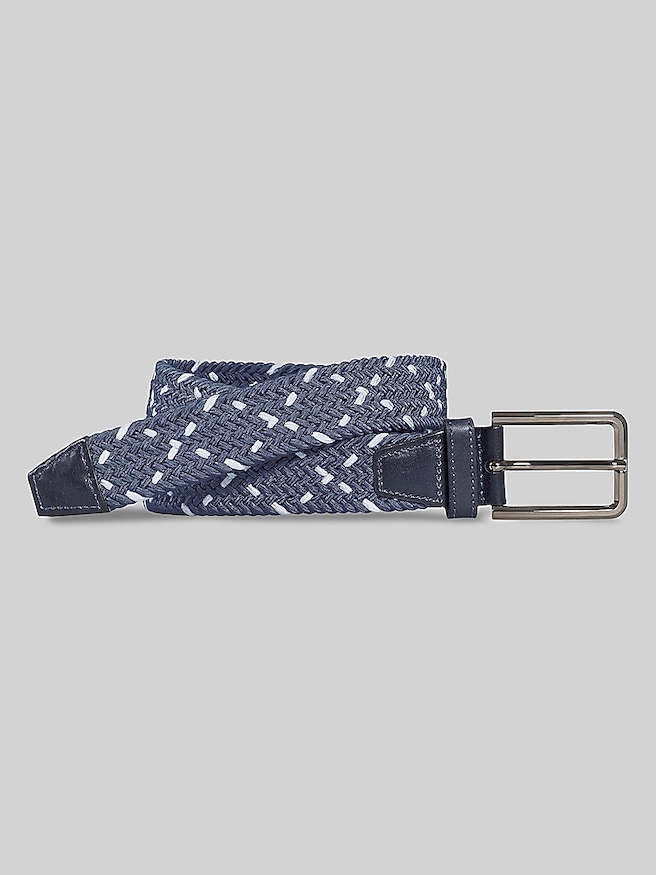
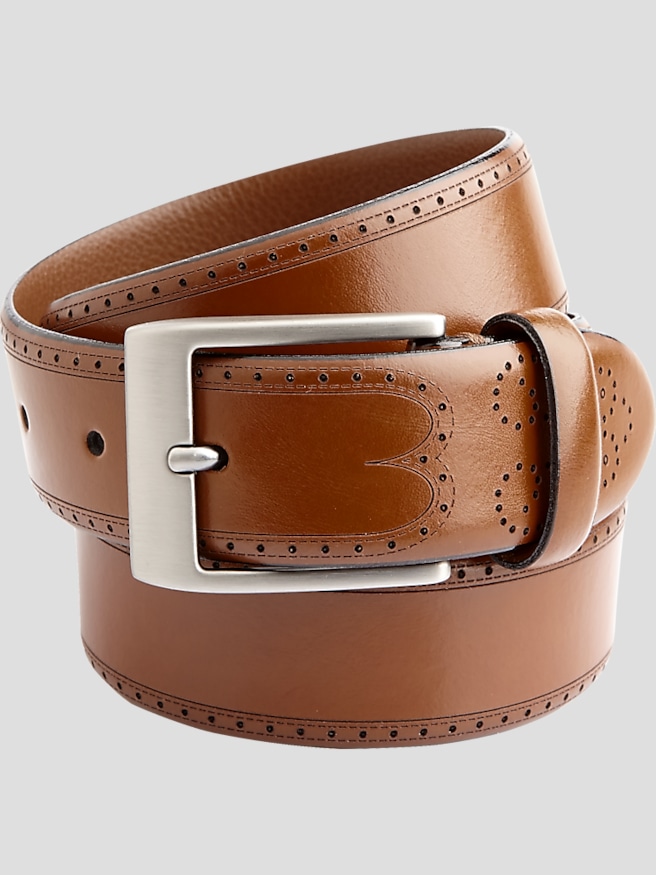
Men’s reversible belts combine two wearable sides in one accessory, most often pairing black with brown so a single belt can complement several combinations of shoes and trousers. Many designs use a buckle that rotates 180 degrees to expose the opposite face, while others have a detachable or repositionable buckle; the correct method depends on the construction. That flexibility makes a reversible belt useful for everyday dressing, business travel, and occasions that call for a polished finish without a complicated wardrobe. A smooth black face works naturally with black leather shoes and charcoal dress pants, while a brown face can bring warmth to navy trousers, tan chinos, or dark denim. Matching the belt and shoes closely in color and level of formality generally creates a cohesive appearance, though an exact shade match is not necessary. Medium-brown footwear, for example, can sit comfortably alongside a slightly darker brown belt when both have a similar finish. Width and hardware also influence how the belt reads: a relatively narrow strap with a restrained buckle tends to look dressier, while a wider strap and more substantial hardware often suit casual pants. Many dress belts measure approximately 1¼ inches wide, while casual styles often approach 1½ inches, but checking the width against the actual belt loops matters more than relying on a category name. A buckle with a low profile helps keep the front of a tucked-in shirt neat, especially beneath a fitted jacket. Silver-tone hardware offers a crisp accent, while warmer metal finishes can complement brown leather particularly well. For an office commute followed by dinner, or a trip that involves both dress shoes and casual leather footwear, the appeal is straightforward: two distinct looks with one familiar fit. The most useful color combination is the one that reflects the shoes and trousers already worn regularly, rather than two colors chosen simply for contrast.
Materials and construction determine how a reversible belt feels in the hand, bends around the waist, and holds its appearance through repeated use. Leather is a common choice because it combines structure with flexibility, although the leather type, surface treatment, and backing all affect performance. Full-grain leather retains its natural surface character and may develop a patina, while top-grain leather has been refined for a more uniform appearance. Neither label alone tells the whole story; strap thickness, edge finishing, stitching, and the connection between the strap and buckle deserve equal attention. A reversible belt may combine layers to create two finished faces, so both sides should feel smooth enough to sit against clothing without rough edges or exposed adhesive. Synthetic materials can provide a consistent surface and an alternative to leather, with care needs that depend on the particular material. A subtle grain can soften the appearance of everyday wear, while a glossy finish gives a sharper impression but may show scuffs more readily. Along the edges, even stitching and neatly applied finishes contribute to a clean outline, especially where the belt curves through trouser loops. Hardware should feel secure rather than loose, and a rotating mechanism should operate as intended without forcing or excessive pulling. Because both faces are meant to be visible, care should address the entire strap rather than treating one side as a permanent backing. A soft cloth removes routine dust, and any cleaner or conditioner should be suitable for the stated material and tested discreetly first. Excess moisture, direct heat, and tightly folded storage can affect the strap or finish. Hanging the belt from its buckle or loosely coiling it helps avoid sharp bends. Rotating between accessories and allowing a damp belt to dry naturally can also reduce unnecessary strain. Deep cracks near the fastening holes, separating layers, or a buckle that no longer locks securely are signs that appearance is not the only concern; reliable fastening matters just as much.
Fit is what makes the two-sided design practical throughout a full day. A belt should hold trousers comfortably without pulling the waistband into pronounced gathers, and it should leave enough strap beyond the buckle to pass through the first belt loop without an excessive tail. For many traditionally sized belts, a common starting point is a belt size about two inches larger than the labeled pant waist, such as a 36-inch belt for a 34-inch pant waist. Sizing conventions vary, however, and pant labels do not always reflect the measurement where the belt sits. The manufacturer’s size chart should take priority. Measuring a well-fitting belt from the specified buckle reference point to the hole used most often can provide a useful comparison when it matches the sizing method in that chart. Fastening near the middle hole usually leaves room for small adjustments, whether wearing a tucked-in dress shirt or sitting through a long meeting. For shoppers who value more control over fastening positions, men’s adjustable belts offer another category to consider, with adjustment methods that vary by design. Reversibility and adjustability describe separate features: one changes the visible face, while the other changes the fit. A reversible belt is especially useful for someone building a work wardrobe, packing lightly for business travel, or moving between chinos and tailored trousers during the week. It can also make a thoughtful graduation, birthday, or Father’s Day gift when the recipient’s size, usual shoe colors, and preferred buckle finish are known. For wedding guests and other dressed-up occasions, a simple strap and understated hardware keep attention on the overall outfit. Traditional tuxedo trousers generally use side adjusters or suspenders rather than a belt, so a reversible style is better suited to clothing designed with belt loops. In everyday use, the strongest choice balances a comfortable fastening position, compatible width, dependable hardware, and two finishes that genuinely earn their place in the wardrobe.