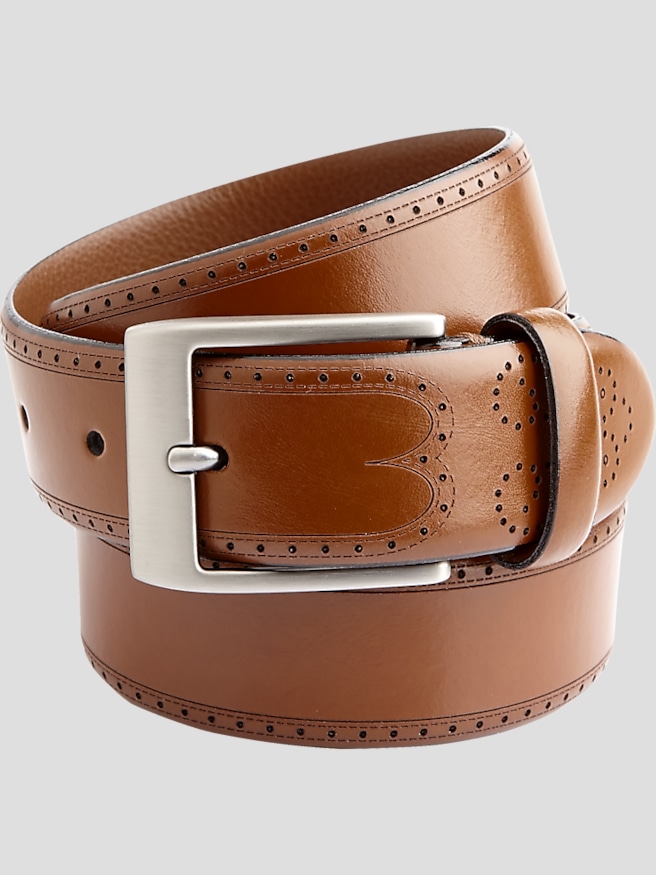
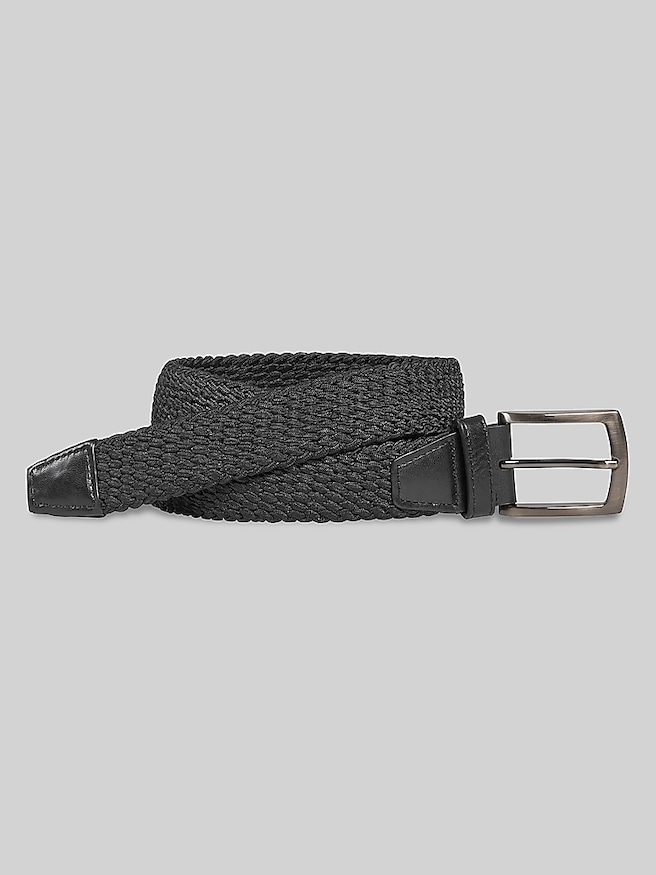
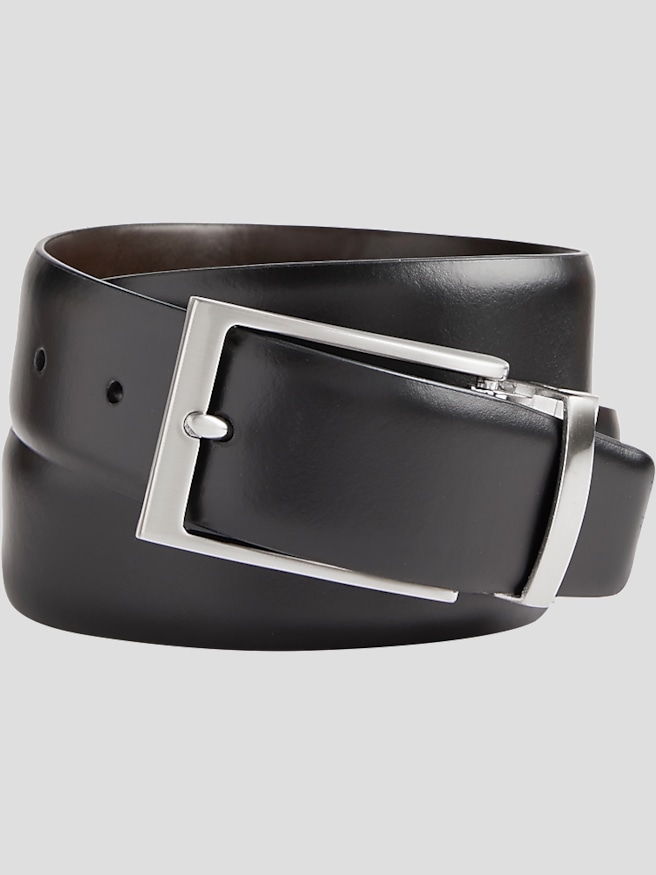
Men's adjustable belts secure trousers while allowing the waist fit to be refined for comfort, movement, and a clean appearance. The category includes traditional belts with multiple holes, ratchet belts with concealed tracks, sliding-buckle designs, and flexible straps that accommodate movement. Each construction adjusts a little differently. A ratchet belt uses a toothed track on the underside of the strap and a locking mechanism inside the buckle, often allowing adjustments in increments of about a quarter inch rather than the wider spacing between conventional belt holes. The exact spacing and release mechanism vary by design. Sliding buckles secure a strap through friction or a clamping mechanism, allowing the fastening point to move along the usable length without relying on punched holes. Elastic constructions add flexibility to the strap itself, which can feel comfortable when sitting at a desk, bending to tie a shoe, or moving between appointments. Not every adjustable belt stretches, and not every stretch belt has a hole-free closure; the fastening system and strap material work together to determine the feel. For a closer look at stretch-focused constructions, Men's Elastic Belts explores that related style. The practical appeal of adjustability is easy to appreciate over a full day: a waistband that feels comfortable while standing may need a slightly looser setting during a long drive or a seated dinner. Small adjustments help keep the fit comfortable without leaving the belt visibly loose. The buckle should hold securely once fastened, and its release should be straightforward to operate without tugging hard on the strap. A low-profile buckle can sit neatly beneath an untucked shirt, while a more substantial buckle creates a stronger visual accent with tucked-in casual clothing. Across these designs, the goal remains the same: dependable support with enough control to avoid choosing between a setting that pinches and one that lets the waistband slip.
Material, width, and finish shape how an adjustable belt looks and how it wears. Smooth leather has a polished appearance that works naturally with dress trousers, office clothing, and suits designed with belt loops. Full-grain leather retains the hide's natural surface, while other leather constructions may be corrected, coated, layered, or bonded for a more uniform finish. Those distinctions matter because the surface, backing, and edges can respond differently to repeated bending and friction. A leather label alone does not establish durability; the quality of the construction and the care it receives also influence its useful life. Woven webbing and synthetic straps bring a more relaxed texture to chinos, jeans, and casual pants, and flexible versions can move comfortably through an active day. Breathability, stretch, and abrasion resistance depend on the particular fiber and weave rather than appearance alone. Belt width also changes the overall impression. A narrower strap and restrained buckle generally look more at home with refined trousers, while a broader strap can balance heavier denim and casual footwear. The strap still needs to pass easily through every belt loop, including any narrower loops near the front of the waistband. Color coordination does not require an exact match, but similar tones help an outfit feel intentional: black leather pairs naturally with black shoes, and brown leather often works well with brown footwear in a comparable depth of color. A subtle grain or matte finish can soften the look, while a glossy surface and bright metal buckle draw more attention. Hardware can echo a watch or other accessories without matching every detail. For someone moving from a client meeting to dinner, a simple leather strap with discreet adjustment offers versatility. For a relaxed office or a day spent on the move, textured webbing or a stretch construction may feel more natural. Neither approach needs an oversized buckle or elaborate detailing to look finished.
Fit begins with the belt's stated sizing method, not an assumption that every waist measurement translates to the same belt length. Some belts are sized to a fastening point, some cover a waist range, and some are designed to be trimmed at the buckle end. Trouser size can be a useful reference, but it may differ from the measurement around the waistband where the belt will sit. A well-proportioned fit leaves enough strap to sit securely through the keeper without an excessive tail wrapping around the hip. Cut-to-fit constructions can create a tidy result when the design permits shortening, but removing material is permanent, and the buckle attachment and usable adjustment track must remain intact. Everyday durability also depends on small construction details: a secure buckle connection, smooth edges, consistent stitching where present, and a strap that lies flat without separating at its layers. Repeated sharp folds can stress leather and coated materials, while grit in a track or clasp may interfere with smooth fastening. Routine care is usually simple and should follow the material's care directions. Leather generally benefits from gentle wiping and occasional use of an appropriate conditioner, with any treatment tested on an inconspicuous area first. Webbing may tolerate spot cleaning with mild soap and water, but soaking is not suitable for every strap or buckle assembly. Thorough drying before storage helps protect both the strap and hardware. Hanging a belt straight or loosely rolling it avoids the tight creases that can develop when it is crumpled in a drawer. These practical qualities also make an adjustable belt a thoughtful gift for a graduate starting an office job, a partner updating everyday accessories, or someone who appreciates a more precise fit. An adjustable design offers some sizing flexibility, although the stated waist range still matters. A familiar color, an easy-to-use closure, and a buckle suited to the recipient's usual clothing make the choice feel personal while keeping it useful for everyday wear.