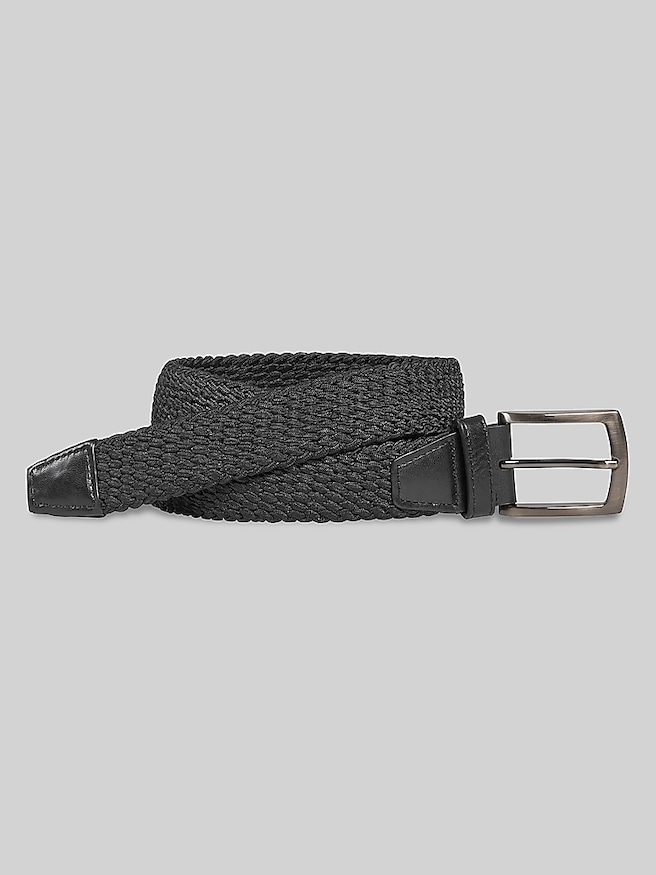
Men’s elastic belts combine a flexible strap with a buckle closure to help keep pants comfortably in place while allowing a little give through everyday movement. Unlike a rigid strap, an elastic construction can stretch slightly when sitting, bending, or reaching, then recover its shape when the tension eases. That balance makes these belts a practical match for chinos, jeans, casual trousers, and other pants with belt loops. Braided elastic belts are a familiar option: their woven structure often lets the buckle pin pass between the strands rather than through a fixed row of holes, allowing small adjustments to the fit. Other stretch belts use a more uniform strap with reinforced holes or an adjustable fastening system, so the construction matters as much as the appearance. Materials may include polyester or nylon blended with elastic fibers, sometimes with cotton in the outer weave for a softer, more textured surface. Leather or synthetic trim at the tip and buckle attachment can add structure where the belt receives frequent handling. A tightly woven braid tends to create a neat, understated texture, while a chunkier weave has a more relaxed character that works naturally with denim and heavier cotton pants. Solid navy, brown, black, and gray are easy colors to work into an everyday wardrobe; mixed-color braids add visual interest without requiring a bold pattern elsewhere in the outfit. The buckle contributes to the overall feel, too. A restrained metal frame can sit quietly beneath an untucked shirt, while a more substantial buckle becomes a visible part of a tucked-in look. Width should suit both the belt loops and the proportions of the pants. A narrower strap generally looks more refined, while a wider one can feel more at home with casual clothing. The result should look intentional without making the belt the first thing noticed.
A good fit starts with enough length to fasten securely and tuck the tip neatly through the keeper or the next belt loop, without leaving a long tail around the waist. Elastic does not eliminate the need for an appropriate size: a strap that must stay heavily stretched just to close can feel restrictive and place unnecessary strain on the weave. Pants sizing and belt sizing are not always identical, especially when pants sit below the natural waist, so the stated measurements and sizing information deserve attention. Measuring around the place where the belt will actually sit gives a more useful reference than relying on an old size label alone. Once fastened, the belt should rest flat, hold the waistband comfortably, and allow a small amount of movement without sagging. It should not need to pull an oversized waistband into deep folds. For someone who spends part of the day at a desk and part walking between appointments, that modest flexibility can make the transition from sitting to standing feel less abrupt than it does with a stiff strap. The same quality is useful on a long drive or a travel day, when a comfortable waistband matters but a tidy appearance still counts. With a tucked-in polo and chinos, a finely braided elastic belt adds texture without looking overly dressed up. With straight-leg jeans and a casual button-down, a broader weave and simple buckle keep the outfit grounded. Matching the general tone of the belt trim to the shoes can help tie a look together, though casual combinations do not require an exact color match. Brown trim works easily with brown leather footwear, while dark trim and subdued hardware suit black or charcoal accents. For traditional formal attire, a smooth dress belt may be the more conventional choice; elastic belts are especially useful where ease and a relaxed finish belong in the same outfit.
Durability depends on how well the strap, buckle, stitching, and reinforced ends work together over repeated use. Elastic fibers should provide give without requiring constant tension, and a well-finished braid should lie evenly rather than twist along its length. Secure stitching around the buckle attachment and tip helps protect areas that receive regular pulling and handling. Smooth buckle edges also matter because rough metal can catch fibers each time the belt is fastened. Even a sturdy elastic belt benefits from being used within its intended stretch range rather than pulled tight to compensate for pants that do not fit. Rotating belts and unfastening them before removing pants can reduce unnecessary strain on both the strap and the loops. Care should follow the material label, particularly when woven fibers are combined with leather trim or coated hardware. Light surface dust can often be lifted with a soft brush, and a slightly damp cloth may be suitable for small marks when the care directions allow it. Soaking, machine washing, harsh cleaners, and direct heat can affect elastic recovery, finishes, or trim, so they should not be assumed safe simply because the main strap is fabric. Letting a damp belt air-dry away from a heat source helps avoid unnecessary exposure, while hanging it without tension or storing it in a loose roll keeps the weave from being sharply bent. For gifting, a neutral color, an uncomplicated buckle, and a confirmed waist measurement make an elastic belt a thoughtful addition to a frequently worn wardrobe. It can suit someone building a business-casual rotation, replacing a stiff everyday belt, or looking for a comfortable finishing touch for weekends and travel. For a broader view of fastening styles, Men's Adjustable Belts includes another useful category to consider alongside stretch construction. Adjustability describes how the fit can be changed, while elasticity describes how the strap gives during wear; understanding that distinction makes it easier to choose a belt with the right combination of comfort, structure, and everyday versatility.