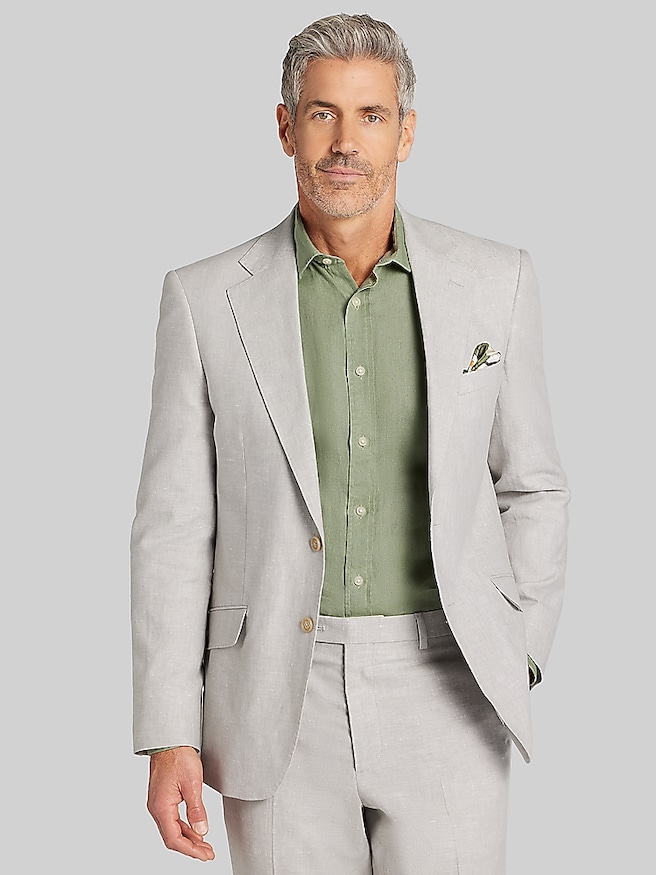
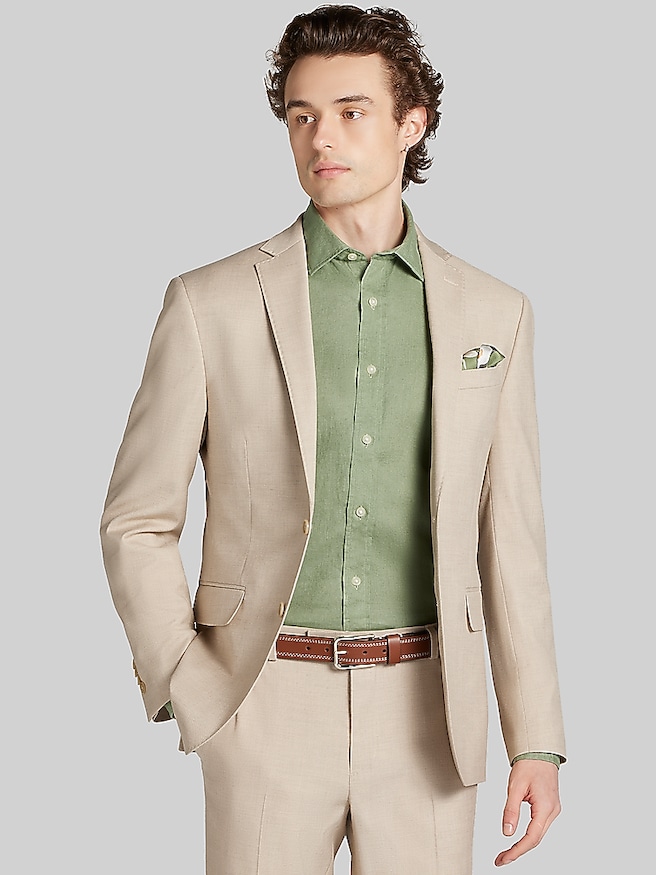
Men’s reception suits bring tailored structure to wedding celebrations, balancing the formality of the occasion with the freedom to sit, mingle, and dance comfortably. For a groom, a reception suit can carry the ceremony look into the evening or create a distinct outfit for the celebration afterward. For groomsmen, family members, and guests, the right suit reflects the invitation’s dress code without competing with the couple’s chosen look. Navy, charcoal, and black offer familiar foundations, while lighter neutrals, rich brown, and subtle patterns create a less traditional impression when the setting allows. A dark, smooth-finished suit with a crisp dress shirt feels at home at an elegant ballroom reception; a softly textured suit can suit a restaurant celebration or a gathering with a more relaxed dress code. The distinction between a suit and a tuxedo matters here. Suits generally have matching fabric across the jacket and trousers, while tuxedos typically feature contrasting satin or grosgrain details. A black-tie reception calls for a tuxedo rather than an ordinary black suit, whereas black-tie optional generally leaves room for a suitably formal dark suit. Within those boundaries, details shape the personality of the outfit. A two-piece suit keeps the silhouette clean, and a three-piece suit adds a waistcoat that maintains a finished appearance when the jacket comes off. Notch lapels feel familiar and versatile; peak lapels give the jacket a more pronounced, dressy line. Solid colors make coordinating shirts and accessories straightforward, while restrained checks or woven patterns introduce depth without dominating photographs. The overall effect depends less on elaborate styling than on proportion, fabric, and a clear sense of the celebration. A reception suit should look intentional beside the wedding party, across a dinner table, and in the candid photographs taken long after the formal portraits are finished. That balance gives the outfit its purpose: polished enough for a meaningful occasion, comfortable enough to remain part of the celebration rather than a distraction from it.
Fabric and fit determine how a reception suit feels over several hours of greetings, dinner, speeches, and dancing. Wool is a traditional suiting material because it drapes well, allows airflow, and offers natural resilience, though its weight and weave influence the finished feel. Wool blends can combine that familiar drape with other performance or texture characteristics, while fabrics with a small amount of stretch may provide extra ease through the seat, knees, and elbows. Stretch does not replace an accurate fit, however; a jacket that pulls across the button or trousers that strain when seated still need a better proportion. Linen and cotton bring their own character, including a more relaxed surface and a greater tendency to show creases, which may suit an informal reception better than a highly formal setting. For additional visual depth, Mens Textured Suits offer a related direction, with woven surfaces that can give a solid-looking outfit more dimension up close. Texture works especially well when the shirt and accessories remain restrained, allowing the fabric to provide the interest. Across materials, a well-fitting jacket rests cleanly at the shoulders, follows the torso without gripping it, and leaves enough room for comfortable movement. The collar should sit close to the shirt collar rather than lifting away, and the lapels should lie smoothly against the chest. Slim, modern, and classic fit labels describe general silhouettes, but the actual cut and individual measurements matter more than the label alone. Trousers need comfortable room through the waist, seat, and thighs, with a hem that meets the shoes neatly instead of gathering heavily at the ankle. A seated dinner makes these details especially noticeable: the waistband should remain comfortable, and the jacket should not feel restrictive when reaching across the table. Clean construction, secure stitching, and fabric suited to repeated wear also support durability, particularly for a suit intended to serve beyond one wedding. Thoughtful alterations can refine sleeve length, trouser length, and the waist while preserving the design’s intended shape.
Shirts, shoes, and finishing details give men’s reception suits their final level of formality. A white dress shirt creates a crisp contrast with most suit colors and keeps the look grounded in traditional occasion dressing. Pale blue offers a softer alternative when the dress code permits, while a quiet stripe can work with a solid suit and an understated tie. The shirt collar should frame the tie comfortably, and the tie’s width should feel balanced with the jacket’s lapels. A pocket square adds a small point of contrast without needing to duplicate the tie exactly; a simple fold often feels more natural than an elaborate arrangement. Polished leather lace-up shoes support a dressier outfit, while refined loafers can complement a less formal reception when appropriate. Trouser length and shoe shape work together, so the finished silhouette is best considered with the footwear intended for the event. Comfort matters just as much as appearance when the celebration includes standing through a welcome reception, sitting for dinner, and spending time on the dance floor. Accessories should feel secure and unobtrusive rather than require repeated adjustment. After the event, careful handling helps preserve the suit’s shape and finish for another celebration, an important dinner, or a professional occasion. The garment’s care label should govern cleaning and pressing, since wool, blended fabrics, linings, and decorative finishes can need different treatment. Prompt attention to marks, appropriate professional cleaning when needed, and storage on a supportive jacket hanger help protect the fabric and structure. Giving the suit space in the closet reduces crushing, while keeping it dry before storage helps prevent unwanted odors. Repeated cleaning after every brief wear is not always necessary; care should reflect the fabric instructions and the garment’s condition. For a gift, a reception suit is most successful when the recipient’s measurements, preferred silhouette, and event dress code are already understood. Whether worn by the groom or a guest, a thoughtfully selected suit offers more than a polished entrance: it provides a dependable outfit for the full celebration and meaningful occasions afterward.