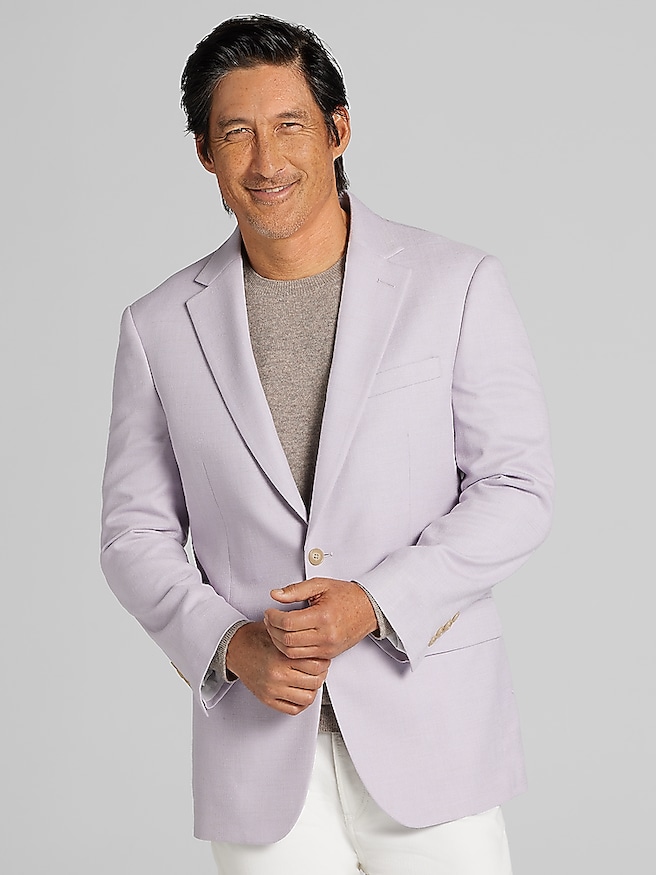
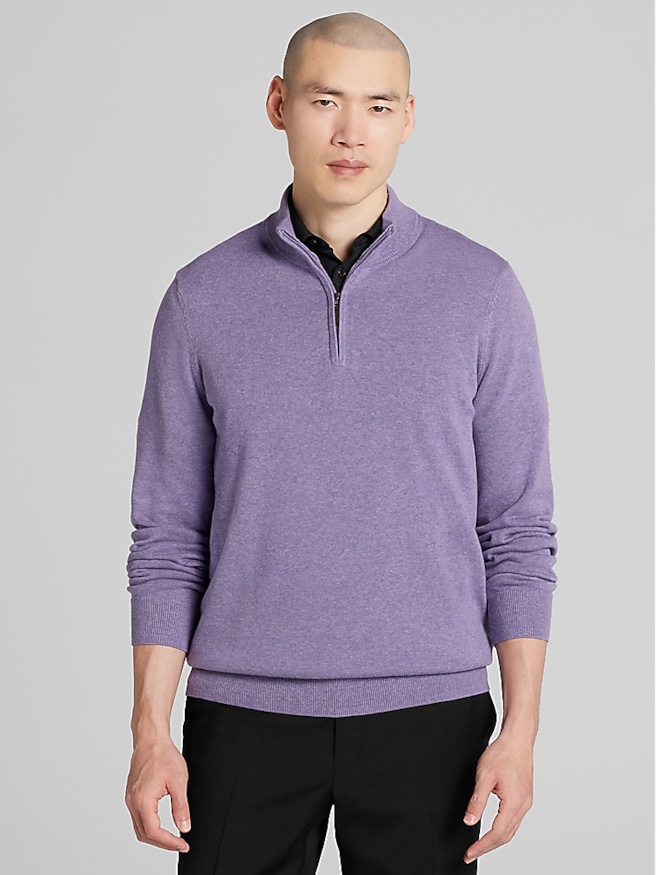
Men’s purple jackets bring color into tailored dressing without requiring an elaborate outfit. The shade makes a considerable difference: deep plum can feel as understated as navy, aubergine has a rich, almost neutral quality, and lavender creates a lighter visual impression with clearer contrast against dark trousers. A muted purple jacket with charcoal pants and a white shirt can look composed at a wedding reception, while a brighter violet jacket makes a more expressive choice for prom, a performance, or a celebratory dinner. Purple also works beyond dressier occasions. A softly constructed jacket over a plain knit shirt can feel relaxed enough for a gallery opening or an evening out, especially when the rest of the outfit stays simple. Rather than matching every element, give the jacket a supporting palette. Gray, navy, cream, and black each bring out a different side of purple; brown leather adds warmth, while black leather creates a sharper finish. For example, an aubergine sport coat with medium-gray trousers and dark brown loafers has depth without looking overly coordinated. A lavender blazer with navy trousers and a crisp white shirt feels distinct but familiar. Pattern changes the effect, too. A subtle check can break up a broad area of color, while a solid fabric lets the cut and shade take center stage. When adding a tie or pocket square, a small trace of purple usually looks more natural than several accessories in an identical shade. Texture can provide the connection instead: a matte tie, a softly woven jacket, and smooth trousers offer contrast without competing for attention. For outfits that carry the color beyond a single layer, Men's Purple Clothing provides a broader starting point for coordinating purple with familiar wardrobe staples. The goal is a combination that suits the occasion and feels comfortable on the person wearing it, whether the jacket is the main statement or simply an alternative to a neutral.
Fabric and construction influence how a purple jacket looks in motion, how it feels through a long event, and how well it holds its shape. Wool is valued in tailored jackets for its drape and natural resilience, with finer, smoother weaves creating a more polished surface and textured weaves giving the color additional depth. Wool blends can balance that character with other qualities, though the full fiber composition matters more than the word “blend” alone. Cotton tends to have a more relaxed appearance and may develop visible creases at the elbows, which can suit less formal styling. Linen has a distinctive slubbed texture and an easy drape, with wrinkles that are part of its character rather than a sign of poor quality. Velvet gives purple a particularly dimensional finish because its pile reflects light differently as the wearer moves. It can be striking for an evening celebration, but the surface needs thoughtful handling to avoid flattening or marking the pile. Synthetic fibers may contribute wrinkle resistance or shape retention, while a small amount of stretch can make reaching and sitting more comfortable. Stretch does not replace a good fit, however, and a jacket should not need to pull tightly across the back to allow ordinary movement. Construction also affects the experience. A full lining provides a smooth interior over a dress shirt; partial lining can create a softer, less structured feel. More defined shoulders and a structured chest support a formal silhouette, while softer shoulders make a jacket easier to pair with knitwear or casually styled trousers. For repeated wear, look beyond color to details such as secure buttons, even stitching, smoothly finished seams, and pockets that lie flat. Areas that receive regular friction, including cuffs and elbows, deserve particular attention. A jacket intended for occasional celebrations may prioritize a distinctive texture, while one meant for frequent dinners or workplace events benefits from a fabric and construction that recover well between wears.
Fit gives a purple jacket its confidence, especially because a distinctive color naturally draws attention to the silhouette. The shoulder line should sit cleanly, without extending noticeably beyond the shoulder or pulling inward across the upper back. Lapels should rest against the chest rather than bow away from it, and the front should close without pronounced tension lines radiating from the button. A trim fit can look sharp, but enough room to sit, reach forward, and move comfortably is essential. For a dressier jacket worn over a long-sleeve shirt, a narrow glimpse of shirt cuff creates a deliberate finish; a casual jacket worn with a knit shirt may call for a different sleeve relationship. Length should balance the torso and trousers rather than follow a single rule for every build. Trying a jacket with the type of shirt and pants intended for it makes proportions easier to judge, and checking the back in a mirror can reveal pulling or excess fabric that is not obvious from the front. Sleeve and waist adjustments may refine the shape, while major shoulder changes are more involved. Care helps preserve both that fit and the purple fabric’s appearance. Follow the care label, since wool, cotton, velvet, and blended materials can require different treatment. A broad, shaped hanger supports tailored shoulders, and allowing a jacket to rest between wears helps it recover from regular use. Brush suitable fabrics gently, address marks promptly according to the care instructions, and avoid aggressive rubbing that can alter the surface. Velvet requires particular caution with pressure and direct heat. Long exposure to strong light can affect color, so a protected storage space is preferable to leaving a jacket beside a sunny window. Keep pockets from becoming overloaded to reduce distortion around the hips. As a gift, a purple jacket is especially personal: the recipient’s usual size, preferred silhouette, and comfort with color all matter. A deep, subdued shade may suit someone who normally wears neutrals, while a vivid purple can reflect an established taste for expressive dressing. Those details help make the jacket a useful part of a wardrobe rather than something reserved for a single photograph.