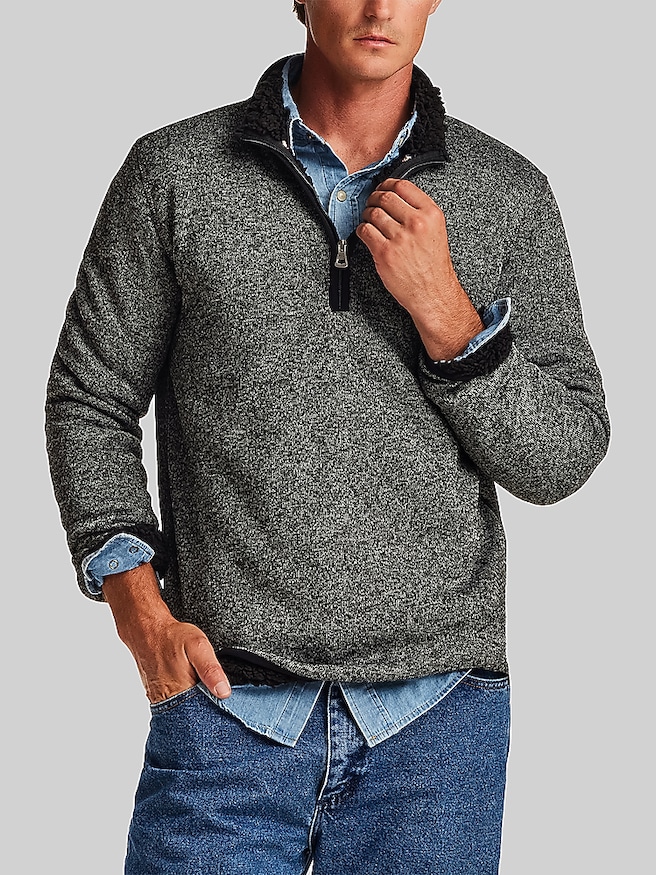
Men's polyester tops bring lightweight comfort, dependable shape retention, and straightforward care to everyday dressing. The category spans casual T-shirts, polos, long-sleeve shirts, and other upper-body layers made from polyester or polyester blends, with fabric construction doing much of the work in determining how each style feels. Polyester is a synthetic fiber that absorbs relatively little moisture and generally dries faster than cotton under comparable conditions. In fabrics engineered to wick moisture, it helps move perspiration across the material's surface so it can evaporate, making these tops useful for active commutes, busy afternoons, and days that involve plenty of movement. Not every polyester fabric has the same performance features, however: moisture management, odor control, and sun protection depend on the garment's construction, treatments, and stated specifications rather than fiber content alone. A fine, smooth knit can feel light beneath a sweater, while a more substantial textured knit gives a polo enough structure to look composed with chinos. A tightly woven shirt may have a crisp appearance but allow less airflow than an open knit, so thickness and texture matter as much as the percentage on the label. Pure polyester often emphasizes quick drying and resistance to shrinking, while blends can balance those qualities with other characteristics. Cotton can contribute a familiar, soft feel; rayon can add fluid drape; and a small amount of elastane can supply stretch and recovery. During the cooler months, these fabrics work as comfortable indoor layers and as part of an outfit that moves between a heated office and a chilly sidewalk. A lightweight top fits easily beneath a jacket without excessive bulk, while a heavier knit offers more substance when worn on its own. Polyester is not automatically warm or cool: fabric weight, knit density, airflow, and the layers worn over it all influence comfort. That range makes men's polyester shirts relevant well beyond exercise, including relaxed workplaces, travel days, casual dinners, and weekend plans.
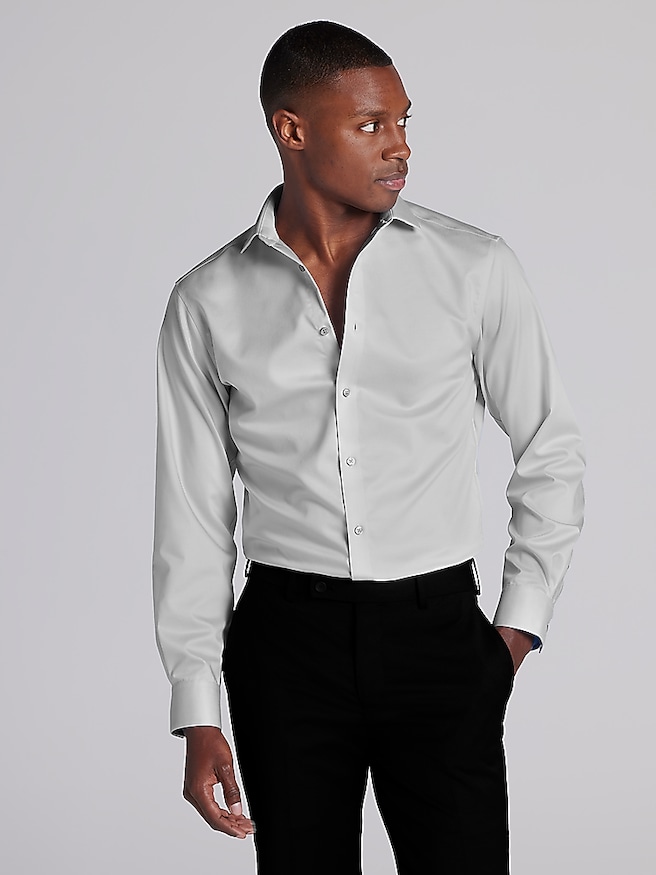
Fit determines whether a polyester top looks relaxed, athletic, or polished, even when the fabric itself is similar. A shoulder seam that sits near the shoulder's edge creates a clean outline in a conventional set-in sleeve, while enough room through the chest allows the fabric to fall smoothly instead of pulling into horizontal lines. Slim cuts sit closer to the torso and can layer neatly under a sport coat; classic or relaxed cuts leave more breathing room for sitting, reaching, and moving throughout the day. Stretch can make a close fit more comfortable, but it does not replace adequate space across the back or through the upper arms. On a long-sleeve style, sleeves that finish near the wrist keep excess fabric from bunching beneath outerwear. Hem length also changes how a top functions: a shorter, balanced hem can look intentional untucked, while additional length helps a shirt remain tucked when reaching for an overhead compartment or settling into a desk chair. These small proportions matter on ordinary days, when clothing needs to look presentable without requiring constant adjustment. For a business-casual setting, a polyester-blend polo with a stable collar and a matte finish pairs naturally with tailored trousers or chinos. A smooth crewneck creates a quieter foundation beneath an overshirt, and a textured long-sleeve top can add visual depth to a simple combination of dark denim and boots. Surface finish is worth considering because some polyester fabrics have a noticeable sheen, while others resemble soft cotton or finely textured knitwear. Neither is inherently better; each creates a distinct impression. Muted colors tend to integrate easily with an established wardrobe, while richer tones or subtle patterns give an otherwise restrained outfit a focal point. For travel, a top that resists everyday wrinkling can emerge from a folded stack looking reasonably neat, though no fabric is completely crease-proof. Comfortable armholes, nonrestrictive necklines, and smooth seams become especially noticeable during a long drive or flight, when even a small source of friction can become distracting.
Durability is another reason polyester tops earn a place in frequently worn wardrobes. Polyester fibers are strong and generally resist stretching out or shrinking with appropriate care, helping a garment maintain its proportions through repeated wear. Color retention can also be good, although dye quality, finishing, washing habits, and exposure to sunlight affect how the fabric ages. High-friction areas, such as the sides beneath a backpack strap or the surface under a seat belt, may develop pilling, and fine knits can snag on rough hardware. A dense construction and secure stitching can support longevity, but a durable fiber does not make every garment equally resistant to abrasion. Care labels remain the best reference for cleaning because blends, decorative details, and fabric finishes may require different treatment. Many polyester tops can be machine washed, often in cool water, and dried on low heat or allowed to air-dry when the label permits. Excessive heat can damage the fibers or affect the garment's shape, so hot dryers and high iron settings deserve particular caution. Washing with similar colors, turning garments inside out, and separating them from abrasive fasteners can help protect the surface. Fabric softener may interfere with moisture-wicking finishes, and polyester can hold onto body oils and odors, making suitable detergent and prompt laundering after sweaty wear useful parts of regular upkeep. Allowing a top to dry fully before folding also helps keep it fresh between wears. For someone building a practical wardrobe, these considerations connect directly to intended use: a frequent traveler may appreciate fast drying, an active commuter may value moisture management, and someone dressing for casual office days may prioritize a collar that holds its shape. Polyester tops can also make thoughtful gifts when the recipient's usual size, preferred fit, and everyday routine are known. For those who prefer a more absorbent natural fiber or a familiar cotton feel against the skin, men's cotton tops offer another everyday option. Polyester's particular strengths remain its easy layering, relatively quick drying, and ability to support a neat appearance through regular wear, especially when fabric weight and fit suit the day's activities.