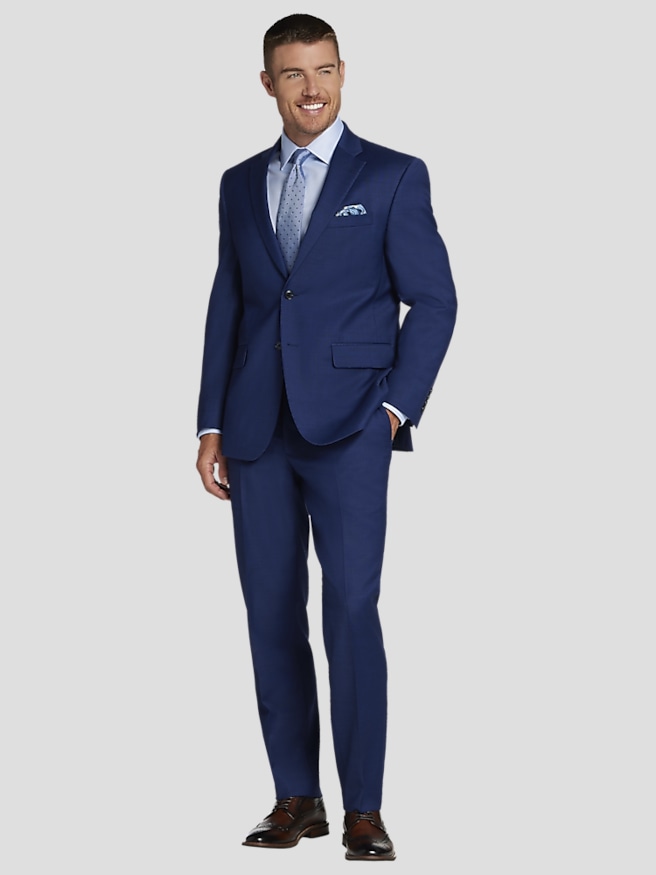
Men's patterned jackets bring visual detail to an outfit through woven or printed designs, from subtle herringbone and small checks to bold plaids, windowpane grids, and stripes. The category spans tailored sport coats, blazers, and more relaxed jacket shapes, giving pattern a place in both dressed-up and everyday wardrobes. A fine check can look almost solid from across a room, revealing its detail when someone steps closer, while a broad windowpane creates a more noticeable outline over a plain shirt. Houndstooth adds a crisp, repeating motif; herringbone creates a broken zigzag with a quieter, textured effect. These distinctions matter because the scale and contrast of a pattern often influence an outfit as much as its color. A navy-and-gray check feels restrained enough for many office settings, while a larger plaid can become the focal point of an outfit for a dinner reservation, anniversary celebration, or evening reception. Patterned tailoring is especially useful when a full suit feels too formal but a shirt alone feels unfinished. Unlike a suit jacket designed to match its trousers, a sport coat is generally intended to work with separate pants, making its pattern part of the contrast rather than something that needs an exact match. Navy, charcoal, brown, and cream can provide an easy foundation, with smaller accent colors offering a connection to a shirt, tie, or pocket square. A jacket with a thin blue line through a brown check, for example, can feel cohesive over a light blue shirt without looking overly coordinated. Solid trousers leave room for the jacket's design to stand out, while dark, clean-finished denim gives relaxed tailoring a more casual character. When patterns appear in both the jacket and shirt, distinct scales usually read more clearly than two equally sized checks. The result can be expressive without feeling busy: a larger jacket pattern, a finely striped shirt, and an otherwise simple outfit.
Fabric and construction shape how a patterned jacket looks, moves, and holds up to regular wear. Wool is valued in tailored clothing for its resilience, drape, and ability to recover from minor creasing, although performance varies with the weave, weight, and finishing. Tweed brings a more pronounced surface texture, which can soften the edges of a check and give a jacket visual depth. Cotton often has a more relaxed character, while linen has a distinctive texture and a tendency to develop visible creases as it is worn. Blended fabrics may combine fibers to balance softness, shape retention, stretch, or ease of care; the fiber label gives a clearer picture than appearance alone. A smooth, tightly woven fabric can make a small pattern look precise, while a more textured weave gives the same colors a softer outline. Inside the jacket, lining helps it slide over a shirt, and the amount of structure through the chest and shoulders affects whether the silhouette feels crisp or relaxed. Fit determines how all of those details come together. Shoulder seams should sit near the natural shoulder edge without a ridge extending beyond it, and the collar should rest cleanly against the shirt collar rather than standing away from the neck. Across the torso, a comfortable fit allows the front to close without strong pulling or an exaggerated X-shaped crease around the button. Sleeves need enough room for ordinary movement, whether reaching across a conference table or lifting a glass at a celebration. A slim cut generally follows the body more closely, while a roomier cut leaves additional space through the chest and waist; neither should restrict natural movement. Jacket length, sleeve length, and trouser proportions also affect the overall balance. Alterations can refine many areas, but a sound shoulder fit provides the strongest starting point for a jacket that looks composed rather than forced.
A patterned jacket earns its place through the occasions it serves and how naturally it fits into an existing wardrobe. For someone who spends the day moving between desk work and client meetings, a restrained check over a solid shirt can look polished without requiring a matching suit. For a guest attending a celebration, a more pronounced pattern can add personality while still respecting the event's dress expectations. Creative workplaces, restaurant dinners, theater outings, and family portraits all offer settings where patterned tailoring can feel appropriate, with the rest of the outfit setting the level of formality. A knit polo and clean-lined trousers create a softer impression than a dress shirt and tie, even under the same jacket. Patterned jackets can also make thoughtful gifts for someone whose size and style preferences are well understood, particularly when the colors connect with clothing already worn often. Shoulder fit, preferred cut, and usual jacket size are more useful details than a general description such as “dressy.” For wardrobes that also include relaxed outerwear, Men's Casual Winter Jackets offers a related direction beyond tailored sport coats. Whatever the jacket's shape, care should follow its label because similar-looking fabrics can require very different treatment. Some tailored jackets call for professional cleaning, while other constructions may permit washing under specified conditions. Between cleanings, a shaped hanger supports the shoulders, emptied pockets help prevent distortion, and adequate closet space keeps the fabric from being crushed. Gentle brushing can remove surface dust from suitable wool fabrics, while stains deserve prompt attention using methods appropriate to the material. Repeated friction at cuffs, elbows, and pocket edges can affect appearance over time, so thoughtful handling matters as much as the initial fabric choice. With a comfortable fit, a pattern that works with familiar clothes, and care suited to its construction, a jacket can become a dependable part of getting dressed rather than a piece reserved for one occasion.