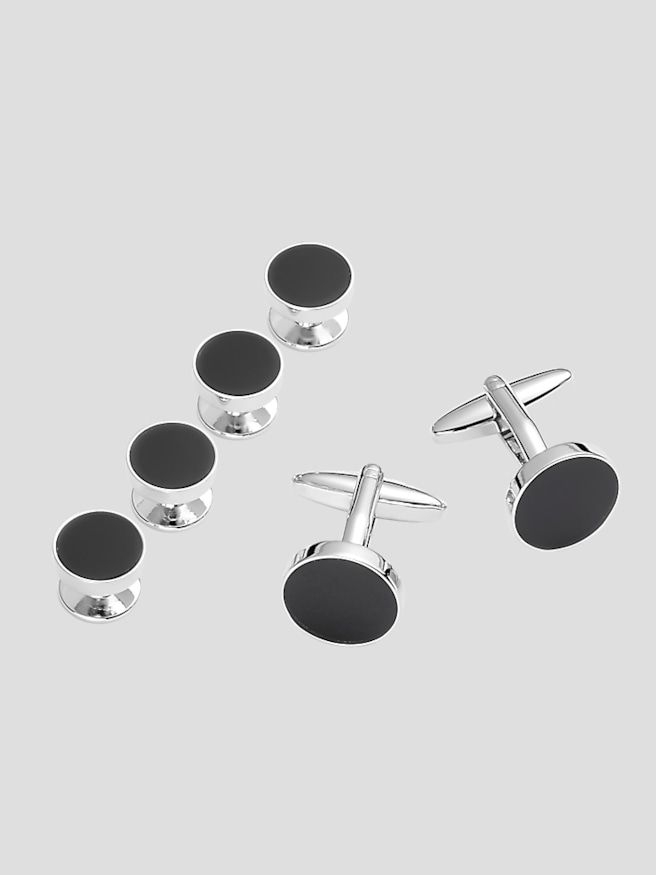
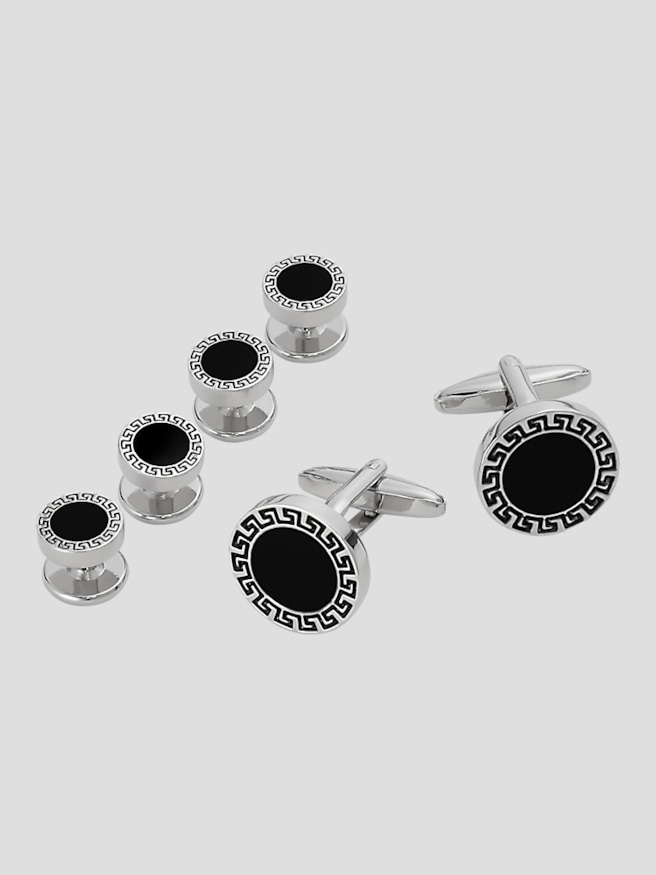
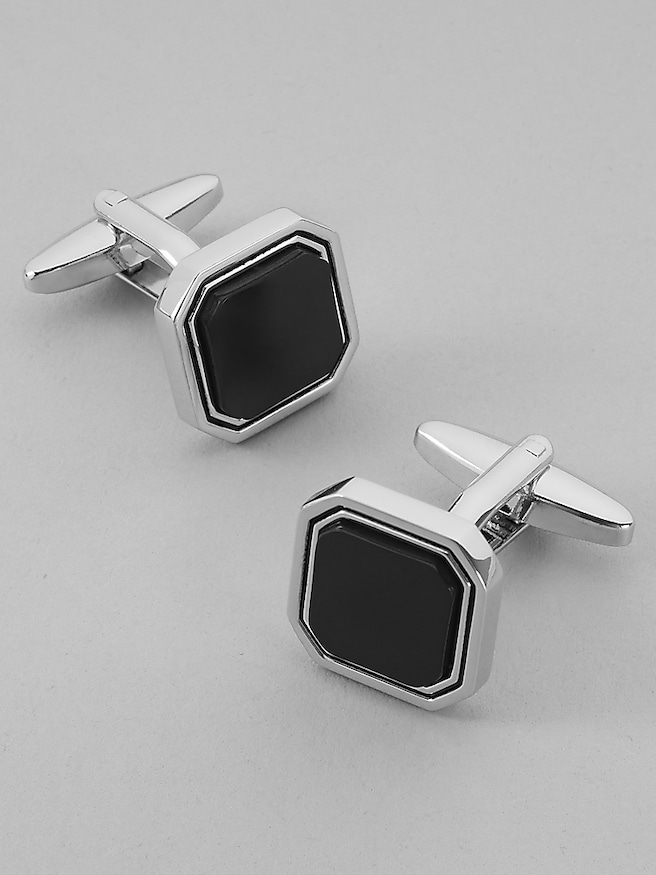
Men’s onyx jewelry brings a deep black accent to personal style, with a smooth surface that can feel understated or bold depending on its shape, size, and setting. Onyx is a variety of chalcedony, a quartz material known for its fine crystalline structure. Natural onyx can show bands of color, while the even black appearance associated with jewelry often comes from color treatment. That distinction makes material descriptions useful: solid onyx, an onyx inlay, and a black enamel accent may share a similar palette, but they are not the same material. Across rings, necklaces, bracelets, and cuff links, the stone’s appeal comes from the contrast between its dark surface and the metal surrounding it. Sterling silver, stainless steel, and white gold create a crisp, cool frame; yellow and rose gold tones add warmth. A polished setting catches light along its edges, while a brushed finish keeps the overall effect quieter. Broad, flat stone faces emphasize clean geometry, and rounded beads introduce a softer, more relaxed texture. These qualities make onyx a natural companion to tailoring without limiting it to formal clothing. A black stone ring can sit comfortably alongside a navy suit and white shirt, then feel just as appropriate with dark denim and a fine-gauge sweater. At an evening reception, an onyx accent can echo black shoes or a dark tie without making every accessory look deliberately matched. With charcoal, camel, olive, or cream clothing, the stone adds definition rather than another competing color. For a broader look at this dark accessory palette, Black Jewelry For Men offers a related perspective. The distinctive feature of onyx remains the stone itself: its depth, polish, and visual weight give even a compact piece a noticeable presence, especially against the texture of wool, cotton, or a softly worn leather strap.
Comfort and proportion matter as much as color when onyx jewelry becomes part of a regular rotation. A signet-style ring with a broad face has a substantial look, but the height of its setting determines how easily it slips beneath a pocket opening or a close-fitting glove. A lower profile is often more practical for someone who spends the day typing, handling paperwork, or putting on a jacket. Ring width also affects fit: a wide band can feel snugger than a narrow one in the same stated size, and fingers may change slightly with temperature and activity. The underside should feel smooth, with no sharp edges pressing into adjacent fingers. For bracelets, bead diameter, overall weight, and construction influence how the piece moves against the wrist. Smaller beads tend to sit more discreetly beside a watch, while larger beads create a stronger visual rhythm. Stretch construction needs enough room to slide over the hand without repeated strain, and a clasped bracelet should allow comfortable movement without dropping far onto the hand. If worn next to a watch, some separation helps limit rubbing between the two surfaces. Necklace length works in relation to the neckline rather than as an isolated measurement. A pendant that rests neatly inside an open shirt collar creates a subtle accent; one worn over a knit shirt becomes a more visible part of the outfit. Chain thickness should suit the pendant’s weight, and clasps should be easy to operate without feeling loose. Cuff links have their own practical requirements, including compatibility with the shirt’s cuffs and a fastening that stays secure through a long event. Metal composition deserves attention as well. Sterling silver may develop tarnish, plated finishes can wear at frequent contact points, and stainless steel is valued for its resistance to corrosion. Anyone with metal sensitivities benefits from checking the full alloy description rather than relying on color or a general finish name. Well-finished edges, a secure stone setting, and balanced weight help distinguish jewelry that simply looks appealing from jewelry that feels comfortable through dinner, a workday, or a celebration.
Onyx is suitable for regular wear with reasonable care, but its dark, polished appearance should not be mistaken for an indestructible surface. It generally measures about 6.5 to 7 on the Mohs hardness scale, which describes scratch resistance rather than resistance to impact. A stone can still chip if it strikes a hard countertop or takes a blow along an exposed edge. Removing onyx jewelry before lifting weights, playing contact sports, doing heavy work, or using household cleaners helps protect both the stone and its setting. Pools, hot tubs, and prolonged soaking can also be hard on metal finishes, stringing materials, adhesives, or some stone treatments. For routine cleaning, a soft cloth lightly dampened with water is a gentle starting point, followed by careful drying. Any cleaning method should follow the maker’s instructions, particularly when a piece combines onyx with other materials. Steam and ultrasonic cleaning are best avoided unless explicitly approved for the complete piece, since treatments and construction can affect how it responds. Separate storage in a soft pouch or lined compartment reduces contact with harder gemstones and keeps chains or clasps from rubbing against a polished face. An occasional check for a shifting stone, worn cord, or loose closure can catch a small issue before it leads to damage. This balance of visual strength and thoughtful upkeep makes men’s onyx jewelry appealing for personal milestones and gifts. A graduation, anniversary, birthday, or wedding-party thank-you can be marked with an accessory that fits the recipient’s established habits rather than asking for an entirely new style. Someone who rarely wears jewelry may appreciate a restrained shape and familiar metal tone, while a regular ring or bracelet wearer may welcome more scale or texture. During the cooler months, onyx holds its own against heavier fabrics and layered clothing, bringing a clear black accent to a sweater cuff or an open collar. Its lasting versatility comes from that straightforward combination of dark stone, considered proportions, and a finish that works with the clothes already worn most often.