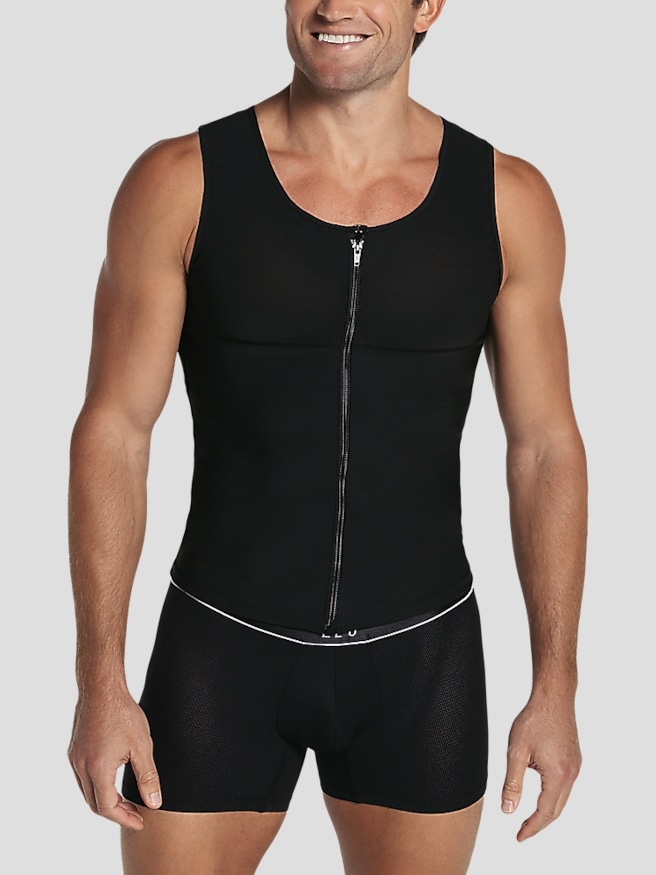
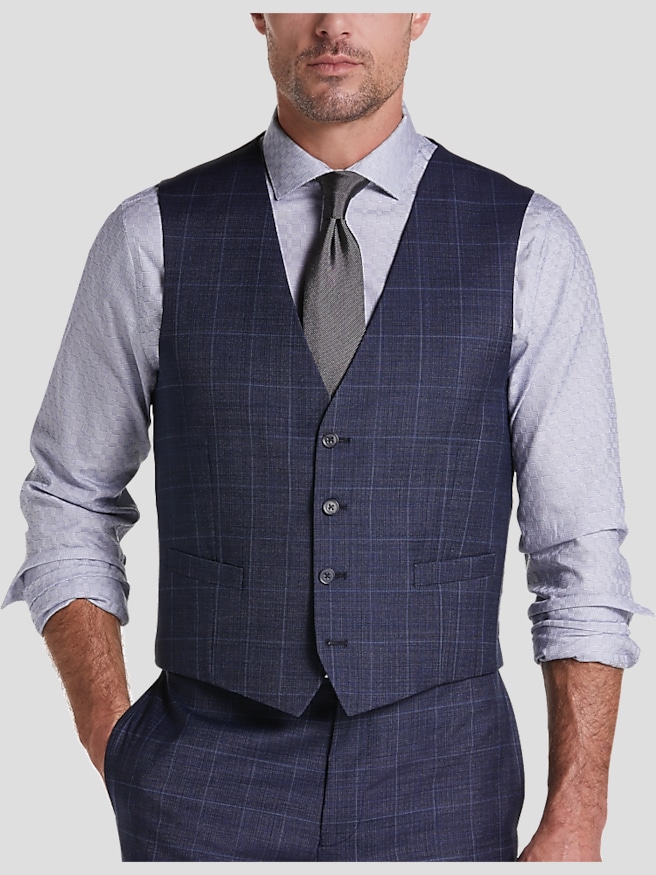
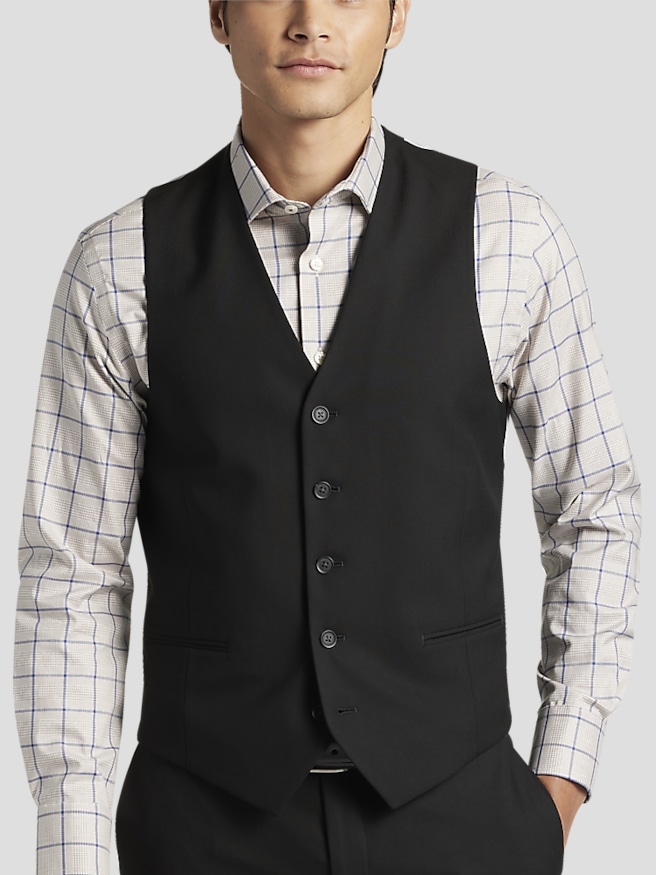
Men’s office vests bring definition to a work outfit without the full structure of a jacket. The category spans tailored suit vests, often called waistcoats, along with sweater vests and streamlined zip-front layers suited to business-casual settings. A tailored vest gives a dress shirt and trousers a finished appearance, while a fine-gauge knit creates a softer outline with an Oxford shirt and chinos. Fleece and lightly quilted styles have a more relaxed character and generally fit workplaces where casual layers are part of the dress code. The strongest choice depends on the setting: a client presentation may call for a matching suit vest, while a day of desk work and informal meetings may suit a simple knit. Navy, charcoal, gray, and black are versatile foundations because they pair easily with familiar shirt and trouser colors. Subtle checks, small-scale textures, and muted heathered finishes add interest without competing with a tie or patterned shirt. Matching fabric and color create the continuous line of a three-piece suit; a deliberately contrasting vest separates the layers and feels less formal. For a coordinated suit, matching the cloth matters as much as matching the color, since two shades of navy can look noticeably unrelated when their textures or finishes differ. Single-breasted designs tend to be straightforward to combine with everyday office clothing, while double-breasted shapes have a more pronounced tailored presence. A deeper neckline leaves more of the shirt and tie visible, and a higher button stance gives greater coverage across the chest. Pocket placement, button finish, and the shape of the front hem also influence whether a vest reads as traditional, modern, or relaxed. For professionals building a repeatable work wardrobe, these details offer variety without requiring an entirely new outfit. A vest can also make a thoughtful gift for someone starting a new role or stepping into a more polished dress code, particularly when the recipient’s size and preferred fit are already known.
Fabric and construction determine how an office vest hangs, moves, and holds its appearance through repeated wear. Wool is a traditional choice for tailored waistcoats because it drapes cleanly and has natural resilience; wool blends can combine that character with other performance or texture qualities. Cotton often has a matte, understated finish that works well in less formal combinations, though its tendency to crease depends on the weave and finishing. Polyester and other synthetic fibers can contribute wrinkle resistance and durability, while a modest amount of stretch may make reaching, typing, and sitting more comfortable. Stretch does not replace correct sizing, however: a vest that pulls across the buttons is still too snug, even when the fabric gives. Fine-gauge merino wool and cotton knits provide a less structured alternative, with ribbed edges and a close, flexible drape rather than a tailored shell. Smooth, compact surfaces typically look more polished with dress trousers than bulky textures or prominent outdoor-style details. Lining deserves attention as well. A smooth lining helps a tailored vest settle over a shirt, while the construction of the back affects how it looks when worn without a jacket. Some suit vests have a contrasting lining-fabric back; others use the outer fabric across the back for a more consistent appearance. Neither is automatically better, but the distinction matters when the vest will be the visible top layer for much of the day. Quality is also evident in smaller features: secure buttons, neatly finished buttonholes, even seams, and pockets that lie flat. Dense, balanced knitting helps sweater styles retain a tidy surface, although friction from a desk edge, bag strap, or repeated arm movement can still cause pilling. For a workday that includes a commute, seated meetings, and an evening networking event, fabric recovery and comfortable construction often matter more than decorative extras. The goal is a vest that looks considered at the conference table and remains easy to wear when the jacket comes off.
Fit brings those fabric and styling choices together. A tailored office vest should sit close to the torso without squeezing it, with shoulder seams resting neatly and armholes allowing movement without revealing excessive shirt fabric. The neckline should lie flat rather than stand away from the chest, and the buttoned front should remain smooth instead of forming diagonal tension lines. Length is particularly important: the front should cover the trouser waistband so a strip of shirt does not interrupt the outfit when standing naturally. Trouser rise affects that relationship, which is why checking the vest with the pants intended for work gives a more useful impression than assessing it alone. An adjustable back strap can refine the waist, but tightening it excessively may create bunching rather than a cleaner fit. Sitting down, reaching forward, and putting on a jacket reveal restrictions that a quick look in the mirror can miss. With many traditional single-breasted waistcoats, leaving the lowest button undone is customary, though the cut should determine whether that convention looks right. Knit and zip-front vests generally need enough room to skim the shirt without gripping it, with hems that sit neatly rather than bunch around the waist. Keeping pockets lightly filled preserves the outline; a phone or thick key ring can distort an otherwise clean front. Beyond workplace combinations, Cool Men's Vests offers another direction for exploring vest styling with a more individual feel. Care should always follow the garment label, since a lined waistcoat, a wool knit, and a synthetic zip-front layer may require distinct methods. Some tailored styles need professional cleaning, while some knits permit gentle washing and flat drying. Folding knit vests helps prevent shoulder stretching; hanging structured styles on a suitable hanger supports their shape. Prompt attention to stains, gentle removal of surface lint, and occasional checks for loose buttons help maintain a presentable finish. With the right proportions and consistent care, an office vest becomes a practical part of the work wardrobe rather than a layer reserved for a single occasion.