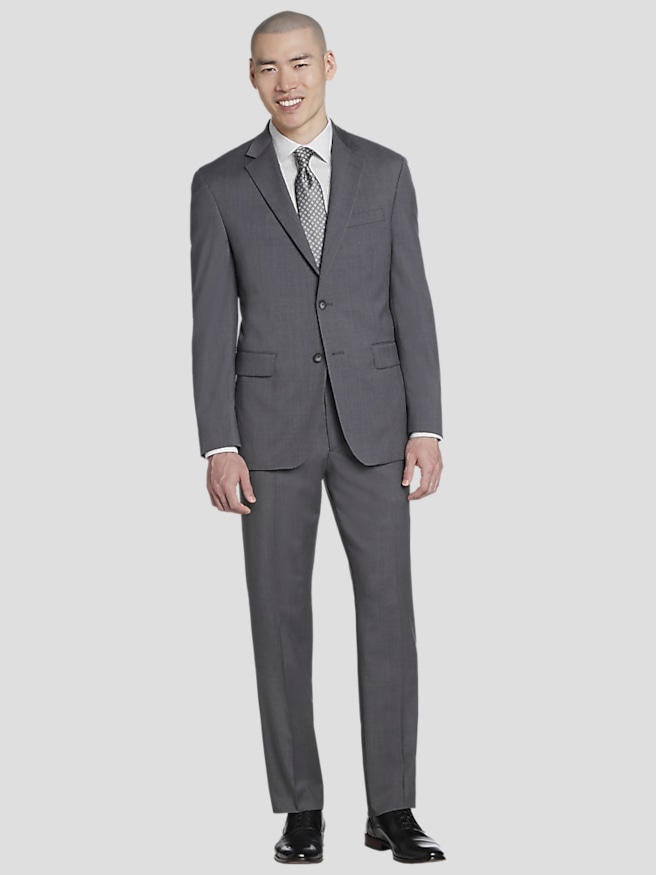
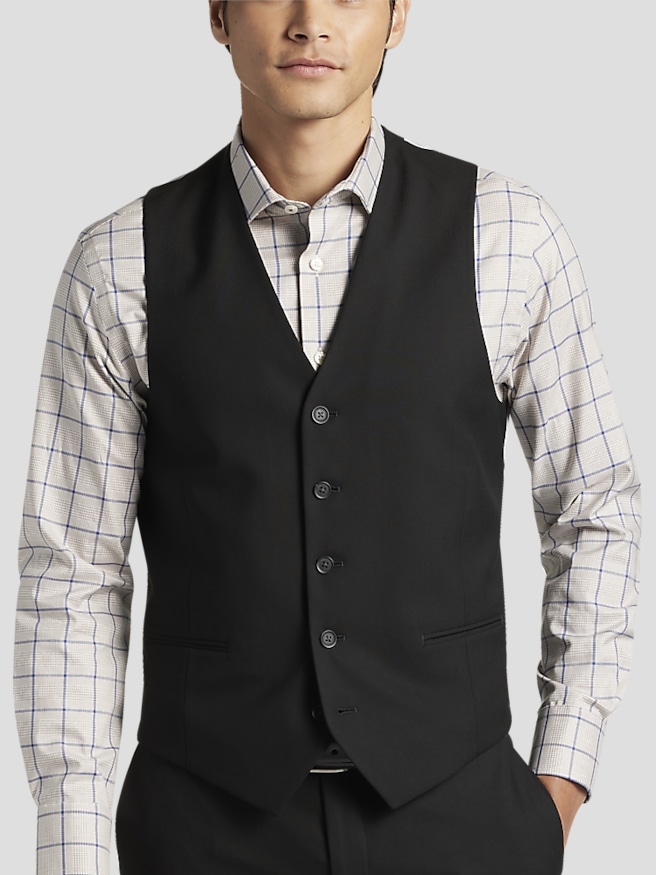
A men’s monochromatic suit set pairs a matching jacket and trousers in a single color, with room to carry that color through the shirt, tie, or vest. Some sets include a matching vest for a three-piece look, while the shirt and accessories can bring in lighter or deeper shades from the same color family. A navy suit with a slate-blue shirt and a deep navy tie reads as monochromatic without asking every piece to match exactly. That small shift in shade brings out the line of the lapel and gives the tie some definition. An all-black suit takes the opposite approach: the color stays consistent, and the texture does the work. A matte jacket, smooth dress shirt, and subtly textured tie each catch the light in their own way, a detail that shows up in photographs and across a dinner table. Charcoal can take on a similar depth with a softer gray shirt, though it helps to see the fabrics side by side. A gray with a warm brown cast can look out of place next to one with a distinctly blue cast, even when both look neutral on their own. That’s one advantage of starting with a matching suit set: the jacket and trousers share a fabric and finish, so the largest pieces look like they belong together. A two-piece suit makes a straightforward choice for client meetings, presentations, and wedding guest attire. A matching vest adds structure for a ceremony or formal dinner and keeps the look pulled together if the jacket comes off at the reception. An all-black suit can look sharp at an evening event, but an invitation that calls for black tie calls for a tuxedo rather than a dark suit. For occasions where a suit is the right choice, Mens Monochrome Outfits offers more ways to carry one color through the rest of the outfit.
The fabric and cut make as much of a difference as the color. Smooth worsted wool has a clean surface that shows off a crisp trouser crease and a defined lapel. Wool also tends to recover well from the creases that form while sitting, a useful quality when the same suit needs to look presentable at a morning meeting and a dinner afterward. Wool blends vary by composition and weave, and some include a small amount of stretch for more ease through the seat or across the back. Linen has a more visible weave and takes on creases with wear, giving a solid-color suit a relaxed look rather than the smooth finish of a crisp business suit. Fabric affects how shades read, too: a brushed charcoal cloth can look softer and lighter than a smooth charcoal shirt, even when the colors are close. Fit is especially noticeable when the jacket and trousers form one uninterrupted line. The jacket should sit cleanly at the shoulders, and the lapels should lie flat rather than bowing outward when the jacket is buttoned. A slim cut can make that line look sharp, but it shouldn’t pull at the button or across the upper back when reaching for a handshake. A classic cut gives more room through the chest and leg without having to look loose. Trousers should sit securely at the waist and fall cleanly from the seat, with enough ease to sit comfortably. At the shoe, a slight break adds a small fold at the hem, while a hem with no break keeps the line straighter. Jacket shoulders are harder to alter than trouser hems, so a good fit through the upper body matters more at the outset. That makes a suit set a more practical gift for a graduation or career milestone when the recipient can be part of the fitting or has a known jacket and trouser size.
Care matters for a monochromatic suit because shine, fading, and abrasion can be more visible when two pieces of the same cloth sit next to each other. The trousers usually see more friction than the jacket, particularly at the seat, inner thighs, and pocket openings. Heavy keys or a bulky wallet can put extra strain on those areas and distort the way the fabric hangs. After wearing the suit, a broad hanger supports the jacket’s shoulders, and hanging the trousers along their creases helps them keep their shape. Giving both pieces time to air out before putting them away lets wrinkles relax and avoids pressing damp fabric into a crowded closet. A soft garment brush can lift lint and surface dust, especially on black or deep navy cloth, while a breathable garment bag helps protect the suit during longer stretches between wears. Follow the care labels on both pieces. Cleaning a matching jacket and trousers together when they need a full cleaning can help them stay consistent in color and finish. Frequent cleaning isn’t a substitute for airing and brushing, and pressing with too much heat can leave a shiny patch that stands out on a matte fabric. For a suit worn regularly to the office, some time between wears gives the cloth a chance to recover at the elbows and knees. The payoff is a suit that can adapt to several settings without losing what makes it distinctive. A charcoal set can look composed with a pale gray shirt at a presentation and take on a more formal feel with a darker shirt and tie at dinner. For wedding photos, a tonal vest keeps the palette intact when the jacket is unbuttoned. The color stays cohesive, but the fabric, fit, and layers give the outfit just enough definition to suit the occasion.