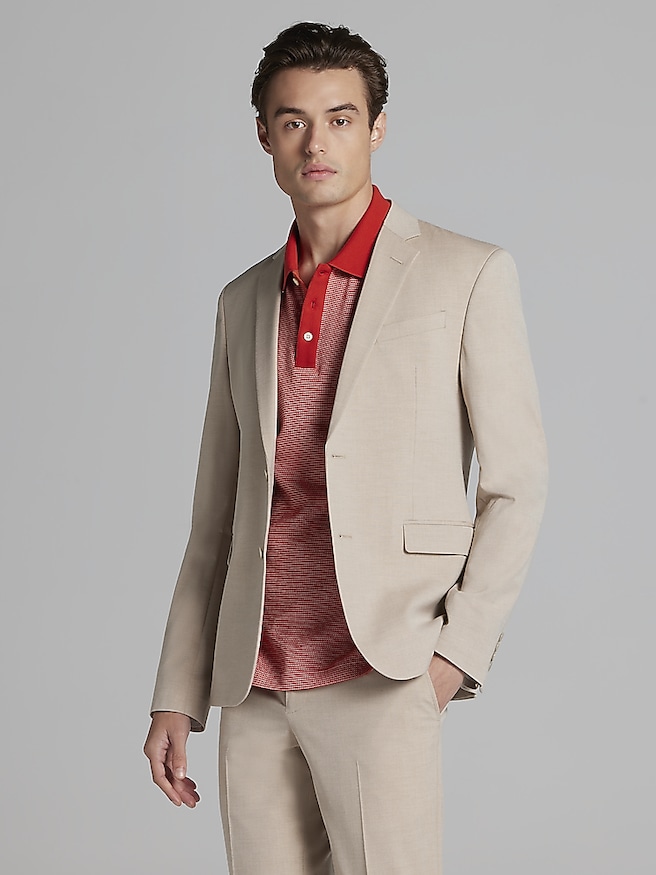
Men’s modern wear centers on clean lines, balanced proportions, and versatile clothing that moves comfortably between work, social plans, and everyday life. The look is polished without feeling overly formal: a jacket with a natural shoulder, trousers with a neat taper, or a textured knit paired with a crisp collar. Rather than relying on bold decoration, modern style often gets its character from the relationship between shape, fabric, and color. Navy, charcoal, gray, tan, and off-white create a useful foundation, while shades such as olive, burgundy, and muted blue add depth without making an outfit difficult to coordinate. A smaller wardrobe can still offer variety when its pieces share a compatible palette and similar levels of formality. The same trousers might work with a button-front shirt for a client meeting, then take on a more relaxed appearance with a fine-gauge knit for dinner. Fit makes those combinations feel intentional. Jacket shoulders should follow the body’s natural line, and the front should close without pulling into an X across the fabric. A shirt collar should sit comfortably at the neck, with enough room to turn the head freely. Trousers need space through the seat and thighs so that sitting at a desk or stepping into a car does not strain the seams. Modern does not have to mean tight; a straight leg or a fuller cut can look equally considered when the length and proportions are right. A slight break at the shoe creates a softer finish, while a shorter hem produces a cleaner outline. The best balance depends on the footwear, the trouser opening, and personal preference rather than a single rule. For someone building a wardrobe for a first office role, refreshing established favorites, or dressing for a more flexible workplace, these details help clothing feel like a natural extension of daily routines. A successful modern outfit looks composed while leaving its wearer free to move, sit, and get on with the day.
Fabric gives modern clothing much of its personality, even when the colors and shapes are understated. Wool can provide a smooth drape and a refined surface for tailored clothing, while textured weaves introduce visual interest without a strong pattern. Cotton offers a familiar feel in shirts and trousers, with a crisp poplin creating a sharper impression than a softly textured Oxford weave. Linen has a distinctive, lightly irregular surface and develops visible creases with wear; that relaxed character is part of its appeal rather than something every wearer will want to press away. Knitted fabrics generally move more freely than tightly woven ones, making them useful for clothing intended to feel less structured. Blended fabrics may combine the qualities of several fibers, and a small amount of stretch can add give, although fabric composition alone does not guarantee comfort or lasting shape. Weight, weave, construction, and fit all contribute to how a garment behaves. Someone who spends much of the day seated may appreciate trousers that recover their shape after movement, while a person carrying a shoulder bag may pay closer attention to surface wear at the shoulder and hip. Details such as secure buttons, evenly sewn seams, tidy buttonholes, and pockets that lie flat can help distinguish thoughtful construction. Care matters just as much after clothing becomes part of a regular rotation. The care label should determine whether a garment is washed, professionally cleaned, or treated another way, since similar-looking fabrics can have very different requirements. Prompt attention to spills, gentle pressing where permitted, and adequate space between garments help preserve their appearance. Jackets benefit from supportive hangers, while many knits retain their shape better when folded instead of suspended. Letting frequently worn pieces rest between uses can also reduce repeated stress on the same areas. These habits support a wardrobe that continues to look deliberate after the first wearing, with texture, drape, and finish remaining part of the appeal rather than becoming an afterthought.
The appeal of men’s modern wear is its range of uses, from a presentation that calls for quiet confidence to a restaurant reservation where a full suit would feel unnecessary. A coordinated tailored outfit creates a clear, composed impression for ceremonies, professional events, and celebrations, while separates allow more room to adjust the level of formality. An unstructured jacket can soften the transition between office clothing and casual plans, especially when its texture relates naturally to the shirt and trousers beneath it. For a business-casual setting, a restrained pattern or a subtle contrast in fabric can provide enough interest without competing for attention. At a wedding or another event with a stated dress code, the occasion’s expectations should take priority over a preferred everyday look. Shoes and accessories help finish the message: sleeker shapes generally support a dressier outfit, while more substantial textures can make tailoring feel less formal. Belts, ties, and pocket squares work best when they relate to the outfit without appearing mechanically matched. A small repeat of color can be more effective than several identical accents. Personal style still has room within this restrained approach, whether that means an open collar, a softly patterned shirt, or a trouser silhouette with a little more volume. For destination celebrations and relaxed coastal settings, Men's Tropical Fashion offers a related direction for exploring expressive patterns and easygoing combinations. Clothing can also make a thoughtful gift for a graduate beginning a career, a partner refining an everyday wardrobe, or a family member preparing for an important occasion. Familiar colors, preferred fabrics, accurate measurements, and the recipient’s actual routine are more useful starting points than an unfamiliar trend. Someone who rarely wears a tie may get more use from an adaptable layer than from highly formal clothing. Across these situations, modern style is less about looking dramatically different each day and more about having well-chosen pieces that work together, feel comfortable, and suit the person wearing them.