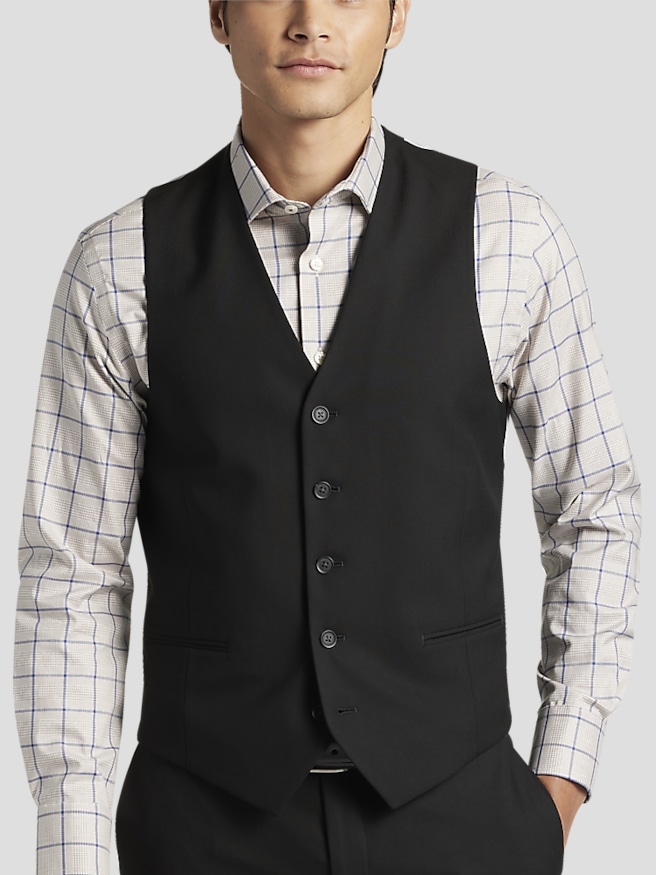
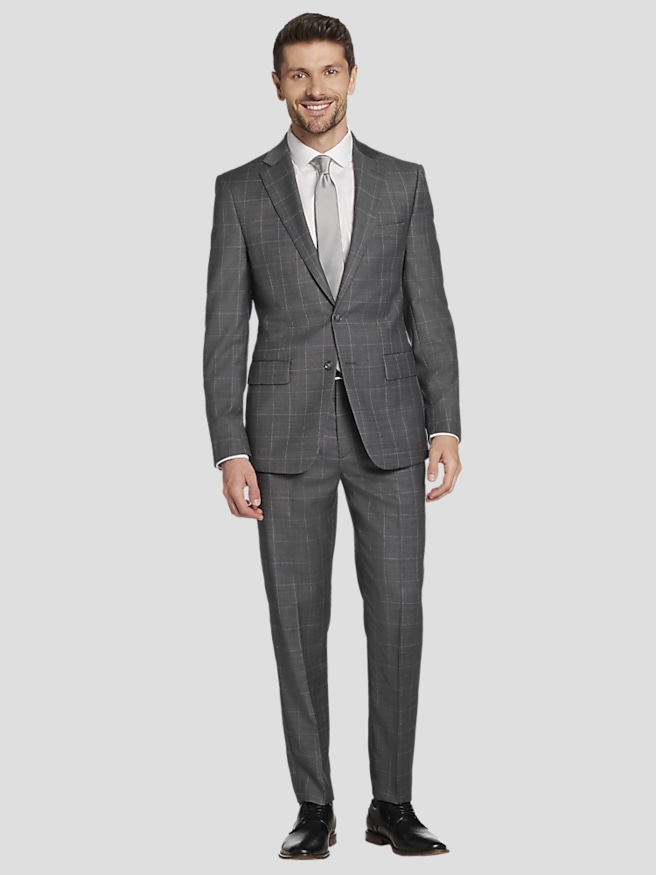
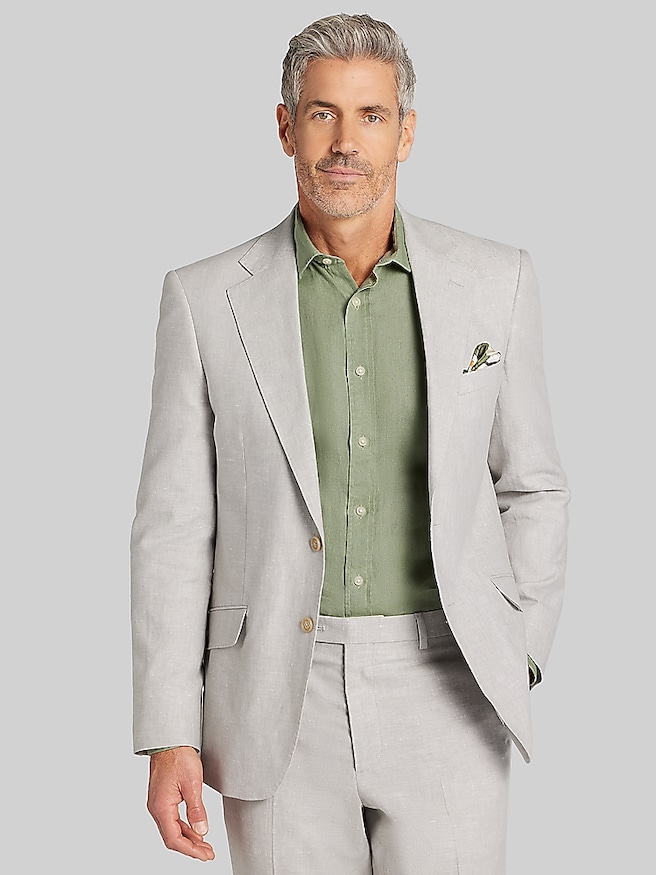
Men’s mix and match suits bring flexibility to tailored dressing by allowing jackets, trousers, and sometimes vests to be selected as separate pieces rather than as a single set. That flexibility serves two distinct purposes: building a coordinated suit with independently sized components, or pairing complementary separates for a deliberately contrasting look. A man who needs a broader jacket and a smaller trouser waist can achieve more balanced proportions without treating both pieces as the same size. Someone building a versatile wardrobe can also wear a jacket with coordinating trousers for a presentation, then combine it with another pair for a dinner reservation or an informal office gathering. The distinction between a matching suit and contrasting separates matters. A true matching suit relies on the same fabric, color, and pattern across its components; two fabrics described as navy may still differ noticeably in shade, weave, or sheen. An intentional contrast often looks more considered than a near match that is slightly off. A navy jacket with medium-gray trousers, for example, creates a clear separation while keeping the overall effect composed. Charcoal paired with a lighter gray can feel equally restrained when the textures work together. Small-scale checks, subtle windowpanes, and textured solids add dimension, though a prominent pattern usually benefits from a quieter companion. The most cohesive combinations share a similar level of formality: a softly constructed, textured jacket generally sits more naturally with relaxed tailored trousers than with sharply finished formal trousers. Mix and match tailoring works particularly well for business settings, celebrations, dinners, and other occasions where polished clothing is appropriate but an exact matching suit is not required. For events with a stated dress code, the invitation remains the best reference, since contrasting separates do not replace a traditional suit or tuxedo in every setting. The appeal is a wardrobe that can accommodate several kinds of plans while still looking intentional from the jacket shoulders to the trouser hem.
Fit gives men’s suit separates their finished appearance, regardless of whether the fabrics match. A jacket should sit cleanly across the shoulders, with the collar resting against the shirt rather than pulling away from the neck. When fastened, the front should lie smoothly instead of forming pronounced tension lines around the button. Sleeve length, jacket length, and the amount of shaping through the torso all influence the silhouette, but comfort matters just as much as a clean outline. Sitting through a meeting, reaching across a table, and walking comfortably should not require constant adjustments. Trousers need adequate room through the seat and thighs, a waistband that stays in place without excessive belt pressure, and a rise that feels comfortable when seated. A tapered leg can look streamlined without gripping the calf, while a straighter cut provides a more relaxed line. The hem may skim the shoe or create a modest break, depending on the cut and the intended appearance. Consistency between the jacket and trousers helps the outfit feel unified; a very close-fitting jacket can look disconnected from substantially fuller trousers unless the proportions are deliberately balanced. For a coordinated alternative with a streamlined silhouette, Men’s Slim-Fit Matching Suits offer another direction in tailored dressing. Fabric contributes to fit as well as appearance. Wool is valued for its drape, breathability, and ability to recover from ordinary creasing, although performance varies with the weave and construction. Cotton often brings a more matte, structured character, while linen has a distinct texture and a naturally creased appearance. Blended fabrics can combine these qualities, and stretch fibers may add ease of movement. Stretch does not compensate for a garment that is too small, however. Lining, seam finishing, pocket construction, and the feel of the cloth also influence everyday comfort and durability. For pieces worn frequently, a resilient fabric and sound construction are more useful than a polished appearance alone.
The usefulness of mix and match suits extends beyond the first outfit assembled from them. A restrained color palette makes it easier for separate pieces to work with shirts, shoes, and accessories already in a wardrobe. Navy, gray, brown, and other grounded tones provide room for variation without demanding a bold statement every time. A pale blue shirt can soften the contrast between a dark jacket and lighter trousers, while a white shirt creates a crisper division. A tie adds definition for a client meeting or ceremony; an open collar can make the same combination feel less formal when the setting allows it. Footwear helps establish that distinction, too. Sleek leather lace-ups support a businesslike finish, while understated loafers can suit more relaxed tailoring. A vest introduces another layer of color and texture, but its fabric and proportions need to relate to the rest of the outfit rather than compete with it. These adaptable combinations can be useful for professionals whose schedules move between desk work and presentations, graduates preparing for interviews, and guests dressing for celebrations with varying levels of formality. Suit separates can also make a thoughtful gift when the recipient’s measurements, preferred fit, and existing wardrobe are known. Long-term wear depends partly on how the pieces are maintained. Care labels take priority because fabrics, linings, and internal construction may require distinct treatment. A shaped hanger supports a jacket’s shoulders, and properly hung trousers are less likely to develop unnecessary folds. Empty pockets after wear to avoid distorting the fabric, allow garments to air, and address marks promptly using methods appropriate to the material. Professional cleaning is best guided by the care instructions and the garment’s condition rather than an automatic cleaning after every wear. Matching components benefit from coordinated care so that their appearance stays consistent. With thoughtful combinations and routine attention, separate jackets and trousers can remain dependable parts of a polished wardrobe across many occasions.