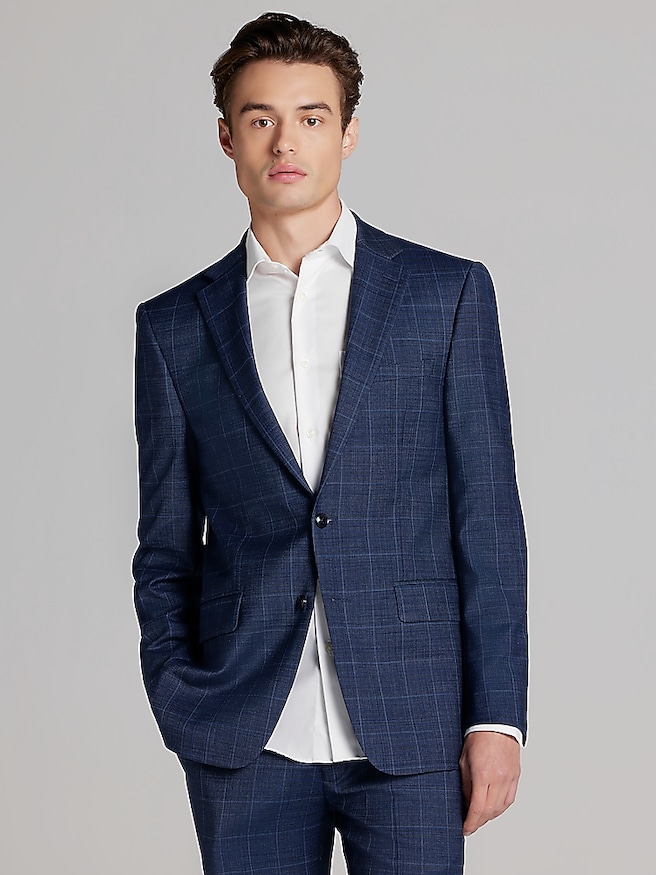
Men’s luxury-look suits bring together refined fabric, balanced proportions, and clean tailoring to create a polished appearance for meaningful occasions and everyday professional life. The effect comes less from a single dramatic detail than from the way the whole suit works together: a jacket that sits smoothly across the shoulders, lapels that lie flat against the chest, and trousers that fall in an uninterrupted line. Navy and charcoal provide a classic foundation, while black creates a sharper, more formal impression. Subtle checks, tonal stripes, and textured weaves add dimension without necessarily making the suit feel bold. For a more expressive look, a double-breasted silhouette or a restrained jacquard pattern can give the outfit a distinctive presence. Fabric plays an important role in that impression. Worsted wool, made with smoothly aligned fibers, is valued for its defined finish, natural resilience, and fluid drape. A fine twill introduces a quiet diagonal texture, while a more pronounced weave gives a solid color greater visual depth. Wool blends may combine these qualities with added strength or stretch, depending on their composition. The fiber label is useful, but the fabric’s feel and behavior matter just as much: material should hang cleanly rather than cling, and it should support the jacket’s shape without looking stiff. A high thread fineness or an unusually soft hand does not automatically mean greater durability; delicate cloth may need more careful handling than a sturdier weave. A luxury look also does not require conspicuous shine. A controlled luster can highlight the richness of a fabric, but a matte finish often brings attention to the tailoring itself. Details such as a neatly shaped lapel roll, aligned patterns, and smooth pocket edges contribute to the overall effect. Together, these elements give a suit its visual character, whether the goal is understated authority in a meeting or a more distinctive entrance at a celebration.
Fit determines how successfully those details translate on the body. A slim silhouette follows the torso and legs more closely, a modern fit offers definition with a little more room, and a classic fit generally allows a fuller line through the chest, seat, and thigh. Those labels are starting points rather than universal measurements, since proportions vary across suit designs. The strongest choice is the one that looks composed while allowing natural movement. Jacket shoulders should meet the wearer’s own shoulder line without extending noticeably beyond it or creating visible dents. The collar should rest against the shirt collar instead of standing away from the neck. When the jacket is buttoned, the front should remain smooth rather than pull into a pronounced X, and the lapels should stay close to the chest. A jacket that looks trim while standing still but strains when reaching for a handshake is too restrictive for comfortable wear. Sleeve length usually leaves a small amount of shirt cuff visible, often around a quarter to half an inch, though the exact balance depends on personal preference and proportions. Jacket length should provide sufficient coverage through the seat and look balanced with the legs. Trousers deserve equal attention: a comfortable waistband should sit securely without relying on a tightly cinched belt, and the seat should remain smooth rather than sag or pull. A slight break at the shoe creates a traditional finish, while little or no break produces a cleaner, more contemporary line. Neither works well if the hem catches awkwardly or the leg opening fights the shape of the footwear. Trying the suit while sitting, walking, and bending the arms reveals more than a still reflection alone. Professional alterations can refine sleeve length, trouser hems, and some waist shaping, but major shoulder changes are more involved. Starting with the right overall proportions helps preserve the intended silhouette and makes the finished suit feel natural rather than carefully managed.
The intended occasion helps determine how that silhouette should be styled. For a presentation, interview, or client dinner, a navy or charcoal suit with a crisp shirt and a restrained tie keeps attention on the wearer. A wedding guest outfit can introduce a little more personality through a textured tie or a pocket square that complements, rather than exactly matches, the neckwear. Grooms and members of a wedding party benefit from coordinating the level of formality as well as the color, especially when outfits will be photographed together. For a school celebration with a more expressive dress code, Men's Homecoming Luxe Suit Styles offers a related direction for considering a dressed-up look with individual character. A suit is not automatically a substitute for a tuxedo, so an invitation specifying black tie calls for attention to that distinction. Accessories should support the tailoring instead of competing with it: polished shoes, a well-proportioned tie knot, and a shirt collar that sits neatly under the lapels make a substantial difference. Care preserves that finished appearance over time. After wear, empty the pockets and place the jacket on a broad, shaped hanger so the shoulders retain their form. Allow the suit to air before returning it to a breathable garment bag, and use a soft clothing brush to remove surface dust. Follow the care label, address spills promptly, and avoid repeated dry cleaning when simple airing or professional pressing will suffice. Excessive heat and direct ironing can leave shine on some fabrics, making careful pressing especially important. Rotating between suits gives each one time to recover its shape. When a suit marks a graduation, career milestone, or other gift-worthy achievement, choosing it with the recipient allows personal preferences and measurements to guide the decision. The result is clothing that feels appropriate to the person and the occasion, with enough comfort and versatility to become part of a lasting wardrobe.