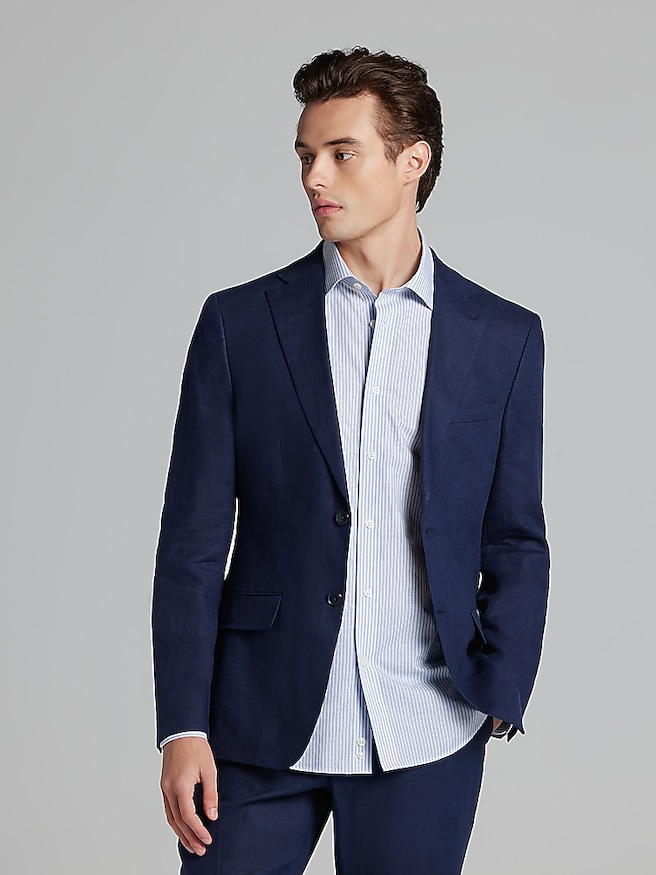
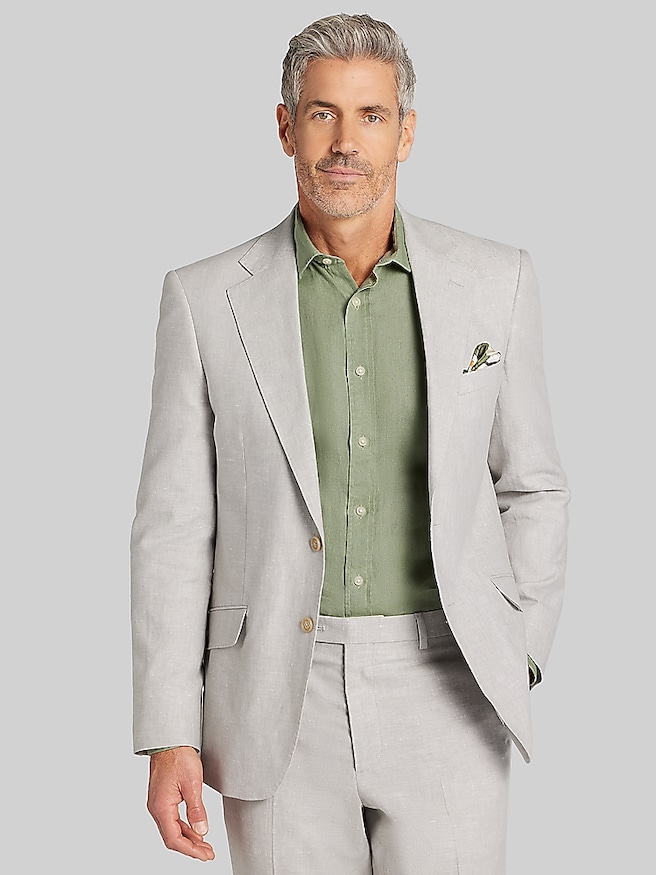
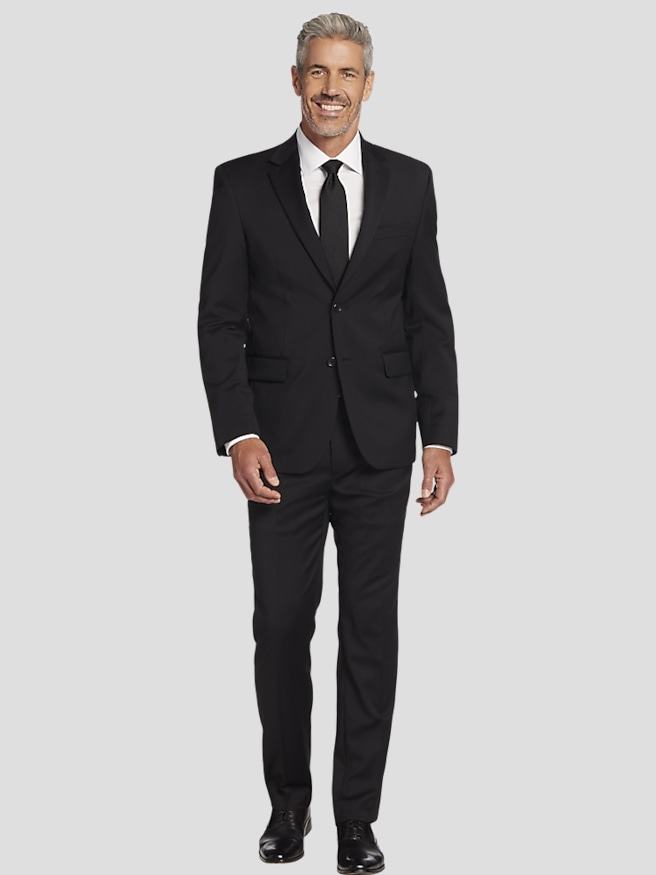
Luxury men’s suits bring together refined fabric, balanced proportions, and construction that gives a jacket shape without making it feel rigid. The distinction is often easiest to notice in motion: a lapel that rolls softly rather than lying flat, trousers that fall cleanly from the waist, and a jacket that settles naturally across the shoulders. Fine wool is a foundation of luxury suiting because it combines an elegant drape with resilience, breathability, and the ability to recover from light creasing. Merino wool can feel particularly smooth against the skin, while blends incorporating cashmere or silk may introduce a softer hand or a subtle luster. Fiber content alone does not establish quality, however. The weave, fabric weight, finishing, and construction all influence how a suit looks, feels, and holds its shape through repeated wear. A tightly woven worsted wool can provide a crisp, understated finish for business settings, while a textured weave adds depth without relying on a bold pattern. Super numbers, when provided, describe wool fiber fineness rather than an overall quality grade; a higher number does not automatically mean greater durability or a better suit for everyday use. High-twist yarns are a separate fabric characteristic and can contribute to crease recovery and a lively, springy feel. Color also shapes the impression. Navy offers depth without looking severe, charcoal feels composed in professional settings, and a restrained pinstripe or windowpane introduces personality while keeping the overall effect polished. For a related expression of refined dressing, Men’s Luxury Look Suits offers another perspective on the look. Across luxury suiting, the most convincing details work together rather than compete for attention. A beautifully finished fabric gains its impact from a clean silhouette, thoughtful proportions, and a fit that allows the wearer to move comfortably through a presentation, a ceremony, or an evening at the table. The result should feel distinctive at close range without needing conspicuous decoration.
Fit gives those materials their purpose, and a luxury suit should look composed while accommodating ordinary movement. The shoulder line establishes the jacket’s shape: a clean seam, an even sleeve, and fabric that sits smoothly across the upper back create a stronger impression than an excessively narrow waist. A structured shoulder can lend definition, while softer construction produces a less angular outline. Neither approach is inherently more luxurious; the right effect depends on body shape, personal taste, and intended use. Through the chest, the jacket should close without pronounced pulling, and the lapels should rest against the torso rather than bow outward. Some movement and light creasing are normal when sitting or reaching, but persistent tension across the fastening suggests that the cut needs attention. Jacket length, button placement, and lapel width also influence visual balance, especially for someone with a longer torso, broader shoulders, or a more athletic build. Trousers complete that balance through the rise, room through the seat and thigh, and the line from knee to hem. A slim silhouette can look sharp without gripping the leg, while a fuller cut can feel equally refined when the fabric hangs cleanly. A slight break gives the hem a traditional finish; little or no break creates a crisper outline above the shoe. Inside the jacket, canvas can help support the chest and shape the lapel. Full-canvas and half-canvas construction describe how extensively that internal layer is used, not a guarantee that every other element is superior. Lining, seam finishing, pocket construction, and pressing also contribute to comfort and longevity. Thoughtful alterations can refine sleeve length, trouser length, and waist shaping, although the underlying shoulder fit and overall proportions remain important. For someone who spends a day moving between a desk, a conference room, and a business dinner, comfort is not separate from polish. Enough ease to sit naturally and extend an arm helps the suit retain its intended appearance instead of looking carefully arranged only while standing still.
Intended use helps define what makes a luxury suit satisfying to own. For frequent professional wear, resilient wool, a versatile color, and a silhouette that works with several shirts and ties can make a suit a dependable part of a wardrobe. For a wedding, an anniversary dinner, or a milestone celebration, a subtle sheen, a more expressive pattern, or a sharply defined lapel can bring a sense of occasion without overwhelming the wearer. A dark suit can be appropriate for many formal gatherings, but it is not automatically a substitute for a tuxedo when an invitation specifies black tie. Styling works best when the level of formality feels consistent from head to toe. A smooth cotton dress shirt gives fine suiting a crisp backdrop, while a silk tie adds texture and a controlled point of color. Polished leather shoes, a neat trouser hem, and a pocket square with a relaxed fold often do more for the finished appearance than an abundance of accessories. Luxury suits can also mark a meaningful gift for a spouse, partner, parent, or graduate, particularly when the recipient can participate in choosing the fit and finishing the alterations. That involvement makes room for preferences that measurements alone cannot capture, such as a higher trouser rise or more space through the chest. Care protects both the fabric and the shape that make the suit distinctive. A broad, contoured hanger supports the jacket’s shoulders, while properly hung trousers help preserve a clean crease. Gentle brushing removes surface dust, and allowing the suit to air between wears gives moisture time to dissipate. Cleaning should follow the garment’s care label, with professional attention when needed rather than automatic cleaning after every outing. Stains benefit from prompt assessment instead of vigorous rubbing, and pressing delicate fabrics requires care to avoid unwanted shine. Rotation also gives wool time to recover between wears. With suitable care and a fit that remains comfortable, a well-made suit can become familiar without losing the qualities that made it feel special in the first place.