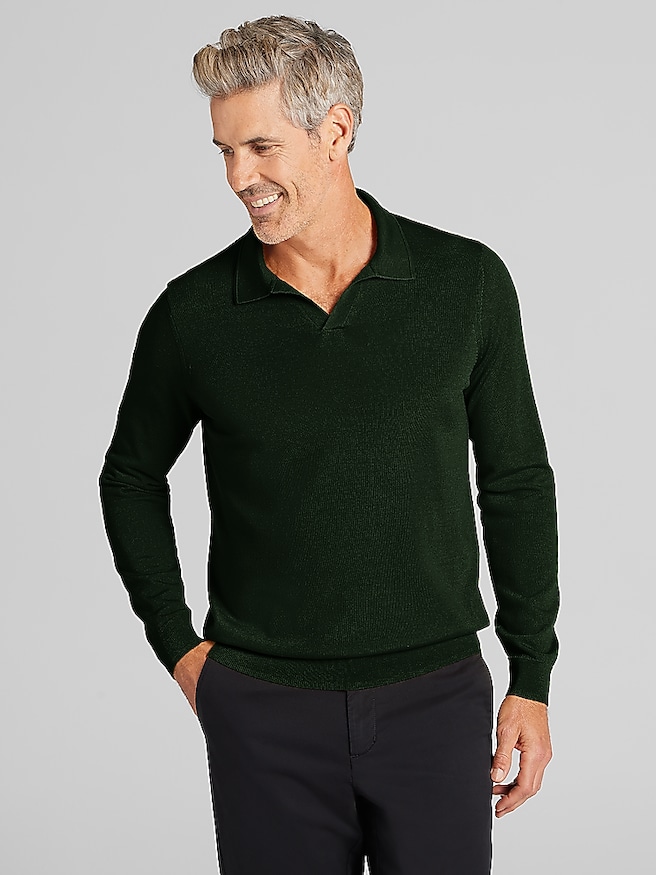
Men’s long sleeve sweaters bring warmth, texture, and a finished look to everyday clothing without requiring the structure of a jacket. Worn over a T-shirt, layered with a button-down, or paired with tailored trousers, they bridge the space between relaxed weekend clothes and office-ready outfits. The main styles include crewnecks, V-necks, quarter-zips, mock necks, turtlenecks, and cardigans, each with a distinct neckline and layering purpose. A crewneck has a rounded opening that looks clean on its own and frames a shirt collar without drawing much attention to it. A V-neck leaves more of the shirt visible, making it a useful choice when a collar and tie are part of the outfit. Quarter-zip sweaters have an adjustable opening that can sit partly unzipped indoors or close higher at the neck outside, while mock necks offer a shorter standing collar without the fold of a turtleneck. A turtleneck provides fuller neck coverage and a smooth line beneath a sport coat; a fine knit in charcoal or navy can look especially sharp with gray trousers and leather boots. Button-front and zip-front cardigans are easy to remove as indoor temperatures shift, making them practical for a commute followed by a day at a desk. For a neckline with more definition, Mens Collared Sweaters complement chinos, dark denim, and other smart-casual staples. Surface texture also changes the character of an outfit. Cable knits have raised patterns and visual weight that suit casual settings, while finer, smoother knits slip comfortably beneath tailored layers. Ribbed designs add subtle dimension without a bold pattern. During the cooler months, these distinctions matter as much as color: a substantial knit feels at home at an outdoor gathering, while a lightweight sweater is often more comfortable in a heated office or dining room. The same basic silhouette can serve several purposes depending on its fabric, knit density, and the layers worn with it.
Fabric helps determine how a long sleeve sweater feels, how much warmth it provides, and how it holds up to regular wear. Cotton sweaters are typically breathable and comfortable against the skin, with a familiar feel that works well for mild days and indoor use. Cotton can also have more weight than its appearance suggests, especially in a thick knit, so a substantial cotton sweater may drape quite differently from a fine wool version. Merino wool combines warmth with relatively fine fibers and helps manage moisture, making it useful when moving between chilly sidewalks and warm buildings. Its feel varies by yarn and construction, and anyone sensitive to wool may prefer a soft base layer beneath it. Cashmere is known for its softness and warmth relative to its weight, though it benefits from gentle handling and careful storage. Blended yarns combine fibers to balance qualities such as softness, shape retention, and resistance to wear; nylon or polyester may add strength, while a small amount of stretch fiber can support flexibility. Fiber content alone does not tell the whole story. Knit density, yarn quality, seam construction, and finishing all influence comfort and durability. Fit is equally important, particularly when the sweater will sit over another shirt. On a traditional set-in sleeve, the shoulder seam should generally rest near the shoulder’s edge, while intentionally relaxed and raglan constructions fit differently. Sleeves should reach the wrist without covering much of the hand or forming bulky stacks at the cuffs. Through the chest and midsection, a comfortable fit allows movement without pulling the knit taut. A shirt underneath should lie smoothly rather than bunching at the upper arms or showing a sharply outlined placket through the fabric. The hem usually works best around the hip, providing coverage when sitting without overwhelming the trousers. For someone who wears a sport coat most days, a close but unrestrictive fine knit is practical; for casual use over a heavier shirt, a little more room can make all the difference.
Color, proportion, and care help make men’s long sleeve sweaters dependable parts of a wardrobe rather than pieces saved for a narrow set of occasions. Navy, charcoal, gray, and brown coordinate easily with familiar trousers and outerwear, while burgundy, forest green, or a warm neutral can add depth to an otherwise simple outfit. A textured sweater often needs little else: dark jeans, clean boots, and a straightforward coat keep the overall look balanced. For a business-casual workplace, a smooth crewneck over an Oxford shirt offers polish without feeling overly formal. At a relaxed dinner, a turtleneck with tailored trousers creates a similarly considered look with fewer visible layers. These combinations also make sweaters thoughtful gifts for a partner, father, brother, or friend, especially when the neckline, fabric preference, and usual size are known. Someone who tends to feel warm indoors may appreciate a lighter knit, while someone who spends more time outside may get more use from a substantial layer beneath a coat. Long-term appearance depends on care that matches the garment’s label, not assumptions about the fiber. Some cotton and blended sweaters allow machine washing, while others call for hand washing or professional cleaning. When washing is permitted, the recommended water temperature and cycle help limit shrinking and distortion. Avoid wringing wet knitwear; gently press out moisture and reshape it for drying as directed. Many sweaters benefit from drying flat because hanging them while wet can stretch the shoulders and body. Folding dry sweaters also helps preserve their shape in storage. Friction from backpack straps, desk edges, or repeated contact beneath the arms can produce pills, even on soft, well-made knits. Careful use of a suitable sweater comb or fabric shaver can tidy the surface without tugging at the yarn. Allowing knitwear to air between wears and addressing spills promptly can reduce unnecessary washing. With sensible care and a fit suited to everyday movement, a long sleeve sweater can move comfortably from the workday to a quiet evening or a weekend away.