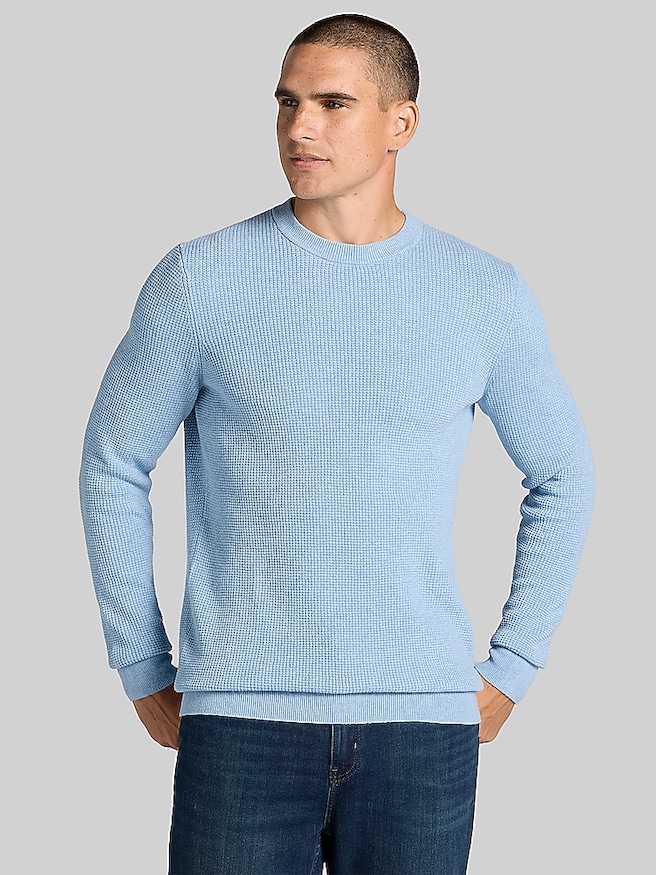
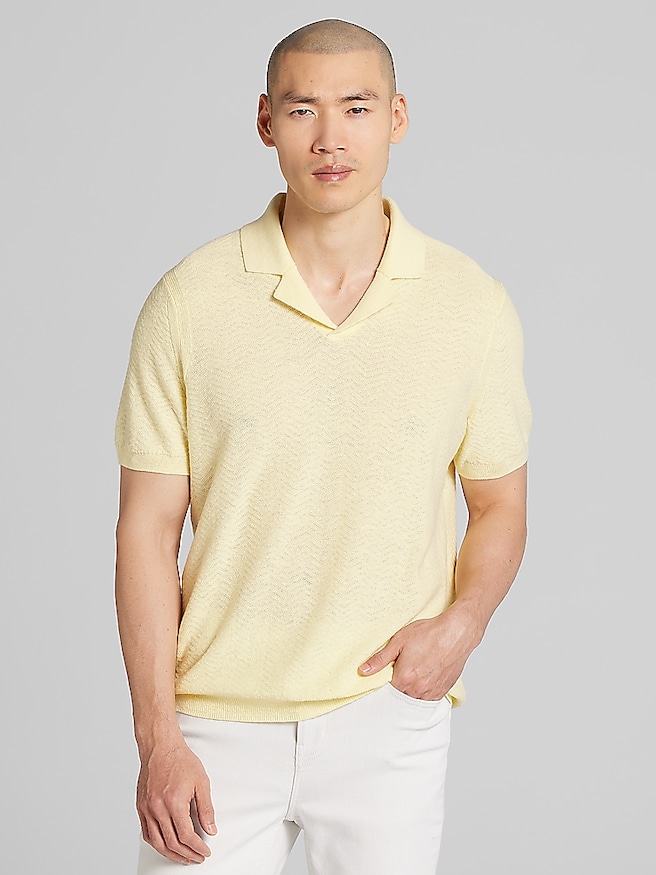
Long sleeve sweaters pair the texture and flexibility of knitwear with full-length sleeves, making them a versatile part of a men's wardrobe. Their character comes from a combination of neckline, stitch, fabric, and silhouette: a fine-gauge crewneck has a smooth, understated appearance, while a cable-knit sweater brings raised texture and more visual weight. A V-neck leaves space for a shirt collar and tie, a turtleneck creates a clean line beneath a tailored jacket, and a cardigan offers an open-front alternative that can be worn buttoned or relaxed. Quarter-zip styles provide another way to adjust the neckline, with a zipper that can sit neatly over a T-shirt or frame a collared shirt. These distinctions make long sleeve sweaters useful across office settings, dinners, travel days, and everyday plans without requiring an entirely separate wardrobe for each occasion. A navy crewneck with gray dress pants feels composed at a business-casual meeting; the same shape with dark jeans and leather sneakers looks more relaxed. A textured cardigan can soften the formality of chinos and a button-down, while a fine-knit turtleneck under a sport coat creates a streamlined alternative to a shirt and tie. Solid colors allow the knit structure to stand out, while stripes, geometric patterns, and heathered yarns add interest to otherwise simple outfits. Ribbed cuffs and hems give many styles a defined edge, helping the sleeves and body sit neatly rather than appearing unfinished. The overall effect depends as much on proportion as on design: a substantial knit makes a stronger statement on its own, while a lighter, smoother sweater slips more easily beneath a jacket. For outfits that call for less sleeve coverage, Men's Short Sleeve Knit Sweaters offer another expression of knit texture. Both sleeve lengths can work with tailored pants or denim, with the neckline and overall fit doing much of the work of setting the tone.
Material plays a central role in how a long sleeve sweater feels, drapes, and holds up to regular wear. Cotton typically has a familiar, soft hand and can provide a less lofty feel than wool, making it a practical choice for everyday outfits and direct contact with the skin. Merino wool uses finer fibers than many traditional wool yarns and is often valued for its softness, breathability, and ability to manage moisture. Cashmere is known for its fine fibers and soft loft, though it benefits from thoughtful handling to limit abrasion. Blended yarns combine characteristics from multiple fibers; depending on the composition, added synthetic fibers may contribute resilience, stretch, or easier maintenance. The fiber label tells only part of the story, since yarn quality, stitch density, and construction also influence performance. A finely knitted sweater can feel light and fluid, while a thicker rib or cable pattern creates dimension and a more substantial silhouette. Even stitches, secure seams, and cuffs that recover after gentle stretching are useful signs of sound construction, although no knit is immune to friction or wear. Fit should allow comfortable movement without pulling across the chest or collecting in heavy folds beneath the arms. On a conventional set-in sleeve, the shoulder seam generally sits close to the shoulder edge; dropped shoulders are an intentional feature of more relaxed shapes. Sleeves usually finish near the wrist, and the hem should provide enough coverage to stay balanced when sitting or reaching. A sweater worn over a button-down needs sufficient room through the upper arms and chest so the shirt does not bunch underneath. One intended for layering beneath a blazer benefits from a smoother profile, especially at the shoulders and sleeves. Ribbing that grips too tightly can make the body blouse above the hem, while an overly loose neckline may distract from an otherwise clean fit. Comfort and proportion matter more than the size printed on the label.
Care habits help preserve the shape, surface, and feel of long sleeve sweaters over time. The garment's care label should determine the cleaning method, since cotton, wool, cashmere, and blended knits do not all respond the same way to water, heat, or agitation. Some sweaters allow machine washing on a gentle setting, while others call for hand washing or professional cleaning. When washing is permitted, careful handling and an appropriate detergent help protect the fibers; wringing or twisting can stretch a knit out of shape. Sweaters that require flat drying benefit from being gently reshaped on a clean, flat surface, with the sleeves and hem arranged in their natural proportions. Hanging a heavy, wet sweater can lengthen the body or distort the shoulders. For storage, folding usually places less strain on the knit than a hanger, and allowing a sweater to air between wears can reduce unnecessary cleaning when the care instructions permit. Small pills may develop where fibers rub together, particularly beneath the arms or along areas touched by a bag strap. Gentle removal with a tool suited to the fabric can tidy the surface without pulling at the yarn. Jewelry, rough edges, and hook-and-loop closures deserve care around open or delicate stitches because they can catch individual loops. These practical details also matter when giving a sweater as a gift: the recipient's usual fit, preferred necklines, fabric sensitivities, and willingness to follow special care instructions all influence how often it will be worn. A familiar neutral shade can integrate easily into an established wardrobe, while a distinctive stitch or richer color can suit someone who enjoys a little more expression. For a partner, father, brother, or friend, a thoughtfully selected long sleeve sweater offers something personal without depending on elaborate styling. Its lasting usefulness comes from a comfortable fit, a fabric that suits the wearer, and a design that feels natural with the clothes already in rotation.