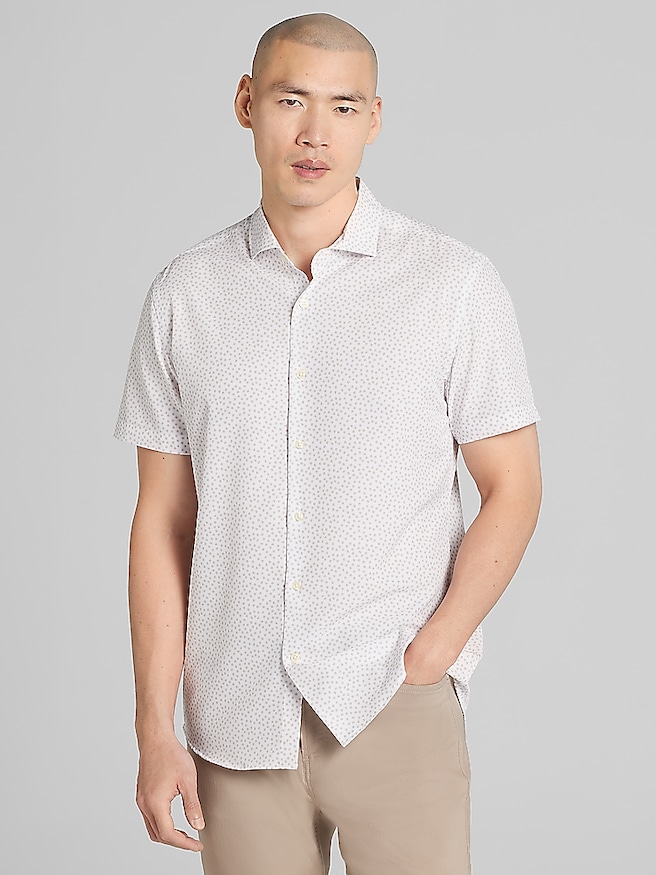
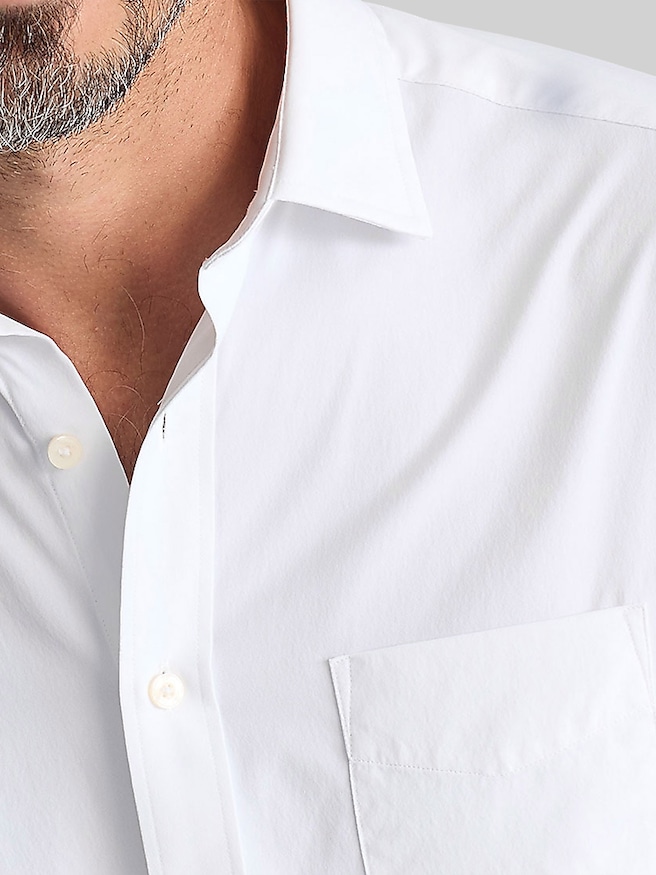
Men’s long sleeve slim fit shirts have a closer cut through the chest, waist, and sleeves than comparable regular-fit shirts, creating a defined silhouette with less excess fabric. The result works equally well beneath a suit jacket, tucked into dress pants, or paired with jeans for a dinner reservation. Slim fit describes the shape of the shirt, not a requirement to have a particular body type, and the most comfortable fit leaves enough room for ordinary movement. Across the chest, the fabric should lie smoothly rather than pull into horizontal lines between the buttons. Through the waist, a gentle taper keeps the shirt from billowing above a belt without making sitting down feel restrictive. Shoulder seams generally sit near the edge of the shoulders on traditionally constructed woven shirts, while sleeves follow the arms without gripping the elbows or forearms. Those details matter when reaching across a conference table, driving to an appointment, or slipping on a jacket before a meeting. Sleeve length deserves the same attention as chest size: a cuff should rest around the wrist rather than climb noticeably up the forearm whenever the arm bends. A dress shirt collar should feel comfortable when fastened, especially when a tie is part of the outfit. Body length also changes how a shirt wears throughout the day. Longer, curved shirttails help a tucked shirt stay in place, while a shorter hem can give an untucked casual shirt a balanced proportion. A broad chest, longer torso, or extended reach may call for adjustments in size or proportions rather than simply a tighter or looser overall cut. Because fit descriptions vary by maker, measurements are more useful than the slim fit label alone. Together, these details distinguish a shirt that merely looks narrow on a hanger from one that sits comfortably through a full day. A little ease through the back also helps preserve the intended shape when seated, so the shirt looks composed in motion rather than only while standing still.
Fabric and construction give men’s slim fit long sleeve shirts much of their character. Cotton is a familiar choice for its breathable feel and versatility, although the weave makes a noticeable difference in texture and appearance. Poplin has a smooth, relatively flat surface that suits crisp dress shirts and clear, small-scale patterns. Oxford cloth has a more textured basket weave, lending a button-front shirt a relaxed appearance that pairs naturally with chinos and denim. Twill has a diagonal weave and often a substantial drape, making it useful when a shirt needs a little more body without a stiff feel. Cotton blends can balance softness with easier maintenance, while a modest amount of elastane can add give across the shoulders and elbows. Stretch supports movement, but it does not replace adequate room in the chest or sleeves. Performance-oriented fabrics may emphasize moisture management, wrinkle resistance, or quick drying; those properties depend on the actual fabric and finish rather than the fit description. Surface texture matters visually, too: a smooth white shirt creates a sharper contrast against a textured jacket, while a subtly woven blue shirt adds depth without a bold print. Collars and cuffs further shape the overall impression. A spread collar leaves space for a tie knot, a point collar creates a narrower frame, and a button-down collar secures its points to the shirt front. Button-down technically refers to that collar construction, although the phrase is also used casually for button-front shirts. For related styles, Mens Slim Fit Button Down Shirts offers a focused look at this closely related category. Solid white and light blue support business outfits, while fine stripes, small checks, and deeper solid colors bring variety to everyday combinations. Pattern scale can help keep an outfit balanced: a small shirt check generally sits more quietly beneath a patterned jacket than an equally bold competing design. When worn without a tie, a collar that holds its shape helps the open neckline look deliberate rather than collapsed.
The appeal of a long sleeve slim fit shirt is its range of uses, from a first interview to a routine office day, a graduation celebration, or a meal with friends. A smooth woven shirt tucked into tailored trousers creates a polished foundation, while a textured version worn with dark jeans feels less formal without looking careless. Beneath a blazer, the reduced bulk through the torso and sleeves can help the layers sit neatly, provided neither piece is too tight. For a relaxed setting, sleeves can be rolled evenly above the wrists, with enough room in the forearm to prevent the fabric from binding. Care helps preserve both appearance and comfort over repeated wears. The sewn-in care label should determine washing temperature, drying method, and ironing settings, particularly for stretch blends or treated fabrics. Excessive dryer heat can contribute to shrinkage and reduce the performance of elastic fibers, while overdrying can leave cotton shirts with stubborn creases. Prompt removal from the dryer and hanging can reduce rumpling, though wrinkle-resistant does not necessarily mean a shirt will never need pressing. Collars and cuffs often need extra attention because they collect skin oils through regular contact; appropriate pretreatment can address buildup before it becomes harder to remove. Sound seams, securely attached buttons, and neatly finished buttonholes are useful construction details to consider for repeated wear. Even sturdy fabric benefits from a fit that does not continually strain the placket, elbows, or side seams. These shirts can also make practical gifts for a graduate, partner, parent, or someone beginning a new job. A familiar collar size, sleeve length, and preferred fit make a more reliable starting point than guessing from a jacket size. For someone who wears a tie regularly, a versatile solid woven shirt may fit naturally into an established wardrobe; for someone with a more casual routine, texture or a restrained pattern may feel more personal. The strongest choice reflects how the recipient actually dresses, with fabric, proportions, and care needs that suit everyday use.