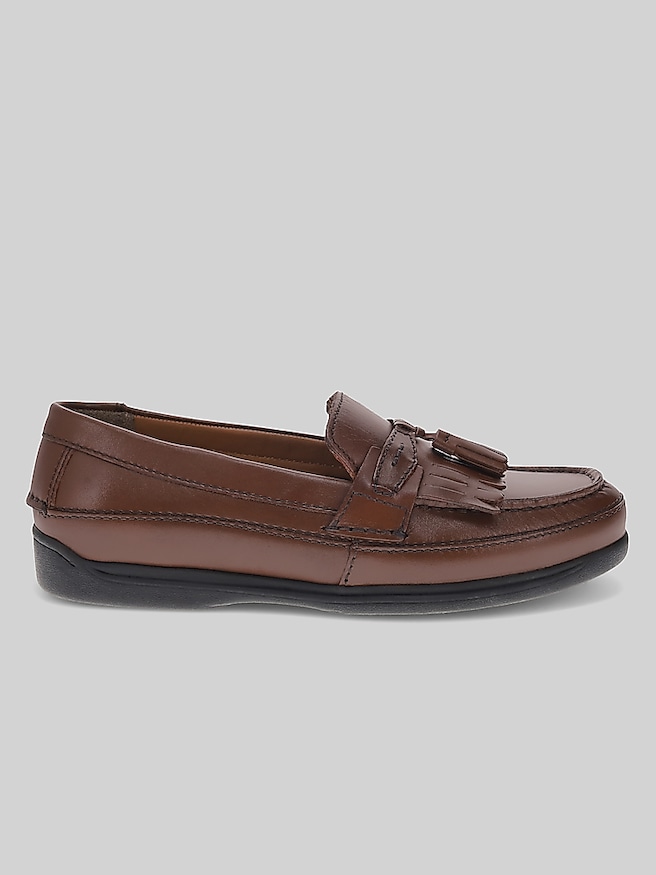
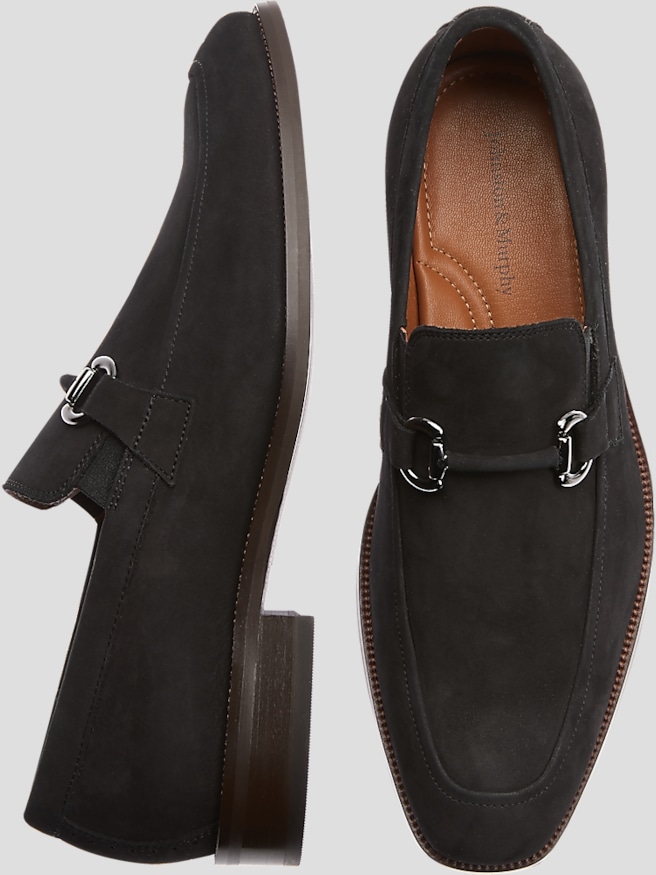
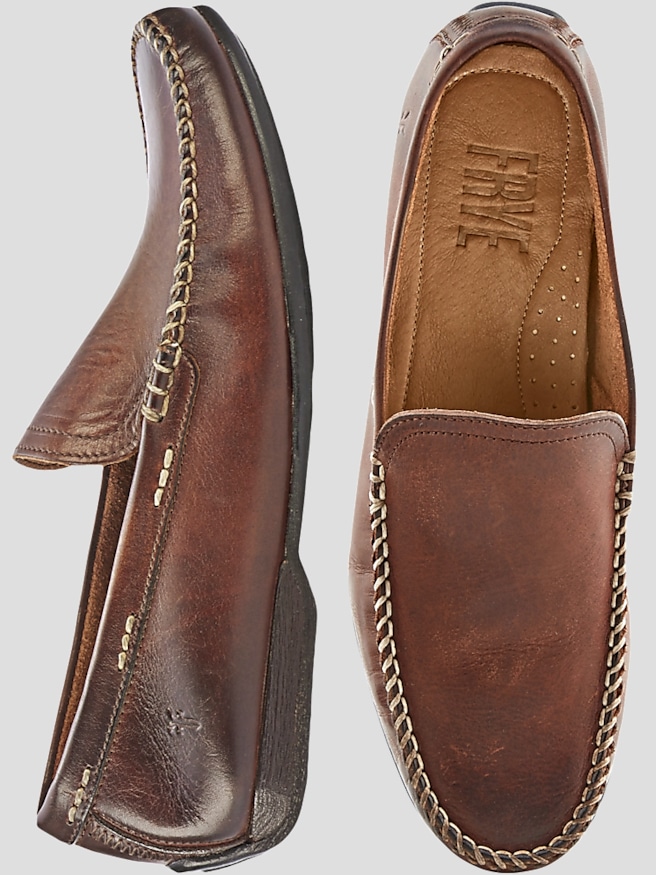
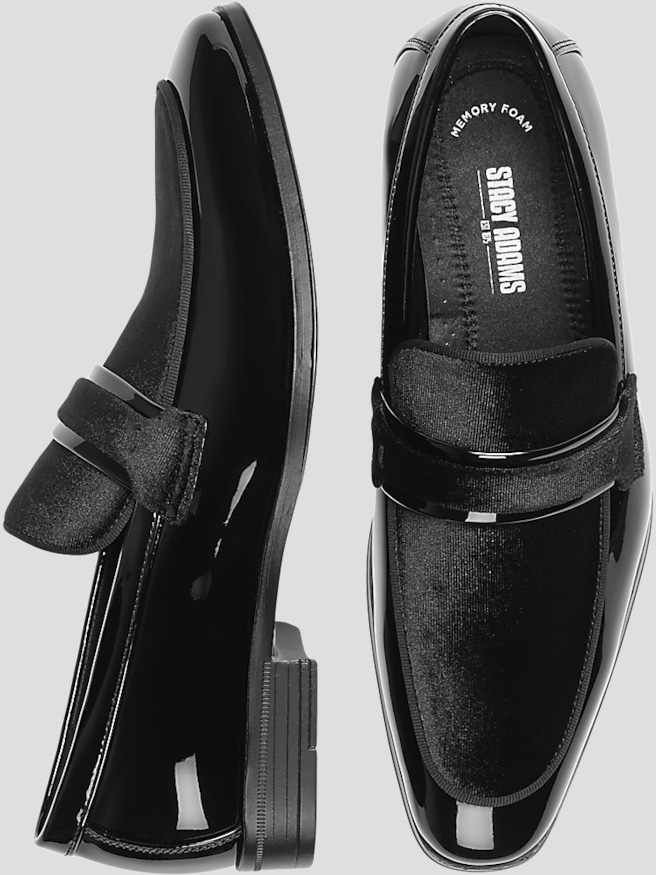
Men’s loafers with a suit bring a relaxed finish to tailored clothing without giving up a polished appearance. The combination works especially well for business-casual offices, dinners, daytime weddings, and social events where a full suit feels appropriate but lace-up dress shoes are not essential. The strongest pairings start with proportion: a streamlined loafer, a gently shaped toe, and a sole that does not overwhelm the trouser opening. Smooth leather generally gives the sharpest impression, while suede introduces a softer surface that complements textured tailoring. Penny loafers have a clean, understated look, with a leather strap across the upper that adds detail without drawing much attention. Tassel loafers create a more expressive finish, and bit loafers use metal hardware to provide a distinct focal point. Each style can work with a suit when its shape and construction suit the setting. Navy tailoring with dark brown loafers is a dependable combination for an office presentation followed by dinner; charcoal trousers and black leather loafers create a quieter, more restrained effect. Cognac leather makes a stronger contrast against navy or light gray, which often feels better suited to a daytime celebration than a conservative business meeting. Suit fabric matters, too. Loafers sit naturally beneath cotton, softly textured wool, and unstructured tailoring, although a sleek leather pair can also complement a smooth wool business suit in a workplace that welcomes the combination. They are not a universal substitute for formal dress shoes. Strict business dress codes may favor oxfords, and black-tie attire generally calls for footwear specifically suited to that level of formality. For occasions that move between tailored and more relaxed clothing, Smart Casual Loafers offer a related direction with the same emphasis on clean lines and easy versatility. The overall impression should come from the complete outfit rather than the shoe alone: jacket structure, trouser length, shirt choice, and the occasion all influence how dressy loafers appear.
Materials and fit determine whether loafers feel as good at the end of an event as they look at the beginning. Smooth leather can develop creases and character with wear, and regular conditioning helps keep it supple. Suede has a matte, tactile finish that looks especially natural beside flannel trousers or a softly constructed wool suit during the cooler months. Neither material is automatically more comfortable; the shape of the shoe, its lining, the flexibility of the sole, and the fit across the instep all play a part. Because loafers have no laces to adjust, a secure fit through the midfoot and heel is particularly important. The upper should hold the foot without pinching, and the toes need room to rest naturally rather than pressing against the front or sides. A little movement at the heel may occur with some constructions, but repeated slipping or a heel that lifts noticeably with every step can indicate a poor fit. Leather may soften, but a shoe that feels painfully tight should not be expected to become comfortable simply through wear. Trying loafers with the socks intended for the outfit gives a more useful sense of fit than trying them barefoot. Thin dress socks can work well for office wear, while a slightly warmer pair may be welcome for a commute in cooler weather, provided the shoe still fits comfortably. Underfoot details matter during long stretches of standing, whether that means greeting guests at a reception or spending an afternoon moving between meetings. Cushioning can soften the feel of each step, while support needs vary by foot. Leather soles have a traditional, refined appearance; rubber soles can offer useful flexibility and traction, depending on their design and the walking surface. A low-profile rubber sole often preserves the tailored look while making practical sense for everyday use. For someone who walks several blocks before reaching the office, that balance can matter more than decorative details.
The way trousers meet loafers has a noticeable effect on the finished outfit. A clean hem with little or no break keeps the front of the shoe visible and prevents fabric from bunching over the vamp. That does not require a sharply cropped trouser: a full-length hem can look polished while providing comfortable coverage in cooler weather. Very narrow openings may catch on the shoe, while wide, heavily stacked hems can hide its shape. Dress socks in a shade close to the trousers create continuity and are a reliable choice for professional settings. With navy trousers and brown loafers, navy socks keep the transition understated; charcoal socks do the same beneath a gray suit. Subtle ribbing or a small pattern adds interest without competing with the rest of the outfit. No-show socks give a more relaxed appearance and are better reserved for casual settings and weather that makes exposed ankles comfortable. Care helps preserve both appearance and useful life. Surface dust can be removed from smooth leather with a soft brush or cloth, followed by appropriate conditioning and polish as needed. Suede benefits from a dedicated suede brush and a protector labeled for that material, tested first in an inconspicuous spot. Wet shoes should dry naturally away from direct heat, with shoe trees inserted once excess moisture has been addressed. Cedar shoe trees help maintain shape and absorb some residual moisture between wears, while rotating footwear allows more time for drying. Regular attention to worn heels and soles can prevent minor wear from becoming a larger problem; repair options depend on how the shoes are constructed. These practical qualities make loafers useful for professionals, wedding guests, graduates building a tailored wardrobe, and anyone who prefers slip-on footwear with a suit. They can also make a thoughtful gift when the recipient’s size, width, and style preferences are known. A restrained silhouette and a color that complements existing tailoring give the shoes a clear role beyond a single occasion, from a family celebration to an ordinary workday that calls for looking put together.