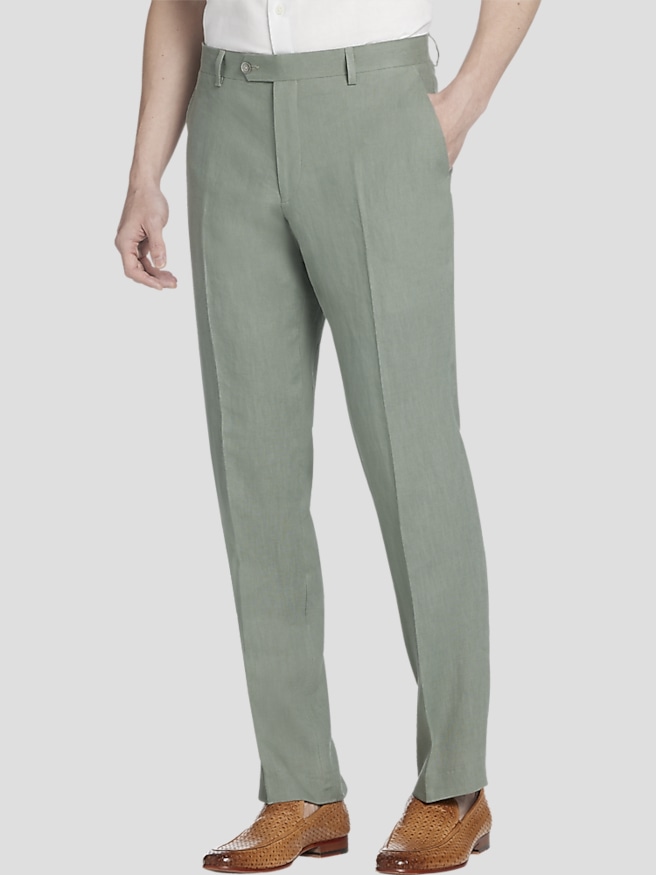
Men’s linen dress pants bring the texture of flax fibers to a tailored wardrobe, pairing the ease of linen with the cleaner lines expected from dress trousers. Their appeal is not limited to a single occasion: a neatly pressed pair can work with a tucked-in dress shirt for a dinner reservation, a sport coat for a wedding with a relaxed dress code, or a fine-gauge knit polo for an office that allows less formal clothing. Linen has a distinctive surface, often with subtle variations in the yarn that give the fabric depth rather than a completely uniform finish. Those small irregularities are part of its character, while more pronounced folds develop naturally through sitting and movement. The result is a dressed appearance that feels less rigid than some traditional suiting fabrics, although the level of formality still depends on the cut, color, construction, and accompanying pieces. Pure linen generally emphasizes that textured feel and natural tendency to crease. Linen blends can behave differently depending on their composition: cotton may contribute a familiar, softer hand, while certain synthetic fibers can help with shape retention or wrinkle resistance. A small amount of stretch may add give, but the fiber percentage alone does not determine how comfortable trousers will feel. Fabric weight, weave, and finishing all influence the way they hang. A substantial weave can create a more defined line through the leg, while a lighter fabric may move more freely and make the fit especially important. Neutral shades such as navy, gray, tan, and cream provide distinct styling possibilities without requiring an elaborate outfit. Navy works naturally with a pale blue shirt and brown leather shoes; tan pairs easily with white, blue, or muted green. Cream creates a lighter-looking contrast with a dark jacket, though opacity deserves attention in pale fabrics. In each case, the texture of the pants becomes part of the outfit rather than something that needs to be disguised.
Fit gives linen dress pants their polish. A waistband should sit securely without digging in, and the seat and thighs need enough room for walking, climbing stairs, and settling into a chair. When trousers are too tight, the fabric may pull across the front pockets or form horizontal lines through the hips; excess room can leave the seat looking loose and interrupt an otherwise clean silhouette. Linen’s natural creasing makes these distinctions worth noticing, because a comfortable fit allows folds to develop without constant tension on the seams. Rise also changes how the pants feel and how a tucked-in shirt looks. A mid-rise shape often works well with everyday tailoring, while a higher rise can create a longer visual line and sit comfortably beneath a jacket when its proportions are coordinated. For a silhouette with consistent room from the knee to the hem, men’s straight leg linen pants offer a useful point of comparison with tapered cuts. A straight leg can fall cleanly over loafers or lace-up dress shoes, while a tapered leg narrows toward the ankle and places more emphasis on the footwear. Neither shape needs to fit closely to look refined. Hem length matters just as much: a slight break provides a traditional finish, while little or no break produces a shorter, cleaner line. Too much length can collect around the shoes and make naturally textured fabric look untidy. The most useful assessment includes the shoes normally worn with the pants and a few minutes of movement, not just a glance while standing still. Details such as pleats, pocket placement, belt loops, and closures also influence the overall impression. Pleats can provide room through the upper leg, whereas a flat front creates a simpler surface. A belt should complement the shoes without becoming the focal point. For an event with photographs or a long seated dinner, a well-proportioned fit usually contributes more to a polished appearance than trying to keep every fold out of the fabric.
Care is part of keeping linen dress pants looking intentional rather than overly rumpled. The care label takes priority, especially when trousers include a lining, blended fibers, structured waistband components, or finishes that require a particular cleaning method. Some linen garments can be washed, while others call for professional cleaning; treating every pair alike can lead to shrinkage, changes in shape, or damage to internal construction. When washing is permitted, following the specified cycle and drying instructions helps preserve both the fabric and the fit. High heat can cause unwanted changes, and prolonged overdrying may make pressing more difficult. If ironing is allowed, linen often responds well when slightly damp, with the iron setting adjusted to the actual fiber blend. A pressing cloth can help protect the surface, particularly on darker colors, and deliberate attention to the waistband, pockets, and seams helps maintain the trousers’ outline. Steaming may soften everyday folds, though it will not always produce the same crisp finish as pressing. Hanging the pants neatly after wear, rather than leaving them folded over a chair, reduces unnecessary creasing and gives the fabric a chance to settle. Linen fibers are strong, but durability still depends on fabric quality, construction, fit, and care. Repeated friction at the hems, pocket edges, and inner thighs can wear any trouser fabric, making an appropriate length and enough room through the leg practical considerations as well as aesthetic ones. These pants can suit someone building a less formal work wardrobe, dressing for celebrations that call for tailored clothing, or looking for an alternative to smooth-finished dress trousers. They can also make a thoughtful gift for a father, brother, or partner whose measurements and preferred fit are known. For weddings and other occasions, the invitation’s dress code remains the best reference; linen dress pants suit many tailored outfits but do not replace clothing required for black tie. Their lasting appeal lies in the combination of recognizable texture, comfortable movement, and a considered fit that makes a simple shirt-and-trouser outfit feel complete.