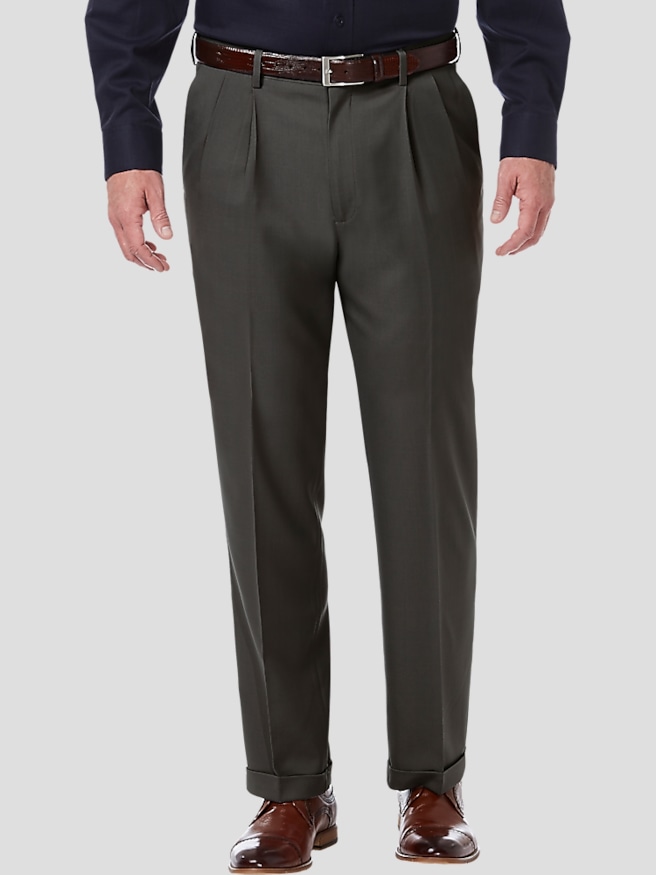
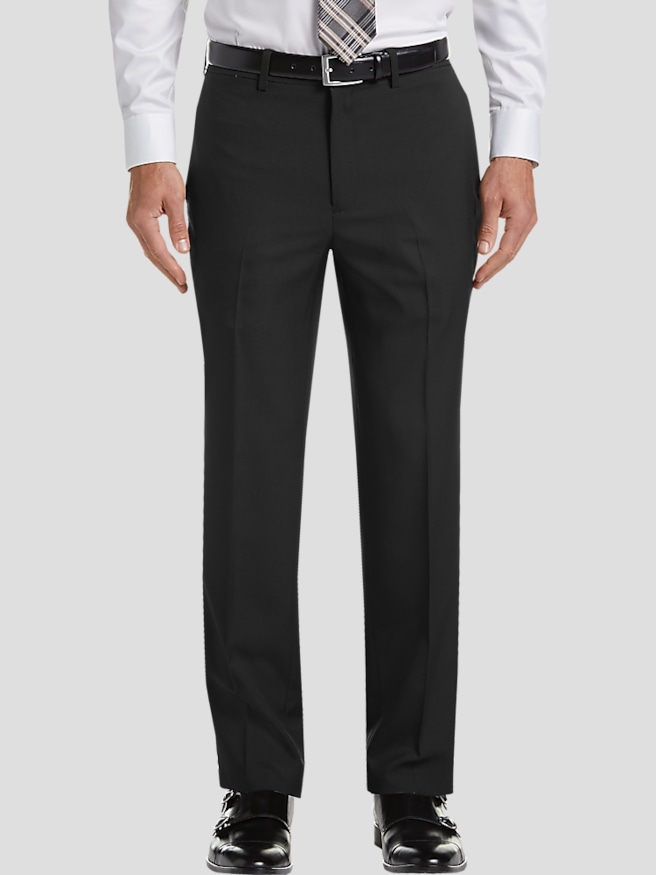
Men’s lightweight work pants combine lower-bulk fabrics with the fit, durability, and practical details needed for a working day. They can range from polished trousers for an office to more casual pants suited to frequent walking, bending, or time spent moving between locations. Fabric weight alone does not determine comfort: the weave, fiber blend, cut, and construction all affect how a pair feels after hours of wear. Lightweight cotton twill offers a familiar texture and a neat appearance, making it a natural fit for business-casual settings. Cotton blends can pair that softness with fibers that help improve shape retention or reduce wrinkling, depending on the fabric. Nylon and polyester blends are common in performance-oriented pants, where low bulk, abrasion resistance, or faster drying may be useful. Moisture-wicking fabrics are designed to move perspiration toward the fabric’s outer surface, while quick-drying fabrics release absorbed moisture relatively quickly; those are related benefits, but they are not interchangeable. Breathability also depends on fabric construction, rather than simply whether a material is natural or synthetic. A small amount of elastane can add stretch for sitting through a meeting, climbing stairs, or reaching into a lower cabinet without making the pants look like athletic clothing. Some woven fabrics provide mechanical stretch through their construction instead. For a more refined setting, lightweight wool blends can offer a smooth drape and a dressier finish without the substantial feel of heavier trousers. Ripstop fabrics, recognizable by their reinforcing grid, are another option in utility-focused designs, although resistance to tearing does not make a fabric damage-proof. The most useful balance is enough structure to maintain a professional appearance, enough flexibility for the movements a job requires, and a fabric that feels comfortable against the skin throughout repeated wear.
Fit has just as much influence on everyday comfort as material. Men’s lightweight work pants should have enough room through the seat and thighs to allow a natural stride and a comfortable seated position, with a waistband that stays in place without digging in. A close fit can appear streamlined while standing but feel restrictive at a desk or behind the wheel. Excess fabric can create a bulky appearance and interfere with movement, particularly around the knees and lower legs. Straight-leg cuts provide a consistent line and practical room, while tapered cuts narrow toward the ankle for a more tailored profile. A slim silhouette can still work for an active schedule when its proportions suit the wearer and the fabric has appropriate give. The rise affects where the waistband rests, how a shirt stays tucked, and how the pants feel when bending or sitting. Inseam length shapes the overall impression, too: a slight break over dress shoes reads differently from a shorter hem worn with low-profile sneakers, and a wider leg opening may be necessary with substantial work footwear. Construction details become noticeable over a full day. Smooth pocket linings reduce unnecessary bulk, secure closures help keep small essentials contained, and well-supported belt loops accommodate the repeated use of a belt. Front pockets should remain reasonably flat when standing, rather than pulling open because the fit is too tight. Utility pockets can be helpful for jobs that involve carrying small tools or a phone, while simpler pocket arrangements generally create a cleaner outline for client-facing work. Reinforcement at pocket corners and other stress points can support durability without adding heavy fabric everywhere. Articulated knees or a gusseted crotch may improve movement in more task-focused designs, but those details are not essential for every workplace. Office staff, educators, managers, and professionals who divide their time between a desk and other locations may each value a slightly different balance of polish, mobility, and storage.
A versatile work wardrobe depends on pants that make sense with the clothing and responsibilities already in the day. Navy, charcoal, black, and khaki provide familiar foundations for button-front shirts, polos, sweaters, and unstructured jackets. A smooth fabric with a clean front leans dressier, while visible texture, utility stitching, and additional pockets give pants a more casual character. The same lightweight pair might accompany a tucked-in shirt and leather shoes for an appointment, then a knit polo for a less formal afternoon, provided both combinations meet the workplace dress code. Pairing them with Men's Lightweight Work Shirts can create a coordinated outfit that avoids unnecessary bulk from top to bottom. For someone who spends part of the day seated and part of it on foot, freedom through the hips and knees may matter more than a long list of technical features. For frequent travel between offices, fabric recovery and resistance to wrinkling can be especially useful, though no fabric should be assumed to stay perfectly smooth after hours in a seat. Care requirements also deserve a place in the overall picture. The sewn-in care label determines whether pants can be machine washed, require professional cleaning, or need particular drying and pressing methods. Excessive heat can affect stretch fibers and certain fabric finishes, so more heat is not necessarily a better route to a crisp appearance. Prompt attention to marks, empty pockets before laundering, and properly supported hanging help preserve the fabric and shape. Routine inspection of hems, seams, and pocket edges can reveal wear before a small issue becomes a larger repair. Lightweight construction is useful for reducing bulk, but it does not establish protection against sparks, sharp edges, chemicals, or other workplace hazards; jobs with protective-clothing requirements call for garments that meet those standards. For everyday professional use, the lasting appeal is more straightforward: an appropriate appearance, dependable construction, and comfort that supports the work rather than distracting from it. As a practical gift, work pants are most useful when the recipient’s waist, inseam, preferred fit, and workplace expectations are already known.