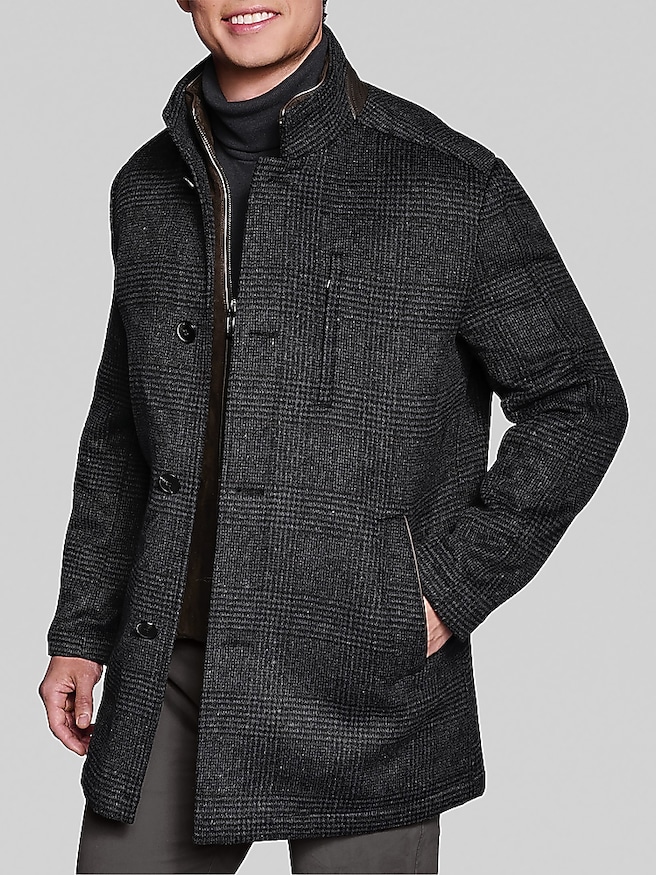
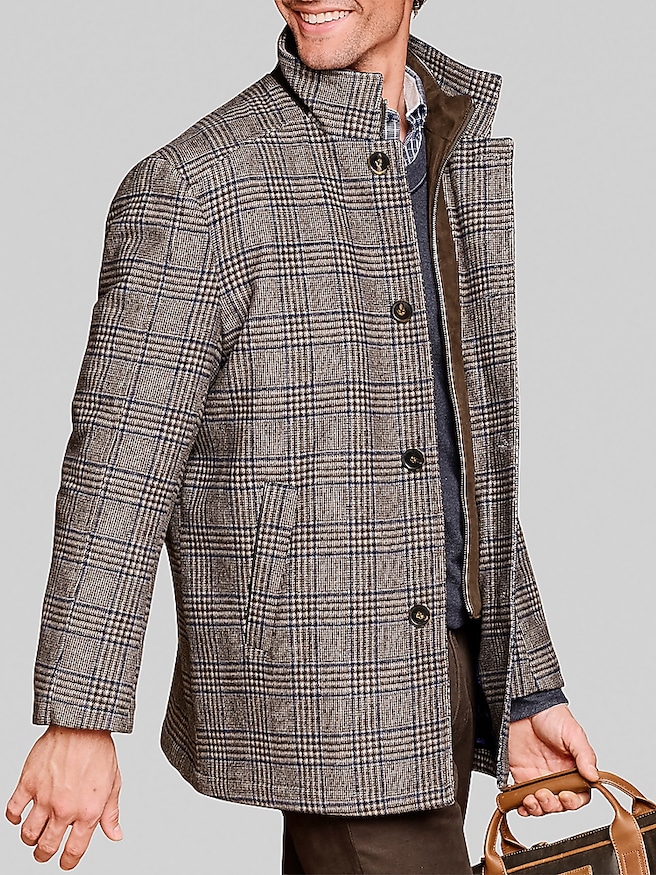
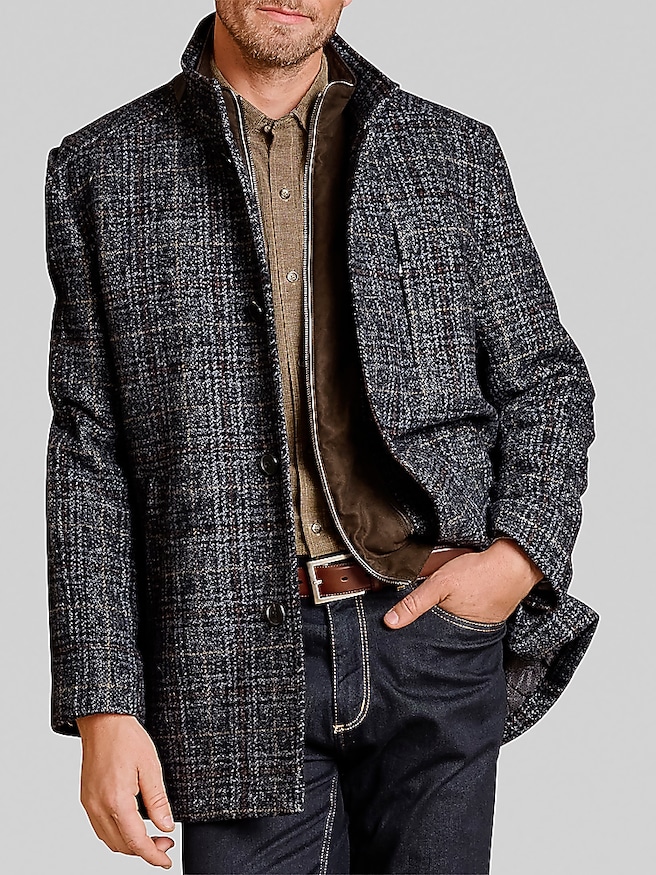
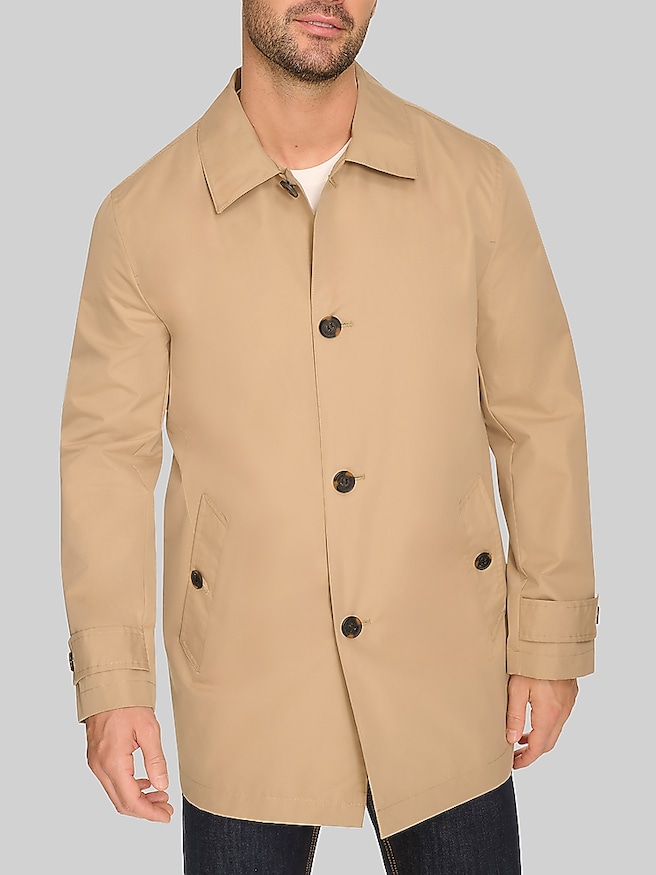
Men’s lightweight winter coats provide insulation and protection from cold air without the weight or volume of a heavily padded coat. They are especially useful for commutes, short walks, travel, and days that involve moving between heated buildings and outdoor spaces. A lighter coat can feel comfortable behind the wheel, sit neatly over work clothes, and leave enough freedom through the shoulders to carry a briefcase or reach for an overhead bag. Warmth depends on more than thickness: insulation, shell construction, coverage, and the layers underneath all contribute to comfort. Down insulation traps warm air in clusters that compress easily, making it useful when low weight and compact storage matter. Its loft can diminish when wet, so protection from moisture matters. Synthetic insulation generally retains more insulating ability when damp, though performance varies with its construction and thickness. Wool and wool-blend fabrics offer another approach, with a tailored appearance that works naturally over dress shirts and knitwear; their warmth and weight depend on the weave, fabric density, and lining. Nylon and polyester shells are common in lightweight insulated outerwear because they can provide a smooth, low-bulk outer layer, sometimes with finishes that help shed light moisture. A water-repellent finish is not the same as waterproof construction, and a light coat is not automatically suitable for prolonged exposure to freezing temperatures. For a walk from the parking garage to the office, modest insulation and a wind-resistant shell may be enough. Waiting outside for a train or spending an afternoon on an exposed sideline calls for closer attention to coverage, layering, and weather protection. Within the broader range of Winter Men's Coats, lightweight designs serve a practical purpose: comfortable outerwear for situations where a substantial parka would feel cumbersome, but a simple uninsulated layer would leave too much warmth behind. The balance comes from matching the coat’s construction to the length and conditions of the outing, rather than judging warmth by appearance alone.
Fit gives a lightweight winter coat much of its everyday versatility. A clean silhouette can still leave space for a sweater, a suit jacket, or a thin insulating layer without pulling across the upper back. Shoulder seams should sit comfortably, sleeves should allow the elbows to bend, and the front should close without tight horizontal creases through the chest or waist. The most useful fit is easy to recognize in ordinary movements: sitting in a car, holding a handrail, or reaching across a desk should not make the coat feel restrictive. Trying the shape over the clothing it will accompany helps distinguish a streamlined fit from one that is simply too small. A coat worn over tailoring also needs enough length to cover the jacket beneath it; a shorter cut may pair more naturally with jeans, chinos, and casual knitwear. Hip-length styles tend to allow easy movement, while longer silhouettes extend coverage over the seat and upper thighs. Details that seem minor on a hanger can matter on a cold sidewalk. A collar that closes comfortably at the neck reduces exposed space, adjustable cuffs help limit drafts, and a covered front closure can add a barrier against wind. A hood offers extra coverage, although its shape should allow a clear view to either side. Pockets are most practical when they remain easy to reach while seated and securely hold small essentials without distorting the front of the coat. Inside pockets can keep a phone or wallet close, while soft pocket linings make a brief walk more comfortable when gloves are tucked away. Quilted construction helps distribute insulation, but the amount of fill and the overall design matter more than the size of the stitched pattern. Dark neutrals give lightweight outerwear a quiet, polished appearance over business clothing, while earth tones and textured fabrics can soften the look with denim or corduroy. A matte surface tends to feel understated; a smoother, slightly lustrous shell gives the same basic silhouette a sportier character.
Durability and care are just as important as initial comfort, particularly for a coat that will be worn repeatedly through winter. High-contact areas such as cuffs, pocket openings, shoulders, and the edge of the front closure benefit from secure stitching and fabric suited to regular friction. Backpack straps and shoulder bags can gradually wear against a lightweight shell, so an exceptionally thin fabric may call for more careful handling than a denser weave. Closures should move smoothly, and the lining should allow sleeves to slide over a sweater without catching or twisting. Care requirements vary by fabric, insulation, trim, and construction, making the garment’s care label the best starting point. Some insulated coats can be machine washed according to specific instructions, while tailored wool styles may require professional cleaning. Excess detergent, unsuitable heat, and incomplete drying can affect the feel or performance of certain materials. Down needs thorough drying using the method specified on the label to restore loft and avoid lingering moisture; synthetic fills also benefit from careful cleaning rather than assumptions based on the outer fabric alone. A damp coat should dry fully before storage, and insulated outerwear generally benefits from being stored without prolonged compression. Keeping pockets free of heavy objects helps preserve the shape, while prompt attention to loose threads or a sticking zipper can prevent a small problem from becoming a larger repair. These practical qualities make lightweight winter coats useful for commuters, travelers, and anyone who prefers adaptable layers to a single bulky outer garment. They can also make thoughtful gifts for a father, brother, partner, or friend when sizing, usual clothing, and care preferences are understood. Someone who spends most of the day indoors may appreciate easy movement and compactness, while someone with a long outdoor walk may put greater value on wind protection and extended coverage. The most satisfying choice feels appropriate to those routines: easy to slip over office clothes, comfortable for a weekend errand, and substantial enough for the expected conditions without carrying more bulk than the day requires.