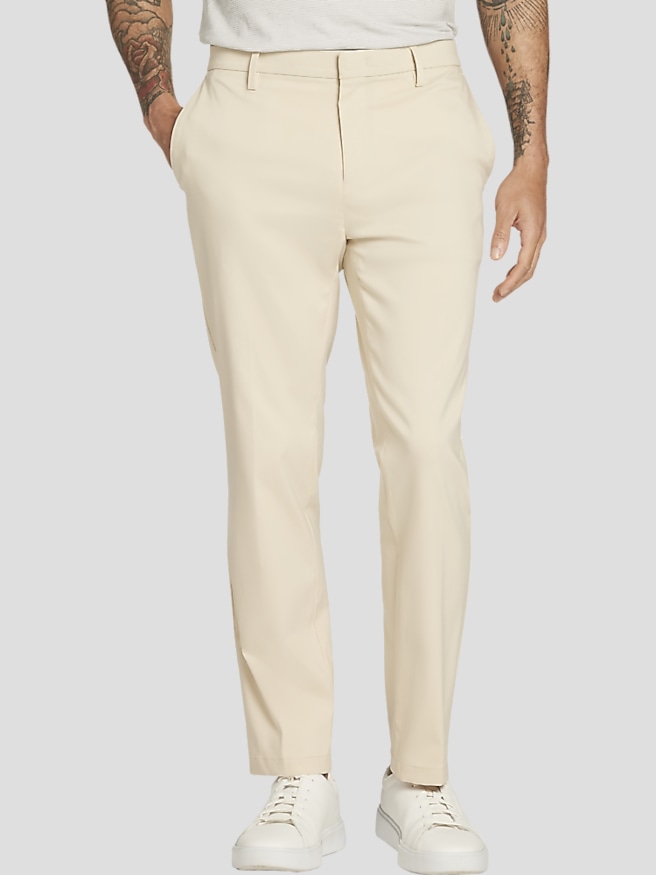
Men’s lightweight linen trousers bring a distinctive combination of breathable fabric, natural texture, and relaxed polish to everyday dressing. Made from fibers derived from the flax plant, linen absorbs moisture and allows air to circulate through the fabric, making it a comfortable choice for warm-weather occasions and travel to sunny destinations. Lightweight construction can add to that airy feel, although breathability also depends on the weave, lining, and cut. Pure linen typically has a crisp touch at first and softens with wear and appropriate care, developing the easy drape and subtle creases that give the fabric its character. Those creases are part of linen’s appeal rather than a sign that trousers are poorly made. Linen blends offer another approach: cotton can lend a familiar softness and a slightly more substantial feel, while viscose can contribute fluid drape. Depending on the proportions and construction, blends containing synthetic fibers may offer improved wrinkle recovery or added strength. A small amount of stretch fiber can provide flexibility, but linen trousers without stretch still need enough room through the seat and thighs for comfortable movement. Fabric weight and opacity deserve attention, especially with white, ivory, and pale beige trousers. A close weave or partial lining may provide more coverage, while a very light, open weave can reveal pocket bags or contrasting underlayers. Smooth undergarments close to the wearer’s skin tone help keep the overall appearance discreet. The surface itself can range from relatively smooth to visibly textured, with small variations in yarn thickness known as slubs adding interest without a bold pattern. For someone who prefers understated clothing, that texture gives a simple outfit depth: a clean shirt, neatly finished trousers, and uncomplicated shoes can look considered without feeling elaborate. The result suits a broad range of wardrobes, from casual travel clothing to more tailored separates for celebrations and settings where a jacket is optional. Lightweight linen offers a less rigid alternative to traditional dress trousers while retaining enough structure for a composed appearance.
Fit determines whether linen trousers look deliberately relaxed or simply oversized. A tailored cut generally sits closer through the seat and thigh, with a straight or gently tapered leg that keeps the outline neat. A classic fit offers additional ease without necessarily creating a wide silhouette, while relaxed cuts give the fabric more room to move and drape. These descriptions vary by maker, so waist, rise, thigh room, and inseam measurements are more useful than assuming a familiar size will fit identically across every pair. The waistband should sit comfortably at the intended position without pulling the front closure or causing the pockets to flare. Sitting down should not create excessive tension across the lap, and the fabric should fall cleanly rather than catch at the calves. Drawstring waists and elasticated sections tend to emphasize comfort and casual use, especially for travel, leisurely lunches, and beachside gatherings. Button-and-zip closures, belt loops, and a structured waistband usually create a more tailored impression, particularly with a tucked-in shirt. Pleats can provide extra room through the upper leg while contributing a fuller drape; flat fronts tend to present a cleaner, simpler line. Neither detail guarantees a particular fit, so the overall cut remains important. Hem length changes the effect as well. Little or no break keeps a tapered pair crisp above loafers, while a slight break can complement a straighter leg. Excess fabric pooling over the shoes can make lightweight trousers appear less intentional. Styling can stay straightforward: an Oxford shirt works for a casual office, a knit polo brings softness to dinner plans, and an unstructured jacket adds definition for an outdoor reception. For destination celebrations and other occasions built around an airy, tailored look, Mens Summer Linen Trousers offer a closely related direction. The event’s dress code still matters; linen separates are not automatically a substitute for formal attire. Neutral shades are particularly adaptable, while deeper colors offer a more subdued appearance and may make the fabric’s creasing less noticeable.
Care helps lightweight linen trousers retain their shape, texture, and usefulness over repeated wear. The garment’s care label takes priority because dyes, blends, linings, and waistband construction can require treatment different from that of the outer fabric alone. Some trousers are suitable for gentle washing in cold water, while others require professional cleaning. When home washing is permitted, a mild detergent and a gentle cycle can reduce unnecessary stress on the fabric. Avoiding excessive heat is important because linen can shrink, and high dryer temperatures may affect both fit and finish. Air-drying in the manner specified on the label is often appropriate; trousers should be smoothed into shape rather than left tightly crumpled. A steamer can soften light creases between wears when the care instructions allow it, while ironing at the recommended setting can restore a sharper finish. Pressing while the fabric is slightly damp often makes wrinkles easier to release, though blends and delicate finishes may require a pressing cloth or a lower temperature. There is no need to erase every fold: a soft crease at the knee or hip is consistent with linen’s natural appearance. For travel, a loose fold or careful roll can limit hard fold lines, and hanging trousers after unpacking gives the fabric room to relax. Emptying pockets before storage helps prevent stretched areas and distorted shapes, particularly with lighter cloth. Linen fibers are strong, but an airy weave is not immune to abrasion, snagging, or strain at seams. Enough room through the body, secure stitching, and thoughtful handling all contribute to longevity. Trousers worn frequently for seated work or travel benefit from attention to high-friction areas such as pocket edges and the seat. As a gift, linen trousers are most practical when the recipient’s preferred rise, leg shape, and measurements are known. For personal wear, the strongest choice is similarly specific: fabric that feels comfortable, a waistband that stays settled, and a cut that works with the shirts and shoes already in regular rotation.