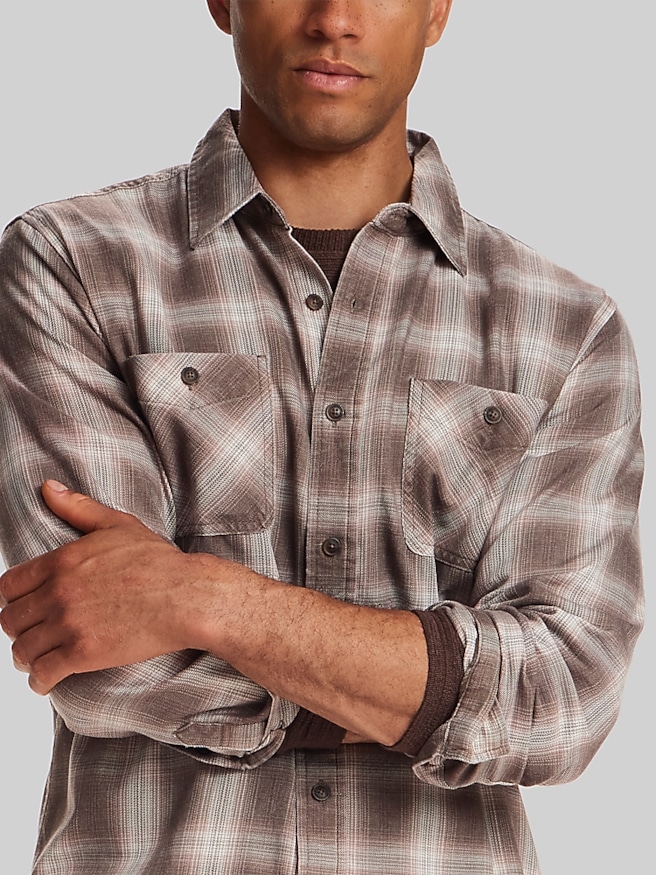
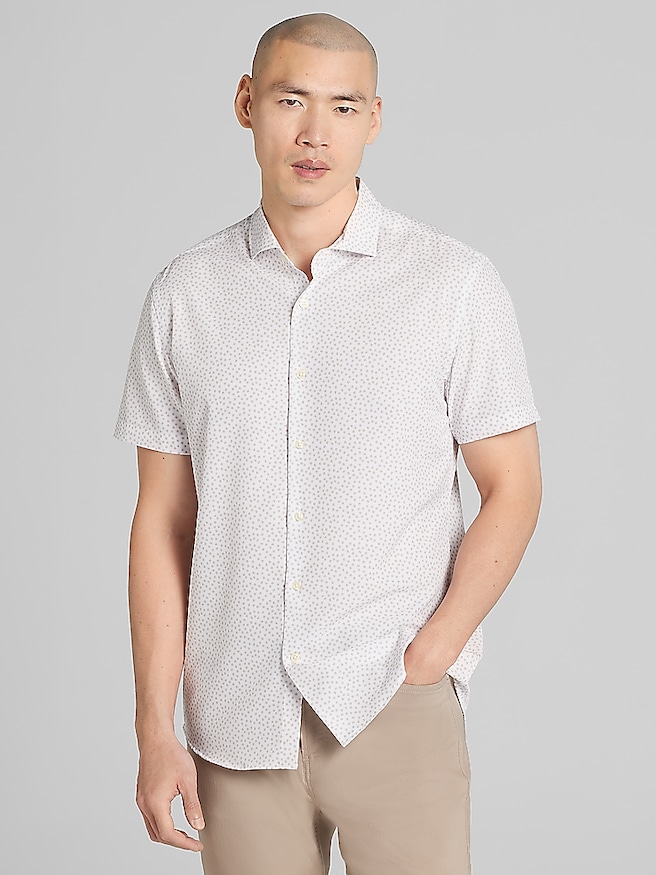
Men's lightweight flannel shirts offer the soft feel of flannel in a lighter fabric that adds less bulk than heavier versions. Their appeal comes from a combination of texture, easy movement, and everyday versatility: a shirt can look relaxed with jeans yet feel put together enough for a casual workplace or dinner with friends. Flannel describes a type of fabric, not a particular pattern, so the familiar plaid design is only one part of the category. Its characteristic softness often comes from brushing the fabric to raise a fine surface nap. That finish gives the shirt a gently fuzzy hand, while the underlying weave helps determine its structure and drape. A lightweight flannel generally feels more flexible and less substantial than a thick flannel, making it easier to tuck, wear beneath another layer, or leave open over a T-shirt. Cotton is a common material because it feels comfortable against the skin and allows airflow, though breathability also depends on the weave, thickness, and finish. Cotton blends may add other qualities, such as improved shape retention or a little stretch, depending on the fibers used. Fiber content alone does not tell the whole story; two shirts with similar labels can feel noticeably distinct because of yarn size, fabric density, and the amount of brushing. For someone who enjoys flannel's texture but prefers a less bulky shirt, those construction details matter more than the size or color of the plaid. A fine check can create a quieter look, while a larger pattern makes the shirt more visually prominent. Muted colors tend to blend easily with an existing wardrobe, and stronger contrasts can give a simple outfit a focal point. Neither approach changes the basic purpose: comfortable, approachable clothing with enough texture to feel distinct from a smooth woven shirt.
Fit determines whether a lightweight flannel shirt looks easygoing or simply oversized. Shoulder seams should generally sit close to the natural edge of the shoulders, and the upper back should allow comfortable movement when reaching forward. Across the chest, the button placket should lie reasonably flat without pulling into small gaps. A slim fit follows the torso more closely, while a classic or relaxed fit leaves more room through the chest and waist; the terminology varies, so measurements are more useful than the fit name alone. Someone who plans to wear a T-shirt underneath may appreciate a little additional ease, but extra room should not come at the expense of sleeves that swallow the hands or a collar that looks disproportionately large. Sleeves should reach approximately to the wrist when the arms hang naturally, with enough room at the cuff to move comfortably. Hem length matters just as much. A shorter hem can look balanced untucked, while a longer shirttail is usually easier to keep tucked during sitting and reaching. Within the broader category of men's lightweight casual shirts, flannel brings a softer surface and a more textured appearance than many smooth shirting fabrics. That texture pairs naturally with denim, chinos, and other casual pants without requiring an elaborate outfit. A small-scale plaid with dark, clean-lined jeans can work for an informal dinner; a subdued pattern with chinos can suit an office that permits casual button-front shirts. Leaving the shirt open over a plain T-shirt creates a more relaxed effect, especially when the underlying color echoes one shade in the pattern. For a neater finish, buttoning the shirt and keeping the sleeves at full length gives the collar and cuffs more definition. When rolling the sleeves, even folds that sit comfortably below or above the elbow look more deliberate than tightly bunched fabric. The best arrangement supports the day's activities, whether that means desk work, a long drive, or meeting friends after an afternoon of errands.
Good care helps preserve the qualities that make lightweight flannel comfortable in the first place. The care label should always guide washing and drying, because fiber blends, dyes, and finishes can require different treatment. When machine washing is permitted, a gentle cycle and cool water are often sensible choices for limiting unnecessary friction and helping protect color. Washing with similar colors reduces the risk of dye transfer, and keeping flannel away from rough towels or exposed hook-and-loop fasteners can reduce abrasion against the brushed surface. Turning the shirt inside out offers another simple way to limit rubbing on the outside. Cotton can shrink when exposed to excessive heat, so drying instructions deserve close attention, particularly when the original fit is already close through the chest or sleeves. If the label allows tumble drying, a lower heat setting may be preferable; promptly removing and reshaping the shirt can also help prevent deep creases. Air drying is another possibility when permitted, with the shirt smoothed into shape rather than stretched from the shoulders. Any ironing should follow the label's temperature guidance, since a setting appropriate for cotton may not suit every blend. Some surface fuzz or pilling can develop with wear, especially where a seat belt, bag strap, or forearm repeatedly rubs the fabric; that change does not automatically mean the shirt is poorly made. Secure buttons, neat seams, and careful handling all contribute to useful wear over time. Lightweight flannel also makes a thoughtful gift for someone who already favors casual button-front shirts but appreciates a softer feel. Checking the measurements of a well-fitting shirt is more reliable than guessing from a usual letter size, and familiar colors make the gift easier to incorporate into everyday outfits. For regular wear or gifting, the most useful choice balances a comfortable fit, manageable care requirements, and a pattern that feels natural to the person wearing it.