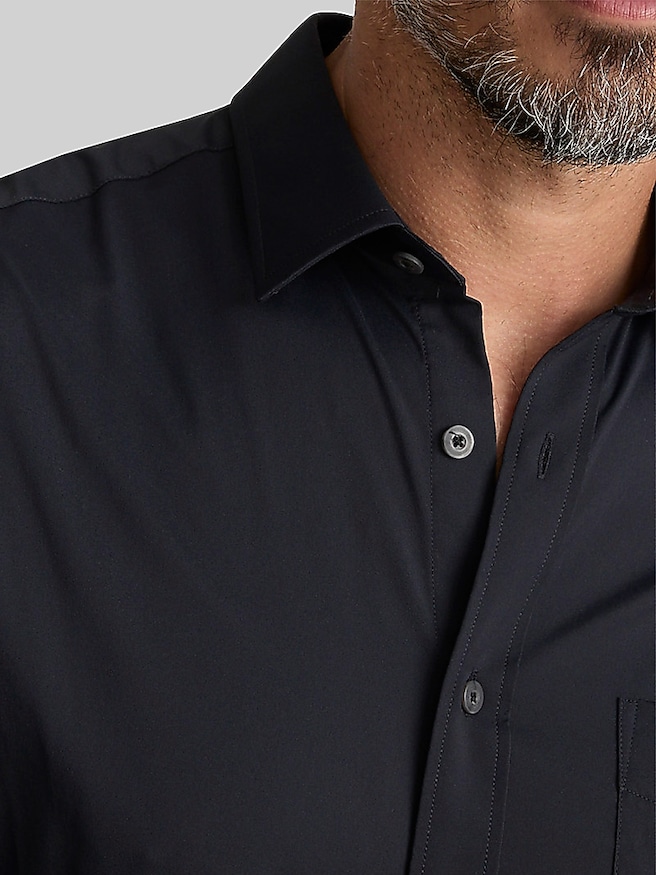
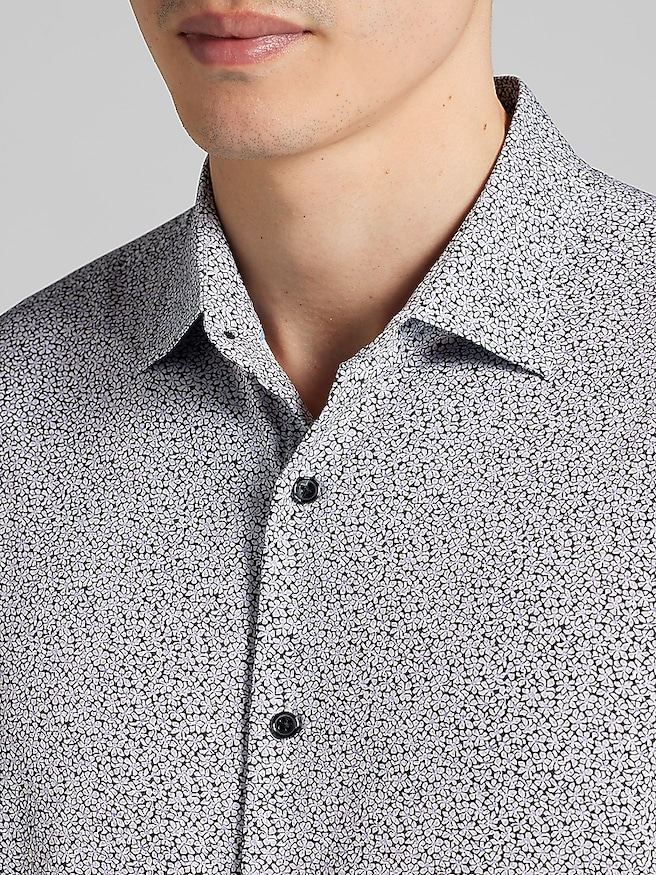
Men's lightweight button-up shirts combine the clean lines of a collared shirt with fabric that feels less substantial and layers without unnecessary bulk. Lightweight describes the fabric's weight, not a single material, fit, or sleeve length, so the category can include crisp cotton poplin, textured linen, linen blends, and woven fabrics with stretch or performance features. Cotton poplin has a smooth surface and a close weave that works well with tailored pants or dark denim, making it a natural choice for business-casual offices and dinner plans. Linen has a more pronounced texture and an easy drape, with natural creasing that gives the shirt a relaxed character rather than a sharply pressed appearance. Linen blends can soften that texture or change how the fabric holds its shape, depending on the fibers used. Stretch blends add flexibility for reaching across a desk, driving, or carrying a bag, though the amount of give varies by construction. Performance fabrics may offer moisture-wicking or quick-drying properties when those features are specified; a lightweight feel alone does not guarantee either benefit. Fabric weight also does not tell the whole story about breathability. Fiber content, weave, finish, and how closely the shirt fits all influence comfort. A tightly woven shirt can feel smooth and structured, while a more open weave may allow greater airflow and show more of the layer underneath. Pale colors and fine fabrics can be somewhat sheer, making opacity another useful consideration for office wear or occasions that call for a polished appearance. Lightweight does not have to mean delicate, either. An evenly woven fabric, secure stitching, and well-finished seams can support regular wear without adding heft. The result is a category with plenty of range: shirts that sit neatly beneath a blazer, styles with enough texture to stand on their own, and comfortable collared options for days that move between a desk, an appointment, and a casual meal.
Fit gives a lightweight shirt its shape, especially because a thinner fabric tends to reveal pulling, bunching, or excess material more readily than a heavier one. Shoulder seams generally look cleanest near the edge of the shoulder, while the chest should have enough room for natural movement without gaps between the buttons. A slim silhouette follows the torso more closely; a roomier cut offers additional space through the chest and waist. Neither should depend on stretching the fabric taut to look neat. Sitting down, bending an elbow, and reaching forward are ordinary movements that reveal whether the cut works beyond a standing pose. Sleeve length matters just as much: long sleeves should reach the wrist without swallowing the hand, and cuffs should close comfortably rather than grip. Short sleeves generally look balanced when they follow the upper arm without squeezing it or flaring dramatically. For another sleeve-length option, men's lightweight short sleeve shirts offer the same easy pairing potential with chinos, jeans, and casual trousers. Hem shape helps determine how a shirt wears, too. A longer, curved hem provides fabric to stay tucked during movement, while a shorter hem can create a cleaner untucked line. Under a jacket, a smooth shirt front and a collar that sits neatly at the neckline help keep the outfit composed. Worn open over a simple T-shirt, a lightweight button-up takes on a more relaxed role, with the collar, placket, and cuffs adding definition. Solid colors make understated combinations easy, while narrow stripes, small checks, and subtle textures add interest without requiring bold accessories. A white or pale blue shirt with charcoal trousers reads differently from a softly textured shirt with denim, even when both share a similar weight. That versatility makes these shirts useful for people who want a collared option for work, travel, restaurant reservations, and everyday plans without relying on a heavily structured look.
Care and construction help determine how well a lightweight button-up shirt keeps its appearance over time. The care label is the best reference because cotton, linen, blended fibers, and performance finishes do not all respond to laundering in the same way. Some shirts can be machine washed, while others require a gentler process or professional cleaning. Washing with compatible colors, avoiding an overloaded machine, and removing a shirt promptly after the cycle can help limit unnecessary creasing and friction. Drying instructions deserve equal attention: excessive dryer heat can contribute to shrinkage or affect stretch fibers, while prolonged overdrying can make wrinkles harder to smooth. A hanger can help preserve the shoulder shape after laundering, and buttons should be fastened carefully rather than pulled through tight openings. For a crisp finish, ironing settings need to match the fabric; steaming may be suitable for releasing lighter wrinkles when the care instructions permit it. Linen will usually retain some natural texture, even after pressing, and that lived-in surface is part of its character. Durability also shows up in small construction details, including tidy buttonholes, securely attached buttons, and seams that lie flat without loose threads. A little ease through the torso can reduce repeated strain at the placket and armholes, particularly for someone who spends much of the day seated or moving between locations. For travel, a lightweight shirt takes up relatively little space, although wrinkle resistance depends on the fabric and finish rather than weight alone. Hanging it after unpacking helps restore its shape before wear. These shirts can also make practical gifts for a father, brother, partner, graduate, or someone building a more versatile work wardrobe. Familiar measurements, preferred sleeve length, and an existing shirt's fit provide more useful clues than a size label by itself. A restrained pattern or versatile solid color can fit naturally into an established wardrobe, giving the recipient a shirt that feels useful for ordinary days as well as plans that call for a little more polish.