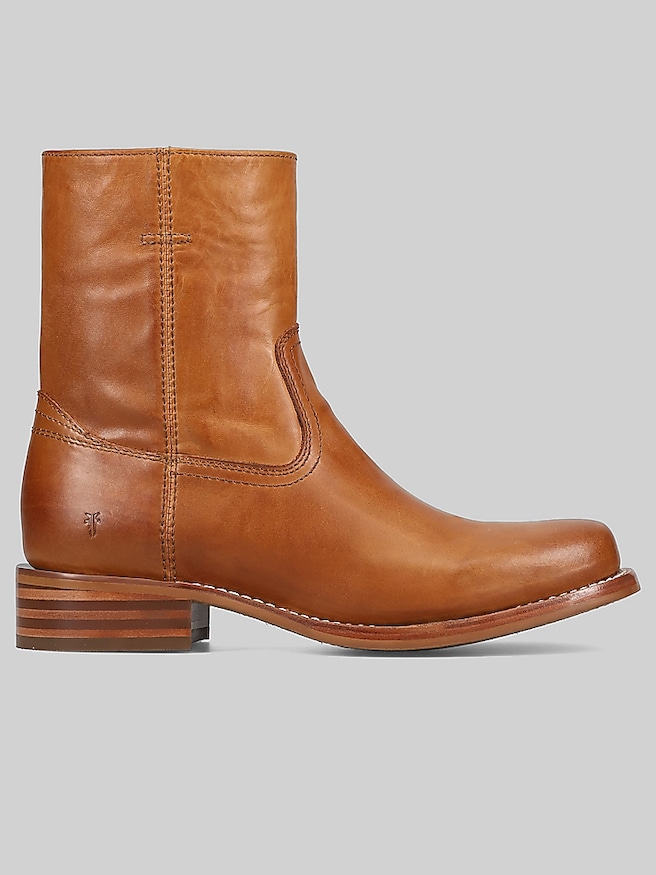
Men's leather winter boots bring together the substance of leather uppers, protection suited to cold conditions, and the everyday versatility of a well-made boot. Their appeal is practical as much as visual: a substantial leather upper looks at home beneath dark jeans or wool trousers, while winter-focused construction can make a meaningful difference on a slushy sidewalk or a cold walk from the train station. Leather alone, however, does not make a boot waterproof or insulated. Those qualities depend on the complete design, including treated uppers, sealed seams, protective membranes, linings, and the connection between the upper and sole. Full-grain leather retains its natural surface and can develop a distinctive patina with wear; top-grain leather has a more refined surface and may provide a consistent appearance. Neither designation guarantees weather protection. Smooth leather is often easier to wipe clean than suede or nubuck, whose textured surfaces generally need specialized protection and cleaning products. Waterproof construction is particularly relevant for wet snow and repeated contact with slush, while water-resistant leather is better understood as protection against lighter, shorter exposure to moisture. A gusseted tongue, when included, helps reduce openings where water or debris can enter, although the height of that attachment limits the protection it provides. Insulation adds another consideration. Synthetic insulation can provide warmth without excessive bulk, while wool or fleece linings can create a softer interior feel. The right balance depends on how much time is spent outside and how actively the boots will be worn. A commuter moving between heated buildings may prefer less insulation than someone spending extended periods standing outdoors. Published temperature ratings are not a universal promise of comfort; socks, circulation, activity level, moisture, and exposure all influence warmth. The most useful men's leather winter boots are therefore suited to a specific routine rather than simply the heaviest or tallest design. For everyday winter wear, dependable comfort and appropriate weather protection matter more than a rugged appearance by itself.
Fit and traction have just as much influence on daily comfort as leather quality. A winter boot should accommodate the socks intended for regular wear without squeezing the toes or creating pressure across the instep. Thick socks are not automatically warmer if they make the boot too tight, because restricted space can reduce comfort and circulation. A secure heel and enough room to move the toes help balance stability with warmth, especially on longer walks. Leather may soften and conform with use, but a boot that feels painfully narrow or too short should not be expected to become the right size through break-in. Lace-up designs allow more adjustment across the foot and ankle, which can be useful when sock thickness varies. Pull-on silhouettes offer a cleaner profile and convenient entry, though their fit depends more heavily on the shape of the last and the hold around the heel. Underfoot, cushioning can soften repeated steps on pavement, while a supportive footbed may help reduce fatigue during a full day of errands or commuting. Removable footbeds can provide room for compatible orthotics, subject to the boot's depth and fit. Outsole construction deserves equal attention. Rubber compounds designed to remain flexible in cold conditions and lug patterns that shed loose snow can support winter use, but deep tread alone does not establish reliable grip on ice. Smooth ice remains hazardous, and specialized traction aids may be appropriate where conditions require them. Boot weight and flexibility also affect the experience: a substantial sole can feel reassuring on uneven ground, yet an unnecessarily heavy boot can become tiring over a long day. For clothing combinations, streamlined leather boots sit neatly beneath straight-leg jeans, chinos, and casual wool trousers. More substantial silhouettes work naturally with heavier denim and textured layers. Clean lines and a well-maintained finish can suit a relaxed office, while pronounced tread and protective details emphasize outdoor utility. Dressier styling should never substitute for construction appropriate to the conditions underfoot.
Regular care helps men's leather winter boots retain their shape, flexibility, and appearance through repeated exposure to moisture and road salt. Salt residue is best addressed promptly with a soft cloth and a leather-appropriate cleaning method, since buildup can leave pale marks and contribute to drying. Heavy mud should be removed gently rather than worked into the surface, and suede or nubuck needs tools intended for its particular texture. After wet wear, boots benefit from drying naturally in a ventilated space, away from radiators, fireplaces, and other concentrated heat sources that can stiffen leather or affect adhesives. Removing removable insoles and loosening the laces can help interior moisture escape. Conditioning smooth leather periodically can help maintain suppleness, but the formula and frequency should match the leather finish and the manufacturer's recommendations. Too much conditioner can alter the feel or appearance, and some treatments may darken lighter leather. Protective sprays, creams, and waxes also need to be compatible with the upper; a treatment that suits smooth leather may flatten the nap of suede or interfere with another finish. Surface treatments can support water resistance, but they do not turn an unsealed boot into fully waterproof footwear. Between wears, allowing the interior to dry completely helps keep the boots comfortable, while checking worn tread, loose stitching, and damaged seams can reveal when maintenance is needed. Some constructions permit resoling, although repair options depend on how the boot is made. The leather quality and considered styling associated with Mens Premium Leather Boots remain relevant to winter footwear, with insulation, moisture protection, and traction adding distinct functional priorities. As a gift, leather winter boots can be especially useful for a regular commuter, a frequent traveler, or someone whose daily routine includes plenty of outdoor walking. Knowing the recipient's usual size, preferred sock thickness, and typical activities makes the choice more personal. A comfortable fit and construction matched to everyday conditions give these boots lasting value beyond their first impression.